
 A Oneindia Venture
- Gold Rate Calculator
- Silver Rate Calculator
- 7th Pay Calculator
- 8Th Pay Calculator
- Gratuity Calculator
- UAE Gratuity Calculator
- NSP Calculator
- PF Calculator
- Income tax Calculator
- RD Calculator
- FD Calculator
- EMI Calculator
- Home Loan Calculator
- Personal Loan Calculator
- Car Loan Calculator
- SIP Calculator
- GST Calculator


 Click it and Unblock the Notifications
- Click on the Menu icon of the browser, it opens up a list of options.
- Click on the “Options ”, it opens up the settings page,
- Here click on the “Privacy & Security” options listed on the left hand side of the page.
- Scroll down the page to the “Permission” section .
- Here click on the “Settings” tab of the Notification option.
- A pop up will open with all listed sites, select the option “ALLOW“, for the respective site under the status head to allow the notification.
- Once the changes is done, click on the “Save Changes” option to save the changes.

IPO
, established in 1970, operates in the sector. The company's IPO opened on January 1, 1970 and closed on January 1, 1970, with an issue price of ₹. The IPO is a book-built issue of ₹0, with a price ... of ₹ per share. The issue includes a total of 0 shares on offer. Read more
IPO Timeline
-
Bidding Starts
-
Bidding Ends
About
OUR BUSINESS OVERVIEW We are an ISO 9001: 2008, 14001: 2004 and 18001: 2007 certified company managed by experienced and dedicated promoters to address the changing needs of the customers in Infrastructure space. Our Company is a ... provider of customised steel fabrication and infrastructure solutions in India for Telecommunication Towers, Transmission Towers & Substation Structures and Solar Module Mounting Structures. The objective of our Company is to supply customized, high-quality material to its impressive and ever-growing clientele. We provide 360 degree solutions by carrying out engineering, designing, fabrication, galvanization and deployment. Our products include Telecommunication Towers, Power Transmission Line Towers, Smart Lighting Poles, Monopoles, Guard Rails, Substation Structures, Solar Module Mounting Structures and Customized Galvanized & Non-galvanized steel structures. Our services include providing complete engineering, procurement and control for projects such as Rural Electrification, Power Transmission Lines, and Solar Power Plants. Our Company commenced its manufacturing/fabrication activities in the Financial Year 2006-07 when first unit became operational. With the addition of a second unit in 2008-09, our Company now provides all kinds of steel fabrication and infrastructure solutions in addition to Telecom Towers and its projects have been executed in all kinds of geographical locations nationally. We have maintained an excellent track record ever since. We have full in house fabrication and Hot Dip Galvanizing Facilities that assist us in the manufacturing of galvanized Towers as per customer needs and drawings and strengthen our market distinguished position Towers Suppliers. In a big leap forward, the company recently increased its installed annual manufacturing/fabrication capacity from 50,000 MT to 1,00,000 MT with the installation of new Galvanizing Plant at its wholly owned subsidiary – Salasar Stainless Limited. In addition to manufacturing/fabrication, we also undertake civil foundation work, erection of towers both telecom & transmission at site including painting. We have also undertaken EPC Turnkey projects for solar mounting structures for our clients. Our Company provides individual attention to its customers and all of its products are fabricated as per the customer’s requirements in accordance with applicable standards. Fabrication is carried out in a state-of-the-art manufacturing facility ensuring strict quality control and safety at every level of production. Our Company has established its execution capabilities in a short span of time and developed firm relationships with its suppliers and customers. Our Company has a strong customer profile and caters to the leading names in India. These relationships have allowed us to carry out massive touchstone projects such as establishing Transmission and Substation for U.P. Power Transmission Corporation Ltd, Tata Power Delhi Distribution Ltd., Unitech Power Transmission Ltd., executing orders of Telecom Towers including erection of towers for ATC India Tower Corporation Pvt Ltd, Indus Towers Ltd, ATC Telecom Infrastructure Pvt Ltd, Bharti Infratel Ltd, Reliance Jio Infocomm Ltd, Tower Vision India Pvt Ltd, Viom Networks Ltd, and supplying Solar Mounting Module Structures for Jakson Engineers Ltd, Prayatna Developers Pvt Ltd, Welspun Renewables Energy Pvt Ltd., Insta Power Energy Efficiency Pvt Ltd etc. TELECOMMUNICATION TOWERS We have already manufactured and erected around 10,000 towers of various designs of Angular, Tubular and Hybrid Ground Based Towers (GBT) and Roof Top Towers (RTT) since inception. We have supplied our towers to all the leading Cellular operators & Telecom infrastructure companies like Airtel, Bharti Infratel, Indus Towers, Reliance Infratel, Reliance Jio, Viom Networks, ATC, Tower Vision and GTL with a robust presence in India and International locations of Africa, Asia and Australia. We are one of India’s face and manufacturing/fabrication partners for Ramboll’s technical expertise in Telecom towers structural design. Ramboll is a Denmark based company and is one of the leading consulting firms for Buildings, Transport, Environment, Energy, Oil & Gas and Telecom markets in the world. The organization has 200 offices worldwide employing more than 10,000 committed professionals We manufacture/fabricate and supply the following self supporting towers with proven expertise: Ground Based Towers (GBT) and Roof Top Towers (RTT) • Angular Towers- Four and Three legged. • Tubular Towers. • Hybrid Towers- Tubular legs with angle bracing. • Monopoles. TRANSMISSION LINE TOWERS & SUBSTATION STRUCTURE We riding on our technical expertise with one of the state-of-art manufacturing facilities are equipped and approved to supply Transmission line towers (TLT) and Substation structures for capacity up to 400KVA. The structures used are of high grade steel with top quality galvanized coating for strength and corrosion resistance. We have successfully serviced 400 KVA projects for NKG Infrastructure and GET Power Private Limited, Chennai and AREVA. We have been approved by the following prestigious Government Undertakings and have successfully executed projects ranging from 33KVA to 220 KVA at multiple locations for them: • UP Power Transmission Corporation Limited (UPPTCL). • Power Transmission Corporation of Uttaranchal Limited (PTCUL). • Haryana Vidyut Prasaran Nigam Limited (HVPNL). • Rajasthan Rajya Vidyut Prasaran Nigam Limited (RRVPNL). • Punjab State Transmission Corporation Limited (PSTCL) • MP Power Transmission Company Limited (MPPTCL) • Delhi Transco Limited • Jammu & Kashmir State Power Development Corporation Limited (JKSPDCL) SOLAR MOUNTING STRUCTURES With growing energy needs, the Indian Government is focused towards sustainable development by promoting the use of its abundantly available solar energy for power generation and other application. To manifest this vision, India in 2009 unveiled a US$19 billion plan to produce 20 GW of solar power by end of the next decade. After having establishing its forte in Telecom and Transmission towers space in fabricating and galvanizing finesse, this created a business opportunity for us to expand its operations in the design, fabrication and installation of Module mounting structures for leading companies venturing into the Solar opportunity. To service its demanding and sophisticated client base, we manufacture variety of Ground based and Roof top solar mounting structures using best quality hot rolled and cold rolled sections for its pre and post galvanized structures. The company aims at customer satisfaction and has delivered turnkey solutions for solar power plants across the country with successful execution of various projects ranging from 1MW to 20 MW. The company is committed to continued improvisation of its product to cater to this growing business space. We have undertaken EPC Turnkey projects for the following esteemed clientele • Welspun Energy Pvt. Ltd- 20 MW at their Bhagwaanpura site in Madhya Pradesh. • Mahindra EPC-Rajasthan site. • Lanco Solar Energy Pvt. Ltd- Rajasthan and Punjab. • Larsen & Toubro. Currently, our Company has 655 employees consisting of skilled, unskilled, experienced engineers and designers, with one key managerial personnel having more than 41 years of experience in the Iron and Steel industry. COMPETITIVE STRENGTHS Since its inception, our company has worked earnestly towards providing the best quality and hence has acquired the following strengthens in the industry: 1. Business Agreement with Ramboll Ramboll is a leading engineering, design and consultancy company founded in Denmark in 1945. It has a strong presence in the Nordics, North America, the UK, Continental Europe, the Middle East, and India. Ramboll is well known among mobile operators and network vendors globally for its Telecom design philosophy and its extensive involvement in international codes and standards. Ramboll Telecom is the market leader in innovative designs and supply of tower solutions with a history in analysis, design and construction of towers and masts since 1945, and nearly 30,000 masts and towers bearing its stamp worldwide. We are manufacturing partner for Ramboll’s technical expertise in Structural Design of Tubular Telecom Towers. 2. Steady financial performance Our volume growth during the last five Financial Years contributed to our financial strength. Our order book of Rs. 5,761.16 million as of May 31, 2017, provides us with revenue visibility for the next financial year. We have never defaulted in the repayment of our borrowings, which, together with our steady financial performance helps us present a strong credit profile to our lenders. Driven by our business growth and execution track record, we have exhibited steady financial performance and credit profile over the last few years. 3. Optimum Galvanizing Capacity Our wholly owned subsidiary Salasar Stainless Limited has recently installed Galvanizing Plant of 50,000 MT which has increased our installed galvanizing capacity to 1,00,000 MT which makes us to manufacture & execute projects twice the business we have been currently doing. 4. Customer Centric Approach Over the years we have developed a significant and mutually beneficial business relationship with our customers and it can be reflected in the repeat orders we get from our customers. 5. Visible growth through a robust order book and excellent pre-qualification credentials We are currently pre-qualified to bid for Rural Electrification projects. With current government thrust on rural electrification, it has helped us to increase our target market size and maintain the momentum of our order book growth. 6. Operational Excellence Our attention to process optimization to achieve the highest safety and quality has resulted in a culture of operational excellence, enriching it with the following strengths: 3.1. Capability to ramp up operations in minimum time with existing facilities 3.2. Timely delivery and competitive prices without quality compromise 3.3. Best quality raw material procurement in line with stringent industry standards 3.4. Skilled and technical manpower in step with industry trends 3.5. Continually updated equipment that serve a wide variety of manufacturing needs 7. Experienced management and promoters Our management has significant experience in steel & allied industry and project management. It is well qualified and experienced in the industry. This team is responsible for the growth in our business operations. In addition, our Board, with a strong combination of managerial acumen as well as entrepreneurial spirit, is equipped to handle complex business situations. The length and breadth of their experience and expertise, coupled with their strong client relationships, gives us a competitive edge in the industry. By focusing on undertaking EPC projects and geographical clustering our projects in our core areas of business, our management has led our Company to achieve strong revenue and profit growth over the last several years. Particularly, we benefit from the expertise of our Promoter and Managing Director, Mr. Alok Kumar has over 41 years of experience in in trading, manufacturing and fabrication of iron & steel and Mr. Shalabh Agarwal, Promoter and Whole-Time Director of our Company, has over 18 years of experience in sugar industry and trading, manufacturing and fabrication of iron & steel. LOCATION OF MANUFACTURING UNITS Our Company has 2 manufacturing units located at: 3. Unit-I, Khasra No. 265, 281 & 283, Village-Parsaun Post-Jindal Nagar, dasna, Ghaziabad-245304, Uttar Pradesh (UP) 4. Unit-II, Khasra No. 1184, 1185, Village Khera, P.O. Pilkhuwa, Hapur-245304. PLANT & MACHINERY Our Company has 2 manufacturing units spanning a cumulative area of approximately 1,00,000 square yards in the heart of National Capital Region’s industrial hub on the National Highway-24. Out of the total area, 40% of it is covered to serve the operations. The plant has robust shed houses, heavy overhead cranes and multiple Hydra equipment for seamless material loading and unloading within the premises. Our Company has all the latest machines like CNC plate cutting machine, CNC angle cutting machine, CNC drilling machine, Punching and Notching machines, Hydraulic presses, Mechanical cutting presses, Welding rectifiers, MIG Welding machines, numbering machines, straightening & bending machines for making sections. It has the Galvanizing plant with an installed capacity of 50,000 MT per annum. The fabrication equipment and installed machinery is regularly upgraded in order to deliver flawless range to clients. Following is the list of major machineries used by us in manufacturing process: Sr. No. Machinery (Unit I) Machinery (Unit II) 1. Zinc Tank D. G. Set 380 KVA 2. Hydra Crane Zinc Tank 3. JCB-12 Ton Air Pollution Control System 4. D. G. Set 250 KVA Grinder Machine 5. Punch Machine PP Tank 6. Power Press M/C Control Panel 7. Angle Cutting Machine CNC Hydraulic Press Break 8. Punching Machine Power Press Machine 9. Air Pollution Control System Power Press 10. ETP Plant Grinder Machine 11. Profile Cutting Machine Wire Rope Hoist 12. Flux Cleaning & Regeneration System Hydraulic Power Pack 13. CNC Profile Cutting Machine CNC Hydraulic Press Break M/C 14. Plasma Cutting Machine CNC Hydraulic Shearing M/C 15. CNC Automatic Punching & Shearing M/C Hydraulic Power Pack 16. CNC Angle Drill Machine Grinder Machine 17. Plasma Cutting Machine Hydraulic Power Pack 18. Angle Heel Milling Machine Hydraulic Power Pack 19. - Purlin Roll Forming Machine 20. - Hydraulic Mobile Crane 21. Welding Gantry Machine 22. Roll Forming Machine Business Agreement with Ramboll Our Company has entered into an agreement dated June 12, 2007 with Ramboll Telecommunication Services India Private Limited to sell telecom mass & towers in India under their design. Major terms and conditions of the agreement are as under: Manufacture & Sale of Products: Our Company shall work closely with Ramboll for promoting sale of the Products and creating awareness among Customers about the competitiveness of the products. Further, our Company agrees to promote Ramboll design towers, wherever such ‘tubular design towers’ offered by Ramboll, satisfy the requirements of the Customer. All offers made by our Company to Customers shall describe the Products as “Ramboll Model No. XXXXXX”. Our Company, while making a quote for traditional Indian design towers, shall also make an optional quote of Ramboll design towers, so that the Customers can analyse the benefits of using Ramboll design towers, wherever applicable/appropriate. We shall be responsible for manufacturing the Products, strictly in compliance to Ramboll’s designs, instructions, drawings and specifications. Each such Product sold by us shall carry “Ramboll” logo and label by stenciling. Design & Technical Assistance by Ramboll: Ramboll shall be responsible for providing designs of the Products as per design specifications, forwarded by us or the Customer(s) in each case. It shall provide technical assistance for establishing the manufacturing facility for the Products. It shall also provide technical assistance in establishing QA procedures & standards for the manufacturing of the Products. Projects Executed & Under Process Our Company has executed various projects in the past among which some major projects were for Rajasthan Rajya Vidyut Prasaran Nigam Limited, NTPC Ltd (Raj), Today Green Energy Pvt Ltd, Bharti Infratel Limited, Reliance Jio Infocomm Ltd, Zamil Infra Pvt Ltd, Indus Towers Ltd, Welspun Energy Pvt Ltd and ATC Telecom Infrastructure Pvt Ltd. Among these some projects are being executed by our company on regular basis viz. Bharti Infratel Limited, Indus Towers Ltd., Welspun Energy Pvt Ltd and ATC Telecom Infrastructure Pvt Ltd. Execution of projects of U. P. Power Transmission Corporation Ltd, Acme Cleantech Solution Pvt Ltd, Bharti Hexacom Ltd, Renew Solar Energy Pvt Ltd, Mahindra Susten Pvt. Ltd, Reliance Jio Infocomm Ltd, Prayatna Developers Pvt Ltd, Paschimanchal Vidyut Vtran Nigam Ltd, PES Solar Pvt Ltd and many more are under process. Ongoing Projects Details of ongoing orders of the Company as on May 31, 2017 are as under: (Rs. in million) Sr No Name Of Customer Address Po No Date Last Shipment Date Order Amount Dispatch Amount Balance Amount 1 Central Organization For Railway Electrification Allahabad Elcoret/T/Ohe/Group-199 & 224/222 05/05/17 04/11/18 494.72 - 494.72 2 Uttar Pradesh Transmission Corp. Lucknow Td-396/115/Pkg-2 19/09/15 26/08/17 1,321.85 1,321.15 0.70 3 Paschianchal Vidyut Vitran Nigam Ltd Meerut 6588/Pvvnl-Mt/Ddugjy/359/15-16 02-08-16 20-06-18 1,121.11 45.10 1,076.02 4 Paschianchal Vidyut Vitran Nigam Ltd Meerut 6583/Pvvnl-Mt/Ddugjy/353/15-16 28-07-16 20-06-18 1,154.09 84.30 1,069.79 5 Reliance Jio Infocomm Ltd Mumbai 118/63021744 10-04-17 FY 2017-18 253.35 154.33 99.02 6 Reliance Jio Infocomm Ltd Mumbai 118/63022415 25-04-17 14-08-17 697.58 42.42 655.16 7 Tydacomm Limited Nigeria 2017/0531/001 31/05/17 FY 2017-18 28.38 - 28.38 8 Tydacomm Limited Nigeria 2017/0531/002 31/05/17 FY 2017-18 2.61 - 2.61 9 Tydacomm Limited Nigeria 2017/0531/003 31/05/17 FY 2017-18 55.24 - 55.24 10 Renew Soalr Energy Pvt. Ltd. Gurgaon 4100001619 12/05/17 FY 2017-18 57.79 - 2.98 11 Mahindra Susten Private Limited Telangana 4900001004 12/12/16 FY 2017-18 18.43 12.41 6.01 12 Mahindra Susten Private Limited Telangana 4900001005 12/12/16 FY 2017-18 19.31 17.06 2.25 13 Adani Enterprises Limited Gujrat Ael/Stelpl/C/Po/338/2017 16/05/17 FY 2017-18 35.25 - 35.25 14 Ulitimate Sun System Private Limited Ambala Usspl/Ho/Projects/Po/Pun/2017/0503 17/05/17 FY 2017-18 1.45 - 1.45 Total 5,761.16 1,676.77 3,584.39 MANUFACTURING PROCESS Hi-tech international machinery and equipment are used to manufacture our products. As much of the process is automated as possible. As heavy parts are dealt with, cranes and hydras are employed extensively. Quality control and security measures are ensured at each production stage. Technicians are trained as per customer requirements for each order. Our Company goes out of its way to ensure that customers’ needs are met. P.O. Receipt from Customer Prepare Bill of Material Procure Raw Material Physical & Chemical Inspection of Raw Material N If Rejected Y Storage of Raw Material in Specified Customer Yard with colour marking Shop Floor Drawings Cutting Check Lengths as per Drawings & B.O.M. Y If Punching A N Rejected A Check Hole Dias & Distances as per Drawing N If Rejected Y Notching Check as per Drawing N If Rejected Y Fitment (If Applicable) Welding Check Welding Quality & Thickness as per drawing. Perform D.P. Test N Rejected If Y Trial Assembly Numbering Rejected N Check Numbering as per B Drawings & B.O.M. If C B Y Galvanizing Check for Coating & Uniformity of Zinc N If Rejected Y Sorting Packing Dispatch C Shot Blasting N If Ok Y Rejected Paint Shop N If Ok Y Rejected Final Inspection Sorting Packing Dispatch Our Company believes in providing the best product in best quality to its customers. For this purpose, it carries out extensive in-house testing and quality control at all stages of production. Galvanising Galvanising is the process of coating zinc on the surface of steel for preventing corrosion. The zinc coating renders zinc iron alloy on the surface which is stable and protects the parent metal from corrosion. The hot dip galvanizing process is the oldest and most used in the steel industry. The steel is first dipped in the flux solution to prepare the surface for zinc adherence and good bonding between the steel and zinc. The steel is dipped into molten zinc at 450 C, and reaction is initiated between steel and zinc. The quantum of free zinc on the alloy layer depends on the wire speed, wiping methodology and zinc temperature. Quality Testing Our Company is in strict adherence to its ISO 9001:2015, ISO 14001:2015 & OHSAS 18001:2007 accreditation, and has an in-house QAP (Quality Assurance Plan) to provide quality products both in manufacturing and services. The focus on supreme quality standards right from the procurement of raw materials to delivering the end product is observed thereby making quality improvement and adherence a continuous process. In-House Testing Our Company is well equipped with latest Mechanical & Chemical testing equipment to carry out necessary mechanical and chemical tests as per relevant IS/International Standards required for both incoming as well as outgoing finished product. In house computerized Universal Testing Machine (UTM) is installed to check the tensile and compressive strength of raw material. To ensure prime quality galvanizing, our Company carries out various chemical tests, zinc coating tests, hammer tests etc. through its well-equipped Chemical Laboratory. Control For manufacturing, superior quality products, our focus is concentrated on efficient execution of every stage of manufacturing. Our experienced quality assurance personnel are responsible for the formulation of an inward raw material inspection procedure and an advanced standard operating procedure in order to implement them for all processes for achieving the desired quality of products. Factories are equipped with most modern testing equipment of galvanized coating testing for our products. Y Accreditation We are accredited following certifications: Factory Address Certifications Khasra No. 265, 281-283, Village –Parsaun-Dasna, P.O. Jindal Nagar, Distt.-Hapur, Uttar Pradesh- 201313, India 1. ISO 9001:2015 2. ISO 14001:2015 3. BS OHSAS 18001:2007 Khasra No. 1184 & 1185, Village –Khera, P.O. Pikhuwa, Distt.-Hapur, Uttar Pradesh-245304, India. 1. ISO 9001:2015 2. ISO 14001:2015 3. BS OHSAS 18001:2007 UTILITIES & INFRASTRUCTURE FACILITIES Our manufacturing units are equipped with computer systems, servers, relevant softwares such as ERP (Enterprise Resource Planning) and other communication equipments, power supply, internet connectivity, security and other facilities, which are required for our business operations to function smoothly. Power The total power requirement for our manufacturing units situated at Khasra No. 265, 281-283, Village –Parsaun- Dasna, P.O. –Jindal Nagar, Hapur-245304, Uttar Pradesh and Khasra No. 1184-1185, Village –Khera, P.O. – Pilkhuwa, Teshil – Hapur, Distt. Hapur-245304 is 300 KVA and 225 KVA respectively, which is fulfilled by Pashimanchal Vidyut Vitran Nigam Ltd, which is sufficient to meet our plant requirement. We also have 2 (two) D.G. sets of 250 KVA and 380 KVA capacity for emergency power requirement which assist in the galvanising process and for other general purposes. Water The water required for our manufacturing process is relatively low as it is required only for rinsing and cooling stages in the galvanising process. Water is procured from external water supply agencies operating in the local area where our existing facilities are situated. Procurement of Raw Material The principal raw material required for our products is Steel shapes & sections which includes MS Plates, MS Angles, MS Pipes and Zinc. We source raw material from Tata Steel Ltd, Jindal Pipes Ltd, Hi-Tech Pipes Ltd and Madhav Alloys Pvt Ltd. For Zinc we buy in bulk from Hindustan Zinc Ltd, sometimes we source from local vendors also such as Hind Metal & Alloys (P) Ltd, Shree Ram Overseas etc. as per the requirements. Our raw material expenditure as per Restated Standalone Financials for the fiscal year ended 2016-17, 2015-16, 2014-15 was Rs. 2,474.63 million, Rs. 1787.58 million and Rs. 1936.15 million which constitute 66.30%, 64.58% and 70.12% of total revenue respectively. PRODUCT PORTFOLIO A. Customized Galvanized and Non-galvanized steel structures Steel fabrication is the building of steel structures by cutting, bending, and assembling processes. It is a value added process that involves the construction of machines and structures from various raw materials. Galvanization is the process of applying a protective zinc coating to steel or iron, to prevent rusting. The most common method is hot-dip galvanizing, in which parts are submerged in a bath of molten zinc. Galvanizing protects in three ways: It forms a coating of zinc which, when intact, prevents corrosive substances from reaching the underlying steel or iron. The zinc serves as a sacrificial anode so that even if the coating is scratched, the exposed steel will still be protected by the remaining zinc. The zinc protects its base metal by corroding before iron. For better results, application of chromates over zinc is also seen as an industrial trend. Currently, our Steel structures predominantly includes: 1. Telecommunication Towers- Telecommunication Towers have several applications in different sectors such as mobile, internet, television, navigation, and radio signal transmissions. Telecom towers are structures that house the antennae, dishes and receivers required for wireless communication and data transfer. A Telecommunications Tower is a first touch point for service and information (signals, calls, data for browsing, etc.) for getting a Mobile service. It sends and receives information to and from cell phones. The Rectangular slab you see near the top in the picture is an antenna, there can be multiple such antennae to receive and send information at different angles (also called sections in Telecom jargon). Our Company manufactures 4 different types of Telecom Towers, which are listed below: a) Angular Angular sections are preferred for most small towers with relatively light loads, mainly because of the wide range of sizes, simple connections and low manufacturing cost. The square angular telecom tower offered is four legged, self- supporting tower that is made of square angular elements. What makes this design unique is the tower is designed on a square base pattern. This telecom tower design is especially ideal for medium or heavy loads. It is also suitable for primary cellular sites, MW backbone sites, or central communication hubs. It comes with a variety of accessories which can be used to customize specific design modifications. This model of telecom tower is the most popular and versatile design used worldwide. There are triangular angular towers (type E) and Towers made of tubular legs and angular braces. b) Tubular Lattice towers are usually made of bolted angles. Tubular legs and bracings can be economic, especially when the stresses are low enough to allow relatively simple connections. Towers with tubular members may be less than half the weight of angle towers because of the reduced wind load on circular sections. However, the extra cost of the tube and the more complicated connection details can exceed the saving of steel weight and foundations. The difference between the angular tower and the tubular telecom tower is the tubular construction of the tower members. These tubular footing members and bracing members are designed for especially heavy loads or for telecom towers in areas with strong, even hurricane level winds. The Tubular tower is designed for heights of 20 to 80m, and can be easily shipped in a standard 40’ ISO container. The modular design of triangular tubular also allows for in the field modifications. The modules can also be easily interchanged according to the specific site design. c) Hybrid Hybrid towers are built for large sites that require independence from the grid and employ an independent source of energy such as solar or wind power. d) Monopoles Monopole towers work well when space is limited, zoning is difficult or harsh weather conditions need to be considered. Designed as a single-pole that can be a tubular section design or a formed, tapered pole, they are the least intrusive – making them the most popular tower types in the wireless communication industry. Because of the single-pole design, it advantageously reduces visual impact and results in a shorter construction time (and typically cost) compared to traditional lattice structures. Many monopoles can also be designed as stealth or camouflage towers. A popular telecom tower model is the Flange Monopole Tower, this tower is an 18-sided monopole that reaches heights of up to 60m. The flange monopole tower is made of 7.5m tapered hollow steel sections. These individual sections are bolted together with circular flanges, and are able to efficiently handle medium to heavy loads. This model of telecom tower is which is offered is generally suitable for standard single or multi operator cellular sites. The monopole telecom tower is designed for heights of 15 to 60m and can be shipped in an OT 40’ ISO container. Another monopole telecom tower that is very popular is the slip-joint monopole design. The slip-joint monopole is made of 7.5m tapered hollow steel sections which are connected in the slip joint method. This telecom tower design is ideal for light to medium loads and heights up to 40m. It is equipped with a number of accessories including lights, lighting protection kits, and antenna mounts. This telecom tower can be customized to fit specific installation specifications. We manufacture both type of monopoles and also offer camouflaging solutions. 2. Transmission Towers and Substation Structures A transmission line tower or power tower is a tall structure, usually a steel lattice tower, used to support an overhead power line. They are used in high-voltage AC and DC systems, and come in a wide variety of shapes and sizes. Typical height ranges from 15 to 55 m (49 to 180 ft). In addition to steel, other materials may be used, including concrete and wood. There are four major categories of transmission towers: suspension, terminal, tension, and transposition. Some transmission towers combine these basic functions. Transmission towers and their overhead power lines are often considered to be a form of visual pollution. Methods to reduce the visual effect include undergrounding. 3. Solar Module Mounting Structures Solar module racking (also called Photovoltaic mounting systems) are used to fix solar panels on surfaces like roofs, building facades, or the ground. These mounting systems generally enable retrofitting of solar panels on roofs or as part of the structure of the building. The solar array of a PV system can be mounted on rooftops, generally with a few inches gap and parallel to the surface of the roof. Our Company undertakes complete EPC for module mounting structures offering a variety of mount types, namely, ground, roof, pole, carport or custom, and different types of tracking like fixed type, season tilt- controlled, and single axis daily tracking. 4. Feeder Segregation and Rural Electrification Our Company is also carrying out Rural Electrification projects under the government through route mapping, feeder segregation and installation of transmission lines and substations. Rural electrification is the process of bringing electrical power to rural and remote areas. Electricity is used not only for lighting and household purposes, but it also allows for mechanization of many farming operations, such as threshing, milking, and hoisting grain for storage. In areas facing labour shortages, this allows for greater productivity at reduced cost. 5. Lighting Poles for Smart Cities A lighting Pole is a raised source of light on the edge of a road or walkway to provide visibility in darkness. The pole is made of steel and our Company has been manufacturing lighting poles for quite some time. However, under the initiative of the government to develop smart cities around India, there is a demand for “Smart” lighting poles equipped with LED lights, CCTV camera, charging stations, pollution sensors and WiFi routers. MARKETING AND DISTRIBUTION We have developed a marketing network across various states in the country. Our marketing team is led by our Directors who are responsible for the overall marketing strategies. The team also comprises of managers which lead the sub-departments of private sector/ dealer liaising, government sector liaising and special products. Our marketing team is also assisted by a technical team. The private sector team taps the private sector entities through the direct marketing approach by identifying their requirements and showcasing our ability to provide customized products. As regards the government sector, our team assists in obtaining empanelment with the various government organizations. Clients & Markets Salasar has a strong customer profile and some of its major customers are Bharti Infratel Ltd, Indus Towers Ltd, Huawei Technologies Nepal Company Pvt Ltd, Reliance Jio Infocomm Ltd, Acme Cleantech solution Pvt Ltd, ATC Telecom Infrastructure Pvt Ltd, U.P. Power Transmission Corporation Ltd, Indus Towers Ltd, Prayatana Developers Pvt Ltd, Unitech Power Transmission Ltd, Today Green Energy Pvt Ltd, Viom Networks Ltd, Welspun Renewables Energy (P) Ltd etc. COMPETITION The market for our products is highly competitive and fragmented, and we face competition from various domestic manufacturers namely Sujana Towers Ltd., Skipper Limited R.S. Infraprojects Pvt Ltd, Kalpataru Power Transmission Ltd., Karamtara Engineering Pvt Ltd, Passive Infra Projects Pvt Ltd and Man Structurals Pvt Ltd. In order to counter the competition, our focus would be to provide products that would be in consonance with technical and quality requirements of our customer as well as by trying to offer a competitive pricing model without compromise on the quality. Our competition depends on the products being offered by various companies in the organized segment besides several other factors like quality, price and capacity to deliver. Competition emerges not only from organized sector but also from the unorganized sector and from both small and big players. We believe that we are able to compete effectively with them due to our product portfolio, strong marketing network, customized and quality processing services. We expect that our commitment to quality, past record of timely execution and transparency will provide us with an edge over our competitors. DETAILS OF INSTALLED CAPACITY The following table illustrates production capacity based on galvanization for two plants in the last five financial years: (Unit- MTPA) Particulars 2016-17 2015-16 2014-15 2013-14 2012-13 Installed Capacity 50,000 50,000 50,000 50,000 50,000 Production 45,395 39,398 36,332 30,992 22,237 Utilisation (%) 90.79 78.80 72.66 61.98 44.47 From a mere 44% capacity utilisation in FY 2012-13, we reached a level of 91% capacity utilisation in FY 2016- 17. This necessitated us to increase our capacity further and therefore we successfully completed the expansion plan in our subsidiary by adding another 50000 MTPA galvanization plant. BUSINESS STRATEGY Our corporate mission is to become the leading customised steel fabrication and infrastructure solutions provider with the highest market share in India. Towards this goal, we are committed to increase our market shares across our product verticals and to diversify our product offerings, customer base, and geographical footprint by following numerous growth strategies: 1. Increasing Installed Capacity and Expanding the Product Portfolio Even after the addition of the 50000 MT Galvanizing plant, pushing our installed capacity to 1,00,00 MT per annum, we will continue to expand our capacity so as to be able to serve more customer needs and leverage economies of scale. This will be achieved through continuous process optimization and enhancing existing units by adding more and better equipment. Additionally, we will continue to expand our product portfolio by upgrading existing products and introducing new ones to maintain market share and engage new customers. Our flawless project execution capabilities and technically skilled employee pool will enable this expansion. Not only will this allow customer retention and addition, but will also allow targeting higher margin opportunities and reduce the risk of dependency on existing products which may become outdated. Continuous improvement will be the only way forward. Recently, we have also invested in a bending machine to automate the process of monopole manufacturing allowing it to offer high quality monopoles of any size, from the thinnest to the fattest, in record time and according to strictest industry standards. This is not only a good move in terms of continuous improvement but a smart one as the telecom industry is steadily leaving behind the traditional tower in favor of the monopole. Similarly, when the government announced its plans to develop “Smart Cities” in India, our Company quickly seized the opportunity to supply smart light poles for these projects, and has already supplied its poles to Lucknow and Indore. This market has just opened up and a lot is yet to be done. In short, we will keep making strides to stay relevant, and hence grow. 2. Expanding Design and Engineering Capabilities Our Company intends to invest in its design and engineering services to provide added value to its customers and concentrate on receiving big orders from domestic markets. This will be done both organically and inorganically. Emphasis will be placed on process, product innovation and value engineering solutions in order to meet the requirements of a wider range of products, applications, geographies and customization requests, in order to diversify the customer base, address emerging demand, and provide unique value-added services. 3. Targeting New Customer Accounts and Expanding Existing Ones Our Company plans to increase its sales and customer penetration by targeting new customers and securing larger orders from existing ones. We will continue to consolidate relationships with large and renowned corporate groups whose product portfolios are spread across industries and develop our design and engineering capabilities so as to be able to enter new markets. While the existing clients will provide the necessary drivers to generate growth, getting new clients will establish growth. 4. Developing Camouflaging Capabilities for Monopoles The Indian telecom industry is witnessing a surge in demand for data services, which calls for an increase in network coverage and given the high frequency spectrum on which data technology operates, there is a need to bridge network coverage gaps. This calls for new tower deployments while also bringing with it challenges such as land acquisition and tower aesthetics. Tower aesthetics have become a primary concern due to government policies becoming stricter and groups protesting against unsightly towers depreciating the character of neighbourhoods. Increasingly, all Telecom companies are asking for camouflaged monopole towers to be installed in new projects in place of regular ones to make getting permits easier. However, while there is a great market for camouflaged monopoles, currently no good camouflaging solutions provider exists in the country. The solutions available are either unappealing or of bad quality. Which is why we plan to provide the solution itself. OUR VISION We believe that the foundation of a strong world is built on 4 pillars- connectivity, accessibility, sustainability and resilience. All of our work is centred around these pillars. Through our rural electrification projects, we are working to provide rural areas with equal accessibility to electricity at par with urban areas hoping to spur a boom in productivity in these previously dark areas. Through our solar power and smart city projects, we are endeavouring to build a more sustainable world by trying to limit our dependence on traditional sources of energy. We are trying to provide the world with Resilient structures made as per exact standards and without the slightest compromise on quality. INTELLECTUAL PROPERTY We have filed the application form TM-1 dated December 21, 2016 for registration of our Logo under the Trademarks Act, 1999. Sr. No. Trademark/Logo Date of Application Application No. Class Current Status 1. December 21, 2016 3438534 6 Objected Further, we have filed reply dated February 28, 2017 with registar of Trademark against objection raised by the authority for reconsideration. LAND & PROPERTIES The following table sets for the significant properties owned by us: Sr. No. Description of Land/Property Date of Purchase Use Nature of Property Title 1. Khasra No. 283, area 1.04066 Hectare, Village Parsaun, Dasna, Gahaziabad- 201001, Uttar Pradesh, India. April 25, 2005 Factory Freehold Mortgaged to Bank of India and HDFC Bank Ltd 2. Khasra No. 1185, area 0.783 Hectare, Village Khera, Pilkhuwa, Gahaziabad, Uttar Pradesh-245304, India. June 2 3, 2007 Factory Freehold Mortgaged to Bank of India and HDFC Bank Ltd 3. Khasra No. 1184, area 0.4020 Hectare, Village Khera, Pilkhuwa, Gahaziabad, Uttar Pradesh-245304, India. June 29, 2007 Factory Freehold Mortgaged to Bank of India and HDFC Bank Ltd 4. Khasra No. 1183, area 0.6961 Hectare, Village Khera, Pilkhuwa, Gahaziabad, Uttar Pradesh-245304, India. July 04, 2009 Factory Freehold Mortgaged to Bank of India and HDFC Bank Ltd 5. Khasra No. 265, area 0.4360, Hectare, Village Parsaun, Dasna, Gahaziabad- 201001, Uttar Pradesh, India. November 01, 2013* Factory Freehold Mortgaged to Bank of India and HDFC Bank Ltd 6. Khasra No. 281 area 0.5820 Hectare, Village Parsaun, Dasna, Gahaziabad- 201001, Uttar Pradesh, India. November 01, 2013* Factory Freehold Mortgaged to Bank of India and HDFC Bank Ltd 7. Khasra No. 282 area 0.4500 Hectare, Village Parsaun, Dasna, Gahaziabad- 201001, Uttar Pradesh, India. November 01, 2013* Factory Freehold Mortgaged to Bank of India and HDFC Bank Ltd 8. Khasra No. 1202/2M area 0.1265 Hectare, Village Khera, Dhehat, Tehsil, Dholana, Dist- Hapur, Gahaziabad- 201001, Uttar Pradesh, India. January 21, 2017 and March 20, 2017 Land Freehold Clear 9. Khasra No. 1202/8M area 501.84 Sq. Mt., Village Khera, Dhehat, Tehsil, Dholana, Dist- Hapur, Gahaziabad- 201001, Uttar Pradesh, India. March 24, 2017 Land Freehold Clear 10. Khasra No. 1202/8M area 645.84 Sq. Mt., Village Khera, Dhehat, Tehsil, Dholana, Dist- Hapur, Gahaziabad- 201001, Uttar Pradesh, India. March 30, 2017 Land Freehold Clear 11. Khasra No. 1202/8M area 560.10 Sq. Mt., Village Khera, Dhehat, Tehsil, Dholana, Dist- Hapur, Gahaziabad- 201001, Uttar Pradesh, India. March 30, 2017 Land Freehold Clear 12. Khasra No. 1202M, 1202/2M and 1202/4M, Area 7590 sqm., Village Khera, Dhehat, Tehsil, Dholana, Dist-Hapur, Gahaziabad-201001, Uttar Pradesh, India. June 02, 2017 Land Freehold Clear *The Company has purchased this Land under the SARFAESI Act, 2002 from Punjab National Bank vide sale certificate dated November 01, 2013 issued by the Punjab National Bank. The said sale certificate also registered in Sub Registrar Dhaulana by Punjab National Bank in favour of our Company. Following table sets for the properties taken on lease / rent by us: Sr. No. Location of the property Document and Date Lease Rent/ License Fee (in Rs.) Lease/License period Use Sr. No. Location of the property Document and Date Lease Rent/ License Fee (in Rs.) From To Use 1. E-20, South Extension I, New Delhi-110049, India. Rent Agreement dated August 24, 2016 Rs.15,000/- Per Month August 24, 2016 June 23, 2017* Registered Office 2. Khasra No. 136, Khata No. 154, Village Khatkahadi Pargana, tehsil Rampur, Distt. Saharanpur, Uttar Pradesh. Rent Agreement dated October 10, 2016 Rs.15,000/- per month November 01, 2016 September 30, 2017 Warehouse *Our Company is in the process of renewal of rent agreement. INSURANCE The Insurance policies covered by our Company are: Sr. No. Insured’s Address Name of the Policy Policy No. Insurance Company Coverage (Rs. In million) Expiry Date 1. Unit-I, Khasra No. 265, 281 & 283, Village-Parsaun Post- Jindal Nagar, dasna, Ghaziabad-245304, Marine Cargo Policy Policy No. 3113012116 0500000006 The New India Assurance Co. Ltd. 4,000.00 June 29, 2017* Uttar Pradesh (UP) and Unit-II, Khasra No. 1184, 1185, Village Khera, P.O. Pilkhuwa, Hapur- 245304. 2. Unit-I, Khasra No. 265, 281 & 283, Village-Parsaun Post- Jindal Nagar, dasna, Ghaziabad-245304, Uttar Pradesh (UP) and Unit-II, Khasra No. 1184, 1185, Village Khera, P.O. Pilkhuwa, Hapur- 245304. Policy Schedule for Money Insurance in safe & transit Policy No. 3113014816 0300000012 The New India Assurance Co. Ltd. 8.00 July 12, 2017 3. Unit-I, Khasra No. 265, 281 & 283, Village-Parsaun Post- Jindal Nagar, dasna, Ghaziabad-245304, Uttar Pradesh (UP) and Unit-II, Khasra No. 1184, 1185, Village Khera, P.O. Pilkhuwa, Hapur- 245304. Burglary & Housebreaking Policy in respect of Furniture & Fixtures, Machinery & Accessories and Stock Policy No. 44168428 IFFCO-Tokio General Insurance Co. Ltd. 877.50 December 30, 2017 4. Unit-I, Khasra No. 265, 281 & 283, Village-Parsaun Post- Jindal Nagar, dasna, Ghaziabad-245304, Uttar Pradesh (UP) and Unit-II, Khasra No. 1184, 1185, Village Khera, P.O. Pilkhuwa, Hapur- 245304. Standard Fire & Special Perils Policy (Material Damage from Building, Furniture & Fixture, Machinery & Accessories and Stock) Policy No. 11901572 IFFCO-Tokio General Insurance Co. Ltd. 926.70 December 30, 2017 *Our Company is in the process of renewal of Policy. HUMAN RESOURCES Our Company believes that a motivated and empowered employee base is key to its operations and business strategy, and has developed a large pool of skilled and experienced personnel overtime. Its employee policies have always aimed to recruit a talented and qualified work force, facilitate their integration and encourage development of their skills in order to facilitate both the growth of its operations and its employees. Our Company is committed towards ensuring an empowering environment that motivates and facilitates growth and contribution. The following table illustrates the department wise numbers of our employees as June 15, 2017. Department Number of Employees (Unit I) Number of Employees (Unit II) Management 06 Accounts & Finance 12 04 Human Resources and Administration 17 13 Production 311 221 Commercial 10 00 Sales & Marketing 19 39 IT 02 00 TOTAL 378 277 Currently, we have qualified engineers and skilled technicians having significant experience in the Engineering and Design fields. A large number of contract labours are engaged regularly depending on the requirements of more labour-intensive projects. The number varies from time to time based on the nature and extent of work involved in the on-going projects. Our Company also employs local labours on daily wage basis depending upon the work load. HEALTH & SAFETY Our Company highly emphasizes the safety of workmen and has dedicated safety managers who ensure that all safety norms are followed during manufacturing at the plant and erection of products at site. All the workmen are provided with safety helmets, safety belts, gloves, masks, boots and other necessary apparel as required. Our Company was the recipient of Indus Towers’ of ‘Hero Award’ for zero fatalities and upholding high Environment, Health and Safety standards. As a socially and environmentally conscious business entity, we have installed equipment like ETP (Effluent Treatment Plant) and Smoke Scrubbers in all our manufacturing units to safeguard our surroundings. INFORMATION SYSTEM All of our resources, personnel, equipment and finances are efficiently and optimally utilized through the use of Management Information Systems and Tools. Various engineering software packages for design and engineering applications are used. Software is deployed for project management, document management, database and payroll. Our company has successfully implemented ERP system which enables it to integrate systems among our departments, including payroll and accounting. CORPORATE SOCIAL RESPONSIBILITY Since industrialization, there has been a gap between developmental growth and welfare based sustainable development. This gap and the disparity are now being slowly bridged with sensitization of businesses and awareness of the greater need to spread the benefits of development to all stakeholders of society for inclusive growth. Being an ISO 14001:2015, ISO 9001:2015 and OHSAS 18001:2007 compliant Company, we continue to strive towards continuous improvement and establishing equilibrium between its corporate and environmental goals. Our CSR activities are primarily focused on initiatives relating to education, healthcare and the environment, particularly in the geographical areas near our manufacturing facilities. We have been associated with Vardan Seva Sansthan – a non-profit service organization registered under the Societies Registration Act 1994 committed to provide high quality medical care to its patients, Handicapped Children Rehabilitation Association and Rotary Noida Research & Social Welfare Trust, Jindal Cheritable Society, Aancahal Nyas-Charitable School. Read more
IPO Reservation
| Investors Category | Shares Offered |
|---|---|
| Indian Public | 33,21,000 (INF%) |
Financial Information
| Year End | Revenue | PAT | Reserves & Surplus |
|---|---|---|---|
| 31 Mar 2025 | 1,417.63 Cr | 50.71 Cr | 539.35 Cr |
| 31 Mar 2024 | 1,200.34 Cr | 51.31 Cr | 290.21 Cr |
| 31 Mar 2023 | 1,002.42 Cr | 40.74 Cr | 368.32 Cr |
SECTION IV – ABOUT THE COMPANY
INDUSTRY OVERVIEW
The information in this section includes extracts from publicly available information, data and statistics and has been derived from various government publications and industry sources, including the report titled ... “Overview of Research Report on Steel and Allied Sector in India” prepared by CARE (“CARE Report”). The information has not been independently verified by us, the Lead Manager, or any of our or their respective affiliates or advisors. The information may not be consistent with other information compiled by third parties within or outside India. The data may have been re-classified by us for the purposes of presentation. Industry sources and publications generally state that the information contained therein has been obtained from sources generally believed to be reliable, but that their accuracy, completeness and underlying assumptions are not guaranteed and their reliability cannot be assured. Industry sources and publications are also prepared based on information as of specific dates and may no longer be current or reflect current trends. Industry sources and publications may also base their information on estimates, projections, forecasts and assumptions that may prove to be incorrect. Accordingly, investors should not place undue reliance on, or base their investment decision on this information. The information in this section should be read in conjunction with the sections titled “Risk Factors” and “Our Business” on page 18 and 120, respectively. The CARE Report is subject to the following disclaimer: “CARE Research, a research report of CARE Advisory (CARE), has taken due care and caution in preparing this Report based on the information obtained by CARE from sources which it considers reliable (Data). However, CARE does not guarantee the accuracy, adequacy or completeness of the Data / Report and is not responsible for any errors or omissions in analysis/inferences/views or for results obtained from the use of Data / Report. This Report is not a recommendation to invest / disinvest in any company covered in the Report. CARE especially states that it has no financial liability whatsoever to the subscribers / users / transmitters / distributors of this Report. CARE Advisory operates independently of ratings division, which may have obtained in regular course of operations, obtain information of a confidential nature. The opinion expressed in this report cannot be compared to the rating assigned to the Company within this industry by the ratings division. No part of this Report may be published / reproduced in any form without CARE Advisory’s prior written approval.” Global Economy As per International Monetary Fund (IMF) October 2015 World Economic Outlook (WEO), global growth, estimated at 3.1% in 2015, is projected to grow at 3.4% in 2016 and 3.6% in 2017. The pickup in global activity is projected to be more gradual especially in emerging market and developing economies. In advanced economies, a modest and uneven recovery is expected to continue, with a gradual further narrowing of output gaps. The picture for emerging market and developing economies is diverse but in many cases challenging. The slowdown and rebalancing of the Chinese economy, lower commodity prices, and strains in some large emerging market economies will continue to weigh on growth prospects in 2016–17. The projected pickup in growth in the next two years — despite the ongoing slowdown in China — primarily reflects forecasts of a gradual improvement of growth rates in countries currently in economic distress, notably Brazil, Russia, and some countries in the Middle East, though even this projected partial recovery could be hit by new economic or political shocks. On the other hand, the World Bank is revising its 2016 global economic growth forecast down to 2.4 percent from the 2.9 percent pace projected in January. The move is due to sluggish growth in advanced economies, stubbornly low commodity prices, weak global trade, and diminishing capital flows. Commodity-exporting emerging market and developing economies have struggled to adapt to lower prices for oil and other key commodities. Growth in these economies is projected to advance at a meager 0.4 percent pace this year, whereas growth in commodity importers has been more resilient. In an environment of weak growth and eroding policy buffers, structural reforms have become even more urgent. Emerging market and developing economies (EMDEs) are facing stronger headwinds, including weaker growth among advanced economies and low commodity prices. Significant divergences persist between commodity exporters struggling to adjust to depressed prices and commodity importers showing continued resilience. Global growth is projected to pick up to 3% by 2018, as stabilizing commodity prices provide support to commodity exporting EMDEs. As of 2015, Brazil, China, France, Germany, India, Indonesia, Italy, Japan, Mexico, Russia, the United Kingdom, the United States and the European Union, these countries or regions have reached an economy of at least the US$ 2 billion for GDP in nominal terms or PPP. Globally investment remains soft amid weaker growth prospects and high political uncertainty, while export growth has slowed due to moderate external demand. Despite the expected momentum of lower energy prices, and the ongoing improvement of labor markets, growth is projected to level off in 2016 rather than accelerate. Investment growth has also slowed substantially, especially in commodity exporters, reflecting in part the tightening of domestic policies and weak capital flows. In China, a gradual rebalancing is taking place at the national level, with strong growth in services and policy support measures that mitigate the slowdown in industrial activity. Brazil and the Russian Federation are still in recession. Global merchandise trade remains subdued, reflecting rebalancing in China and weaker demand from commodity exporters, which together contributed to an outright contraction in overall EMDE merchandise imports in 2015. Major Economies – Recent Developments and Outlook: Major advanced economies are at different stages of their post-crisis recovery but are expected to stabilize around a weak growth trajectory. Rising or high public debt and monetary policy rates at or near the zero lower bound could reduce the effectiveness of counter-cyclical policies, leaving these economies more vulnerable to domestic and external shocks. At the same time, declining productivity growth and aging populations exert a more fundamental drag on potential growth. United States – Growth Stabilising: Softer-than-expected activity since the start of 2016 has led to downward revisions to growth projections. Sectors that rely on oil-related activities or exports have faced increasing headwinds. Low oil prices, and associated financial stress, has led to a collapse of capital expenditure in the energy sector. As for external trade, a strong U.S. dollar and weakening demand from emerging markets contributed to stalling exports. In the United States, first-quarter growth was weaker than expected, triggering a downward revision of 0.2 percentage points to the 2016 growth forecast. High-frequency indicators point to a pickup in the second quarter and for the remainder of the year, consistent with fading headwinds from a strong U.S. dollar and lower energy sector investment. The impact of Brexit is projected to be muted for the United States, as lower long-term interest rates and a more gradual path of monetary policy normalization are expected to broadly offset larger corporate spreads, a stronger U.S. dollar, and some decline in confidence. With the new government slated to change in the country after the recent election, according to various industry experts, it is expected that new government would be able to implement the Keynesian fiscal stimulus that current outgoing government often proposed but was unable to deliver. In all, U.S. GDP growth is expected to step back to 1.9 percent in 2016, 0.8 percentage point lower than projected in January, and to remain only slightly above 2 percent for the rest of the forecast period, providing modest support to global growth. Euro Area – Modest Momentum: In the euro area, growth was higher than expected at 2.2 percent in the first quarter of 2016, supported by an increased level of monetary policy accommodation, low oil prices, and slightly expansionary fiscal policies, reflecting strong domestic demand— including some rebound in investment. While high-frequency indicators point to some moderation ahead, the growth outlook would have been revised up slightly relative to April for both 2016 and 2017 were it not for the fallout from the U.K. referendum (Brexit). As per International Monetary Fund (IMF), in light of the potential impact of increased uncertainty on consumer and business confidence (and potential bank stresses), 2017 growth was revised down by 0.2 percentage points relative to April, while 2016 growth is still projected to be slightly higher, given outcomes in the first half of the year. Notwithstanding some progress since 2015, the ongoing recovery in the Euro Area is subdued in comparison with the recoveries following systemic banking crises in other advanced economies, such as the United States, the United Kingdom, and Sweden in 2008-09. Problems associated with structural rigidities and persistent imbalances, although being gradually addressed, are still significant. After a long period of consolidation that dampened activity, fiscal policy is also expected to be slightly expansionary this year, reflecting in part additional public spending associated with the refugee crisis, which is projected to add about 0.2 percentage point to 2016 GDP growth. Rising flows of migrants to the European Union are creating notable challenges. E.U. countries have agreed to a relocation plan to help countries most affected by the influx, but implementation has been very slow. Japan – Continued Stagnation: Japan continues to fluctuate between periods of modest growth and contraction. Private consumption remains weak, falling short of the gains in real income, which have themselves been modest. Exports are also subdued, dampened by weak external demand and limited benefits of past yen depreciation. Despite weak growth, labor market conditions continue to show signs of tightening against the backdrop of an aging population. The unemployment rate remains slightly above 3 percent, the active job openings-to-applicants ratio has risen steadily, and the perception of labor shortages has heightened. Because of growth disappointments and persistently low consumer price and wage inflation, the Bank of Japan continued to ease monetary policies in 2016, introducing a negative interest rate policy in January this year. A decision by the government to postpone the consumption tax hike to 10 percent, scheduled for April 2017, could lead to stronger growth in the short term but slow fiscal consolidation. Japan’s growth in 2017 could be higher if, as expected, a supplementary budget for fiscal year 2016 is passed, providing more fiscal support. China – Ongoing Rebalancing: Growth in China decelerated further, to 6.9 percent in 2015, and to 6.7 percent in the first quarter of 2016, reflecting weak exports and slowing investment. A sharp slowdown in industrial activity has thus far been mitigated by steady growth in the services sector. In 2015, the services sector accounted for half of GDP and the majority of new urban jobs. This helped to offset layoffs in shrinking industrial sectors and kept urban labor markets tight (Lardy 2016). In addition, consumption growth continued to be robust, contributing 4.6 percentage points to GDP growth in 2015, compared to a contribution of 2.5 percentage points from investment. As a response to the pronounced slowdown in the industrial sectors and in real estate, a range of expansionary policy measures were implemented in the second half of 2015. These included cuts in reserve requirements and interest rates, increased public spending on infrastructure projects, and tax cuts for small businesses. Fiscal support measures and tax cuts widened the central government deficit to a six-year high of 2.3 percent of GDP in 2015 and to an expected 3 percent of GDP in 2016. The direct impact of the U.K. referendum will likely be limited, in light of China’s low trade and financial exposure to the United Kingdom as well as its likely respond to achieve their growth target range. Hence, as per industry estimates China’s growth outlook is broadly unchanged relative to April (with a slight upward revision for 2016). Other Emerging Economies Outlook The outlook in other large emerging markets has changed slightly. Consumer and business confidence appears to have bottomed out in Brazil, and the GDP contraction in the first quarter was milder than anticipated. Consequently, the 2016 recession is now projected to be slightly less severe, with a return to positive growth in 2017. Higher oil prices are providing some relief to the Russian economy, where the decline in GDP this year is now projected to be milder, but prospects of a strong recovery are subdued given longstanding structural bottlenecks and the impact of sanctions on productivity and investment. Real GDP Growth (%): Country groups 2013 2014 2015e 2016f 2017f 2018f Aggregates Advanced economies 1.1 1.7 1.8 1.7 1.9 1.9 High-income economies 1.2 1.7 1.6 1.5 1.9 1.9 Developing economies 5.3 4.9 4.3 4.3 4.9 5.1 Low-income economies 6.5 6.1 4.5 5.3 6.3 6.6 BRICS 5.7 5.1 3.8 4.2 5.1 5.3 Emerging market and developing economies (EMDEs) 4.7 4.2 3.4 3.5 4.4 4.7 World 2.4 2.6 2.4 2.4 2.8 3 Regions/economies Europe and Central Asia* 2.3 1.8 -0.1 1.2 2.5 2.8 Latin America and the Caribbean* 2.9 1 -0.7 -1.3 1.2 2.1 Middle East and North Africa* 2 2.9 2.6 2.9 3.5 3.6 Sub-Saharan Africa* 4.8 4.5 3 2.5 3.9 4.4 East Asia and Pacific* 7.1 6.8 6.5 6.3 6.2 6.1 South Asia* 6.1 6.8 7 7.1 7.2 7.3 * Includes emerging market and developing economies (EMDE), e-estimates; f-forecast (Source: World Bank, International Monetary Fund) Year-on-Year Real GDP growth rates of major countries/ region (percent) (Source: SEBI) Indian Economy: India has emerged as the fastest growing major economy in the world as per the Central Statistics Organisation (CSO) and International Monetary Fund (IMF). According to the Economic Survey 2015-16, the Indian economy will continue to grow more than 7 per cent in 2016-17. The improvement in India’s economic fundamentals has accelerated in the year 2015 with the combined impact of strong government reforms, RBI’s inflation focus supported by benign global commodity prices. India’s Consumer Confidence score in the April-June 2016 quarter declined to 128 from the high of 134 in the January-March 2016 quarter. India was ranked the highest globally in terms of consumer confidence during October-December quarter of 2015, continuing its earlier trend of being ranked the highest during first three quarters of 2015, as per the global consumer confidence index created by Nielsen. Market Size: According to the IMF World Economic Outlook Update (January 2016), India’s economy is forecast to grow between 7 and 7.75 percent during FY 2016-17, despite the uncertainties in the world market. The Economic Survey of 2015 – 16 predicts that India’s economy will grow more than seven percent for the third consecutive year 2016-17 and may begin to grow to eight percent or more over the next two years. As per industry inc., after the recent 104ecognize104104104104n of certain currency notes by the GoI, GDP growth rate in FY’17 may dip a little compared to the last two years, but even then India is likely to outpace most other major economies . Further, India’s foreign exchange reserves stood at US$ 360 billion by end of March 2016, as compared with US$ 342 billion at same time last year, according to data from the Reserve Bank of India (RBI). The steps taken by the government in recent times have shown positive results as India’s gross domestic product (GDP) at factor cost at constant (2011-12) prices 2014-15 is Rs.106.4 trillion (US$ 1.58 trillion), as against Rs.99.21 trillion (US$ 1.47 trillion) in 2013-14, registering a growth rate of 7.3 per cent. The economic activities which witnessed significant growth were ‘financing, insurance, real estate and business services’ at 11.5 per cent and ‘trade, hotels, transport, communication services’ at 10.7 per cent. According to some economists, India could grow at a potential 8 per cent on average during from fiscal 2016 to 2020 if powered by greater access to banking, technology adoption, 105ecognize105105105 and other structural reforms. Recent Developments across various sectors: India Industrial Production: Industrial production in India went up 0.7 percent year-on-year in September of 2016, following two straight months of falls (-0.7 percent in August and -2.5 percent in July) and slightly above market expectations of a 0.5 percent gain. Manufacturing rose 0.9 percent (-0.2 percent in August), also the first gain in three months and the strongest since October last year. Electricity increased 2.4 percent (0.1 percent in August) while mining shrank 3.1 percent (-5.8 percent). From April to September, industrial production declined 0.1 percent. Industrial Production in India averaged 6.22 percent from 1994 until 2016, reaching an all-time high of 20.00 percent in November of 2006 and a record low of -7.20 percent in February of 2009. India’s Gross Capital Formation: Gross Fixed Capital Formation in India decreased to Rs.8,583.37 Billion in the third quarter of 2016 from Rs.8,639.56 Billion in the second quarter of 2016. Gross Fixed Capital Formation in India averaged Rs.4,951.59 Billion from 2001 until 2016, reaching an all-time high of Rs.9,091.17 Billion in the third quarter of 2015 and a record low of Rs.2,021.90 Billion in the first quarter of 2002. (Source: Trading Economics) With the improvement in the economic scenario, there have been various investments leading to increased M&A activity in the country. India has emerged as one of the strongest performers in terms of deals related to mergers and acquisitions (M&A). The total M&A deals involving Indian companies grew by 82 per cent to US$ 27 billion during January to June 2016, which is the highest in the first six months in any year since 2011, led by a four and a half time increase of Indian acquisitions abroad at US$ 4.5 billion. Under the new National Mineral Exploration Policy (NMEP), the Government of India plans to conduct e-auction of 62 mineral blocks of minerals such as iron ore, limestone and gold located across several states to further open up the mining sector and increase output of minerals in 2016-17. Government Initiative: Numerous foreign companies are setting up their facilities in India on account of various government initiatives like Make in India and Digital India. Government has launched the Make in India initiative with an aim to boost the manufacturing sector of Indian economy. This initiative is expected to increase the purchasing power of an average Indian consumer, which would further boost demand, and hence spur development, in addition to benefiting investors. Besides, the Government has also come up with Digital India initiative, which focuses on three core components: creation of digital infrastructure, delivering services digitally and to increase the digital literacy. Government is looking at a number of reforms and resolution of pending tax disputes to attract investments. Currently, the manufacturing sector in India contributes over 15 per cent of the GDP. The Government of India, under the Make in India initiative, is trying to raise the weightage contribution of manufacturing sector and aims to take it up to 25 per cent of the GDP. The Government of India has also launched an initiative to create 100 smart cities as well as Atal Mission for Rejuvenation and Urban Transformation (AMRUT) for 500 cities with an outlay of Rs.48,000 crore (US$ 7.47 billion) and Rs.50,000 crore (US$ 7.34 billion) crore respectively. Smart cities are satellite towns of larger cities which will consist of modern infrastructure and will be digitally connected. Road Ahead: The International Monetary Fund (IMF) and the Moody’s Investors Service have forecasted that India will witness a GDP growth rate of 7.5 per cent in 2016, due to improved investor confidence, lower food prices and better policy reforms. Besides, according to the World Bank, the Indian economy will likely grow at 7.6 per cent in 2016-17, followed by further acceleration to 7.7 per cent in 2017-18 and 7.8 per cent in 2018-19. According GoI, Indian economy would continue to grow at 7 to 9 per cent and would double in size to US$ 4–5 trillion in a decade, becoming the third largest economy in absolute terms. (Source: Industry Source) Steel Sector Overview Introduction India is the world’s third-largest producer of crude steel (up from eighth in 2003) and is expected to become the second-largest producer by the end of FY 2016. The growth in the Indian steel sector has been driven by domestic availability of raw materials such as iron ore and cost-effective labour. Consequently, the steel sector has been a major contributor to India’s manufacturing output. Indian Iron and steel industry, with its strong forward and backward linkages, contributes significantly to overall growth and development of the economy. As per official estimates, the Industry today directly contributes 2% of India‘s Gross Domestic Product (GDP) and its weightage in the official Index of Industrial Production (IIP) is 6.2%1. The per capita consumption of total finished steel in the country has risen from 51 kg in 2009-10 to about 60 kg in 2014-15. Being a core sector, steel industry tracks the overall economic growth in the long term. Also, steel demand, being derived from other sectors like automobiles, consumer durables and infrastructure, its fortune is dependent on the growth of these user industries. The Indian steel sector enjoys advantages of domestic availability of raw materials and relatively cheap labour. Iron ore is also available in abundant quantities. This provides major cost advantage to the domestic steel industry. The Indian steel industry is largely iron-based through the blast furnace (BF) or the direct reduced iron (DRI) route. Indian steel industry is highly consolidated. About 60% of the crude steel capacity is resident with integrated steel producers (ISP). But the changing ratio of hot metal to crude steel production indicates the increasing presence of secondary steel producers (non –integrated steel producers) manufacturing steel through scrap route, enhancing their dependence on imported raw material. Market Size In 2015 India produced 91.46 million tonnes (MT) of finished steel. Total finished steel production in the country increased at a CAGR of 7.45 per cent over FY11–15. During April-August 2016, crude steel production in the country grew by 7 per cent year-on-year to ~40 MT. Over April-August 2016, steel imports fell 34.5 per cent year-on-year to 3.01 MT, while steel exports rose 23.6 per cent year-on-year to 2.38 MT. 1Erstwhile Planning Commission Report Steel consumption in the country is expected to grow 5.3 per cent year-on-year to ~ 85 MT during FY 2016-17, led by growth in the construction and capital goods sector. (Source: IBEF) Government support and regulatory framework The steel sector has often been supported by favorable regulatory frameworks, not only during initial phases of development but also during times of economic downturn. These benefits range from easier loans, tax incentives and subsidized land availability to tariff protection measures. The Government of India has allowed 100 per cent foreign direct investment (FDI) in the steel sector under the automatic route. Nearly 301 MoUs have been signed with various states for planned capacity of about ~480 MT. A new scheme, ‘The scheme for the promotion of R&D in the iron and steel sector’, has been approved with budgetary provision of US$ 24.6 million to initiate and implement the provisions of the scheme as per the 11th Five-Year Plan which has continued in the 12th Five Year Plan. The development of technology for Cold-Rolled Grain Oriented (CRGO) steel sheets and other value-added products is also included under the policy purview and is allocated US$ 6.7 million. The Government of India faces several challenges in providing support to the sector. The most significant so far have been challenges in land acquisition and infrastructure access. Major steel players have shelved or abandoned projects worth crore of rupees primarily due to problems in acquiring land and delays in obtaining environmental and forest clearances. With multiple users struggling for limited resources, national and state governments have become more stringent around environmental regulations and compliance. The work completion rate in general has fallen in the country from 64% in 2012–13 to 26% in 2013–14, thereby, locking in large capital and not achieving its economic multiplier effect. Growth Factors As per the report of the Working Group on Steel for the 12th Five Year Plan, there exist many factors which carry the potential of raising the per capita steel consumption in the country. These include among others, an estimated infrastructure investment of nearly a trillion dollars, a projected growth of manufacturing from current 8% to 11- 12%, increase in urban population to 600 million by 2030 from the current level of 400 million, emergence of the rural market for steel currently consuming around 10 kg per annum buoyed by projects like Bharat Nirman, Pradhan Mantri Gram Sadak Yojana, Rajiv Gandhi Awaas Yojana among others. At the time of its release, the National Steel Policy 2005 had envisaged steel production to reach 110 million tonnes (mt) by 2019-20. However, based on the assessment of the current ongoing projects, both in greenfield and brownfield, the Working Group on Steel for the 12thFive Year Plan has projected that domestic crude steel capacity in the county is likely to be 140 mt by 2016-17 and has the potential to reach 149 mt if all requirements are adequately met. As per the Ministry of Steel, GoI, The National Steel Policy 2005 is currently being reviewed keeping in mind the rapid developments in the domestic steel industry (both on the supply and demand sides) as well as the stable growth of the Indian economy since the release of the Policy in 2005. Protectionist Measures by the Government of India An Inter-Ministerial Group (IMG) is functioning in the Ministry of Steel, under the Chairmanship of Secretary (Steel) to monitor and coordinate major steel investments in the country. As a facilitator, the Government monitors the steel market conditions and adopts fiscal and other policy measures based on its assessment. Currently, basic excise duty for steel is set at 12.5% and there is no export duty on steel items. The government has also imposed export duty of 30% on all forms of iron ore except low grades which carry a duty of 10% while iron ore pellets have an export duty of 5% in order to control ad-hoc exports of the items and conserve them for long term requirement of the domestic steel industry. It has also raised import duty on most steel imports by 2.5%, taking the import duty on carbon steel flat products to 10% and that on long products to 7.5%. For ensuring quality of steel several items have been brought under a quality control order issued by the Government. Investments Steel industry and its associated mining and metallurgy sectors have seen a number of major investments and developments in the recent past. According to the data released by Department of Industrial Policy and Promotion (DIPP), the Indian metallurgical industries attracted Foreign Direct Investments (FDI) to the tune of US$ 8.89 billion, respectively, in the period April 2000–March 2016. Some of the major investments in the Indian steel industry are as follows: Y Tidfore Heavy Equipment Group, the China-based infrastructure giant, is looking to enter the Indian market by signing an investment agreement worth US$ 150 million with Uttam Galva Metallics, to expand its Wardha, Maharashtra unit along with South Korean steel major Posco. Y Arcelor Mittal SA is looking to set up a joint venture (JV) factory in India with state-owned Steel Authority of India Ltd (SAIL), to manufacture high-end steel products which could be used in defence and satellite industries. Y National Mineral Development Corporation (NMDC) has planned to invest Rs.40,000 crore (US$ 5.96 billion) in the next eight years to achieve mining capacity of 75 Million Tonnes Per Annum (MTPA) by FY2018-19 and 100 MTPA by FY2021-22, compared to 48 MTPA current capacity. Y Public sector mining giant NMDC Ltd will set up a greenfield 3-million tonne per annum steel mill in Karnataka jointly with the state government at an estimated investment of Rs 18,000 crore (US$ 2.67 billion). Y JSW Steel has announced to add capacity to make its plant in Karnataka the largest at 20 MT by 2022. Road Ahead India is expected to become the world’s second largest producer of crude steel in the next 10 years, moving up from the third position, as its capacity is projected to increase to about 300 MT by 2025. Huge scope for growth is offered by India’s comparatively low per capita steel consumption and the expected rise in consumption due to increased infrastructure construction and the thriving automobile and railways sectors. Segments As steel demand emanates from the various end using segments, category wise estimates of steel demand is best related to the activity levels in segments that account for a major share of consumption of steel in that category for instance, in construction, automobile, railway transport, transportation of oil & gas, ship building, capital goods (heavy machinery equipment), consumer durables, agricultural equipment, etc. would by and large account for a significant portion of steel consumption. Current Indian steel demand by sector The major steel-consuming sectors in India are construction and infrastructure, capital goods and automotive. Steel consumption pattern in India Overview of the Focus Sectors of the Salasar Techno Engineering Limited: Infrastructure Development and growth of Infrastructure sector is critical for rapid growth of domestic steel industry in the country. Steel industry is a major user of infrastructural facilities especially of Railways, roads, power, and ports. Besides, the competitiveness of domestic steel industry depends heavily on the expansion and provision of efficient infrastructural facilities. As per the working group projections, the steel production in the country will nearly double within the next five years. This requires rapid growth of railways, roads, ports and power facilities. The existing infrastructural facilities are not adequate. There is immediate need for substantial up gradation of infrastructural facilities to meet the increasing steel requirements of the steel industry. Investments to the tune of US $ 1 Trillion are proposed in the infrastructure sector in the 12th plan. An investment of this scale and size is likely to generate higher domestic demand for steel and at the same time help build necessary infrastructure required for the steel industry. Growth in the infrastructure and construction segment is expected to be driven by power, roads, irrigation and urban infrastructure. To support infrastructure in the country, the Government has identified infrastructure as a priority sector to bolster the GDP growth rate. In line, more sectors have been added as eligible sectors for Viability Gap Funding under the scheme “Support to PPP in infrastructure.” Telecom Tower The Indian telecom industry has witnessed significant growth in subscriber base over the last decade, with increasing network coverage and a competition-induced decline in tariffs. The growth story and the future potential have also served to attract newer players in the industry, with the result that the intensity of competition has kept increasing, forcing the telecom operators (telcos) to look for cost-cutting measures. Telecommunications in India has grown from a fledgling to a large industry over the last decade, reporting a compounded annual growth rate (CAGR) of around 70% in wireless subscriber base between March 1999 and September 2010. During this period, the size of the wireless subscriber base has increased from 0.12 crore to 68.77 crore, taking wireless tele-density up from 10% to 54%. The growth in subscriber base has been facilitated mainly by the increase in network coverage and decline in tariffs and handset prices. The Government of India’s auction of 2G licenses in January 2008 also gave an impetus to the telecom industry’s growth by providing more spectrum and allowing new players to enter the arena. Growth in Wireless Subscriber Base in India (in crores) The growth in subscriber base has necessitated expansion of network coverage, which in turn has driven the telcos to make sizeable investments in active and passive infrastructure. Over the last few years, driven by the need for more towers and increasing tower sharing, many independent telecom tower companies (ITTCs) have also emerged, although these remain much smaller in relation to the telecom operator-owned tower companies. Rapid growth in the sector has also prompted tower companies to invest heavily in capital expenditure (capex). The aggregate capex spend increased from Rs.8,000 crore in 2013-14 to Rs.10,200 crore in 2014-15. Net tower additions were also significantly higher at 6,300 in 2014-15 vis-à-vis 3,200 in 2013-14. One of the key emerging trends in the last few years is the emergence of towers running on green energy. In line with the trend, 15 per cent of the total capex spends were incurred by towers running on green energy. Projected Smartphone Penetration and Mobile Data Consumption for India As per industry sources, telecom tower companies in India will post a revenue growth of about 10 percent over the next two years, as mobile operators are expanding their 3G and 4G footprint and will seek to lease more tower space. Considering India is at the cusp of a rolling out 4G and other high end services, industry estimates significant growth and bright future of the Indian Tower Industry. With the increasing proliferation of smartphones among the Indian masses, data will grow exponentially, requiring a significant number of additional data sites over the next few years. An amalgamation of coopetition and competition among telecom operators and tower companies will be required to cater to this next phase of growth. An ASSOCHAM-KPMG joint study has predicted that the telecom tower sector in India is set to see a higher growth in next few years as its tenancy ratio will increase from 1.95 times (as on March 2015) to 2.9 times by March 2020 due to the expansion of 3G and onset of 4G technologies. The growth in telecom sector has helped India emerge as a trendsetter in the tower infrastructure segment. Around 70 per cent of India’s 4,00,000 towers are owned and operated by tower companies. The advent of new technologies, such as 4G by Telecom Service Providers (TSPs), along with expansion in the rural areas, is expected to be key drivers for the telecom infrastructure industry over the next five years. Transmission Towers India’s Power Transmission networks constitute the vital part of the entire power value chain. The growth of power sector is contingent to development of a robust and a reliable transmission network. The country has been demarcated into five transmission regions viz. Northern, Eastern, Western, Southern and North Eastern. In the country over the past decades, the total power capacity has witnessed commendable growth, with more than 232 GW of generation capacity currently installed in India. However, India’s peak load supply is only 141 GW, and aggravating this situation further is that some of India’s power surplus regions do not have adequate power evacuation infrastructure which could alleviate the recurring supply shortages in other parts of the nation. Despite having installed power generation capacity of ~225 GW and power demand of 135 GW (as of May 2013), India faced a peak power deficit of 9% (12 GW). One of the major reasons for this situation is the inadequate transmission capacity, not matching the generation capacities and load requirements. Unlike infrastructure sectors like the road network, where substitutes like rail, ship, waterways, airways, etc. are available, no such alternative to the transmission lines exist in the power sector. With the sole exception of captive power, cross country transmission lines ferry every unit of the power generated in the country. In 2012-13, domestic power exchanges Indian Energy Exchange and Power Exchange of India failed to consummate sales-purchase deals worth crores of rupees, amounting to ~15% of total traded volume of power, due to transmission constraints. Power evacuation is turning out to be a bigger problem than power generation for the country. Plants supplying electricity to state electricity boards (SEBs) under long term power purchase agreements (PPA), lost millions of units of generation due to transmission capacity bottlenecks. Power shortages have and are adversely affected the country’s economy. Power shortages cause significant GDP loss, impacting multiple industries like agriculture, manufacturing, services etc. Improvement of this sector is essential for the economic well-being of the country and enhancement of the quality of life of citizens. In the last 5 years, power generation capacity has grown by ~50%, whereas transmission capacity has increased by ~30% . As per the 12th Five Year Plan, the future expansion in power generation capacity in India is planned around 88GW. In order to meet this capacity, investment in the transmission sector needs to be increased. Overall, an addition of 90,000 ckm of 765-220 kV lines, 154,000 MVA of substation capacity and 27,350 MW of national grid capacity is required in order to meet the 12th Five Year Plan. For this purpose, an investment of USD 35 billion is planned in the power transmission sector. Of this, about USD 19 billion is planned to 10 come from Power Grid Corporation of India Limited. The remaining USD 16 billion, ~46% of the total investments, needs to be secured from private players. Planned Generation Capacity Additions India is one of the few countries where Transmission Sector has been opened up for private participation & has garnered significant interest from private players. The bidding framework is fairly comprehensive with provisions for majority of situations which may occur during the term. Growth of the power sector and hence transmission lines network are directly linked to the growth of GDP. Both central and state governments are responsible for the development of electricity sector in India. Powergrid is the Central Transmission Utility (CTU) and is responsible for wheeling of power generated by Central Generating Utilities (CGUs) and inter-state Mega Independent Power Producers. Solar and Total Renewable Energy Capacity in India As many as 120 transmission projects have faced delays because of the developer's inability to acquire land and get timely clearances from all stakeholders. There have been instances of transmission lines being forced to take a different route than planned, resulting in the entire project budget going out of control. Power transmission constraints have also made it difficult to evacuate excess power and channel it to regions that face shortages. Projects have had to purchase power from costlier sources while others remained under-utilized. Hence, there is an urgent need to timely address underlying issues in the transmission sector to ensure power demand is effectively met in the future. Future Investments Despite billions of dollars investments being planned for the next couple of years, the investments in the transmission sector are still not adequate. As per the industry norm, for every rupee invested in power generation, at least half should be invested in power transmission. In India the ratio is very low from the standard. To make up for this investment deficit, India needs to invest more than 0.5 times of the future investments made in generation into transmission. Currently, the Indian transmission sector is in the early stages of globalization compared to other sectors like ITES, Telecom etc. Many private players, ranging from power generation companies like Adani, GMR, etc. to EPC and infrastructure companies like KEC, Isolux, etc. are entering the sector. However, progress in the sector is hampered by various challenges. Going forward, the demand side capacity is expected to further increase with the industry moving towards Open Access. Open access will allow every end-user of electricity in the country to choose from all available transmission lines, thereby increasing transmission load across the country. If India’s transmission capacity is not timely augmented, this problem is expected to further aggravate. The power transmission sector in the country has seen robust capacity addition in 2014-15, with around 18,000 ckt. Km of lines being added at the 220 kV and above voltage levels (as of February 2015). In comparison, the line length addition during the same period in 2013-14 was around 13,600 ckt. Km. The transformer capacity added was also much higher at 55,000 MVA during 2014-15 (as of February 2015) as compared to 45,600 MVA during the same period in 2013-14. Progress in transmission capacity addition at higher voltage levels continues to remain steady. More than 50 per cent of the transformer capacity addition and one-third of the line length addition during 2014- 15 has been at the 765 kV level. Work on the development of 1,200 kV UHVAC and 800 kV HVDC lines has also made good progress. Integration of renewable energy is another key focus area for transmission planners. With the government’s ambitious plans to install 100 GW of solar power capacity by 2022 and 10 GW of wind power every year, evacuation of this power will be a challenge. Realising this, the central transmission utility, Powergrid, is developing nine high capacity green transmission corridors. The CTU has also announced a Desert Power Plan, which outlines the transmission capacity needed to evacuate solar and wind power from the desert regions of India by 2050. Recently, the company has been assigned the construction of transmission lines and pooling substations for solar parks in seven states. Further, 11 high capacity power transmission corridors (HCPTCs) being implemented by Powergrid are making swift progress. Transmission lines and substation packages have been awarded for most of the HCPTCs and are under implementation. Most of these are expected to be commissioned in 2015-16. The state sector has contributed a significant 42 per cent of the line length addition and 46 per cent of the transformer capacity addition during 2014-15 (as of February 2015). Most of this addition has been at the 400 kV and 220 kV level. However, the growth in intrastate transmission network has lagged behind that in the interstate transmission system. India is planning to construct several cross-border interconnections with its neighboring countries to boost power trade. These links are part of the country’s larger plan of creating an integrated SAARC power market. The most recent cross-border transmission line constructed was the 400 kV Baharampur (India) – Bheramara (Bangladesh) line, commissioned by Powergrid in September 2013. Four more interconnections – one each with Bhutan and Sri Lanka and two with Nepal – are also expected. The changing requirements of the transmission system are driving technology developments in the area. High performance conductors (HPCs) are already being used, while R&D is being carried out on superconducting cables. Sub Station Structure GoI is looking to transform India’s electricity sector. This push is driven by the longstanding need to reform the ailing finances of India’s power-generation and electricity-distribution sectors which augurs well for setting up of sub-station structure which will be required for smooth transmission of the power from generation side. According to official estimates, India is undertaking a sustained heavy capital-expenditure program that is running at US$4- 5bn annually to cover grid-transmission line and substation expansions and upgrades while expanding inter- regional capacity. The Indian grid has an installed generation capacity of ~250GW. In next 5 years, that figure is expected to approach 500GW, requiring an investment of more than US$20bn. Estimated Power Requirement as per Central Electricity Authority As per CEA, 175 GW Renewable Energy (RE) will contribute to 18 9% of the entire power consumption in India in 2022. Below is the projected percentage contribution by RE in the entire energy mix of India. Solar Energy Sector India has the fifth largest power generation portfolio in the world and its current renewable energy contribution stands at 44.81 GW which includes 27.44 GW of Wind power and 8.06 GW of Solar power installed capacity in the country (as on 31.07.2016). It has fourth largest installed capacity of wind power and third largest installed capacity of concentrated solar power (CSP). Renewable energy contributes 14.7% of the total installed capacity in the country (as on 31.07.2016). India has ambitious target of 175 GW of renewable power by 2022 which includes 100 GW of Solar power, 60 GW from wind power, 10 GW from biomass power and 5 GW from small hydro power. Economic growth, increasing prosperity, a growing rate of urbanisation and rising per capita energy consumption has led to increased demand for energy in the country. The target of National Solar Mission has been up-scaled to 100 GW from 20 GW of grid connected solar power by 2022, which creates a positive environment among investors keen to tap into India’s renewable energy potential. It may be noted that Foreign Direct Investment (FDI) up to 100% is permitted under the automatic route for renewable energy generation and distribution projects subject to provisions of The Electricity Act, 2003. Grid Connected Rooftop India is one of the lowest per capita consumers of electricity in the world. Over 200 million people remain unconnected to the electricity grid, and those who are, continue to face frequent disruptions. Power shortages also affect industrial output with many industries and manufacturers relying on expensive and polluting diesel-based back-up power supplies. Solar grid connected rooftop power plant provides solutions to these problems. According to a study conducted by TERI, a potential of 124 GWp SPV Rooftop plants has been estimated in the country. GoI has ambitious target of installing 40GW of rooftop solar plant across the country. The details of same are as follows: Status 358 MW Projects sanctioned and 41 MW installed [Potential for 124 GW exists Target 40,000 MW by 2022 of which 10 GW during 2015-16 to 2017-18 Current Support Financial assistance of 15% of the benchmark (Reduced from 30% earlier) Major growth factors for solar power sector Y India is the fourth largest importer of oil and the 15th largest importer of petroleum products and Liquefied Natural Gas (LNG) globally. The increased use of indigenous renewable resources is expected to reduce India’s dependence on expensive imported fossil fuels. Y The government of India through Ministry of New and Renewable Energy (MNRE) is playing a proactive role in promoting the adoption of renewable energy resources by offering various incentives such as generation-based incentives (GBIs), capital and interest subsidies, viability gap funding (VGF), concessional finance, fiscal incentives etc. Y The National Solar Mission aims to promote the development and use of solar energy for power generation and other uses, with the ultimate objective of making solar energy compete with fossil-based energy options. Y The objective of the National Solar Mission is to reduce the cost of solar power generation in the country through long-term policy, large scale deployment goals, aggressive R&D and the domestic production of critical raw materials, components and products. Y The government has created a liberal environment for foreign investment in renewable energy projects. The establishment of a dedicated financial institution – the Indian Renewable Energy Development Agency (IREDA), makes for renewed impetus on the promotion, development and extension of financial assistance for renewable energy and energy efficiency/conservation projects. Y Renewable energy is becoming increasingly cost-competitive as compared to fossil fuel-based generation, like the prices of solar modules have declined by almost 80% since 2008. Y Reserve Bank of India (RBI) has revised the guidelines for all scheduled commercial banks including renewable energy in the categories priority sector, in addition to existing categories making significant inroads for renewable energy in the priority sector lending, also bank loans for solar rooftop systems to be treated as a part of home loan/ home improvement loan with subsequent tax benefits. According to industry estimates, with expected new capacity addition of 5.4 gigawatt (GW) in 2016, India will become the fourth largest solar market globally this year, overtaking the UK, Germany and France. Galvanized Steel Sector As per industry estimates global steel demand is expected to continue to grow at 2 – 4% p.a. for the next decade before leveling out. Developing regions like India would continue to drive steel demand growth, increasingly away from China and to other developing regions. Actual and anticipated finished steel demand in India (Source: Industry data) After a decade of high growth, steel growth in India has slowed down considerably in the last 2 years. However, India’s low per capita steel consumption and robust GDP growth forecast indicates a good potential for steel demand growth. As per industry estimates, India has a low share of galvanised steel products compared to developed economies, which presents an opportunity for growth. The share is almost constant (between 4% - 6%) since 1995. Going forward, demand is expected to grow at a steady rate given the positive outlook of major end use sectors of galvanizing steel. Main use of galvanized steel is mainly into construction and infrastructure sector. Infrastructure sector includes power, bridges, dams, roads and urban infrastructure development. 50% of the demand for construction activity in India comes from the infrastructure sector; while the rest comes from industrial activities, residential and commercial development etc. Currently the Indian construction industry is valued at over USD 126 Billion. It may be noted that Infrastructure sector is a key driver for the Indian economy. The sector is highly responsible for propelling India’s overall development and gets focus from Government for initiating policies for creation of world class infrastructure in the country. As per industry estimates, India needs USD 1 trillion to be spend on infrastructure development over the next five years, with 70 per cent of funds needed for power, roads and urban infrastructure segments. The Indian power sector itself has an investment potential of US$ 250 billion in the next 4-5 years, providing immense opportunities in power generation, distribution, transmission and equipment. The Indian construction equipment industry is reviving after a gap of four years and is expected to grow to US$ 5 billion by FY2019-20 from current size of US$2.8 billion, according to a report released by the Indian Construction Equipment Manufacturers’ Association (ICEMA). Further, according to the Department of Industrial Policy and Promotion (DIPP), Foreign Direct Investment (FDI) received in construction development sector from April 2000 to March 2016 stood at US$ 24.19 billion. The Government of India has made a record allocation Rs.221,246 crore (US$ 33.07 billion) for several infrastructure projects in Union Budget 2016-17, which is expected to provide significant boost to Indian infrastructure sector. As per industry sources, global galvanized steel market to grow at a CAGR of 5.18% during the period 2016- 2020. One of the primary drivers in the market is upgrading of existing transmission and distribution networks. Global investments in transmission and distribution infrastructure will amount approximately $8.4 trillion by 2040. Galvanized steel has wide applications such as equipment buildings, platforms, stairs, and handrails. Piping and its fittings consume massive amounts of galvanized steel in water reticulation, cooling water, and fire protections systems. Asia & Pacific is the fastest-growing region in the galvanized steel market and is anticipated to occupy around 68% of the overall market revenue by 2020. The primary reason for this region’s growth is the high demand for galvanized steel flat-rolled products coming from the automobile and construction sectors. Moreover, with China, being the largest producer of galvanized steel market, especially metal-coated steel sheets, will accelerate steel production in the region in the coming years. Galvanized sheets and strips dominated the galvanized steel market and accounted for around 61% of the total market share in 2015. Much of the segment’s growth can be attributed to the growing demand coming from the construction and infrastructure industry, which accounts for around 38% of the overall market share. Galvanized sheets and strips are used for several construction purposes including doors, sashes, walls, shutters, fences, beams, columns, partitions, under-ceiling units, carports, verandas, and storerooms. Cold Formed Steel Cold-formed steel (CFS) is the common term for products made by rolling or pressing steel into semi-finished or finished goods at relatively low temperatures (cold working). Cold-formed steel goods are created by the working of steel billet, bar, or sheet using stamping, rolling (including roll forming), or presses to deform it into a usable product. Cold-worked steel products, such as cold-rolled steel (CRS) bar stock and sheet, are commonly used in all areas of manufacturing of durable goods, such as appliances or automobiles, but the phrase cold-formed steel is most prevalently used to describe construction materials. Read more
Disclaimer: This is 3rd Party content/feed, viewers are requested to use their discretion and conduct proper diligence before investing, GoodReturns does not take any liability on the genuineness and correctness of the information in this article
Latest Updates
-
 LIC Q2 Preview FY26: APE Likely to Remain Flat, Margins Stable & VNB Seen at Rs 2,844 Crore Amid Modest Growth
 -
 IndiGo Q2 Preview FY26: InterGlobe Aviation Expected to Report Net Loss, Ebitdar to Rise 35%; Share Price Up
 -
 Shringar House of Mangalsutra IPO GMP Today Stays Strong! Issue Booked 4.3x On Day 2; Should You Subscribe?
 -
 Urban Company IPO GMP Today: Strong Retail Interest Fuels Day 2 Subscription; How Much Issue Has Been Booked?
 -
 GMDC Share Price Jumps 7%, Soars Around 19% in 2 Days; Hits 52-Week High on Rare Earths Push
 -
 Ola Electric Share Price Falls as SoftBank Sells 2.15% Stake, Reduces Holding to 15.68%
 -
 Vikran Engineering IPO Allotment Status To Be Out Today! How To Check Status, IPO GMP Today, Other Details
 -
 Vikran Engineering IPO Allotment Out? Check Date, How To Check Allotment Status, IPO GMP Today, Other Details
 -
 Last Call For IPO Investors! Vikran Engineering IPO Subscription Closes Today, Check Status, IPO GMP Today
 -
 IPO GMP Today: Anlon Healthcare IPO Subscribed 4.15X, Strong Interest In Retail Category; Should You Bet?
 -
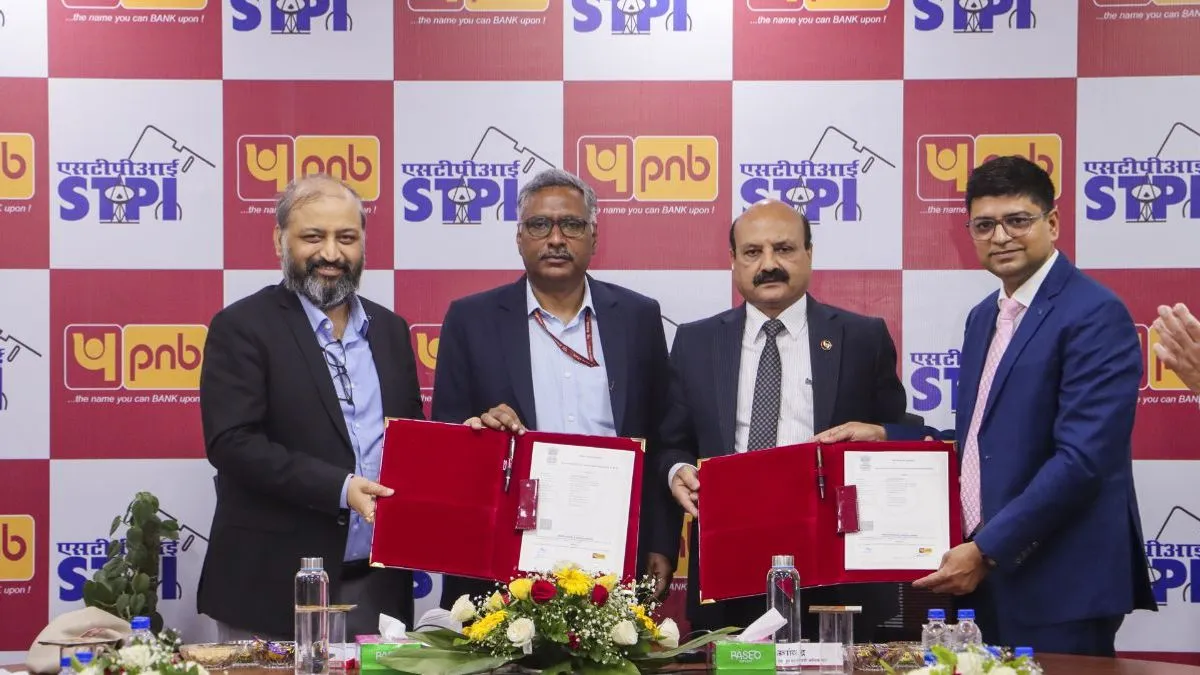 Punjab National Bank Launches New Branch For Startups In New Delhi
 -
 IPO GMP Today: Anlon Healthcare IPO Subscribed 2.42 Times, What Does GMP Indicate? Check Full Details
 -
 TCS Share Price Falls Nearly 2% After New AI Unit Announcement; Motilal Oswal Maintains 'Buy' on This IT Stock
 -
 What Is Vikram Solar Share Price Today After IPO Listing? Stock Debuts At 2.4% Premium | Full Details Inside
 -
 IPO GMP Today: Anlon Healthcare IPO To Open For Subscription Tomorrow: Should You Bet? Check Latest Info
 -
 Patel Retail IPO Allotment Date: What Does IPO GMP Signal Today? Step-By-Step Guide To Check Status
 -
 Vikram Solar IPO Allotment Today: How To Check Status? Know IPO GMP Today, Listing Details Here
 -
 Vikram Solar IPO GMP Today: Last Call For Investors! IPO Subscription Ends On Aug 21, Issue Booked Over 4.73x
 -
 Vikram Solar IPO GMP Slips on Day 2, Subscription Crosses 1.6x; Can It Shine on Listing Day?
 -
 Vikram Solar IPO Opens For Subscription Today: What Does GMP Indicate? Time To Subscribe? All You Need To Know
 -
 PG Electroplast Share Surges Nearly 12%, Nears 52-Week High; FMCG Index Climbs, What’s Driving The Sharp Rise?
 -
 Vodafone Idea Q1 Results: Net Loss Widens to Rs 6,608 Cr YoY, Revenue Rises 5%, ARPU Improves Slightly.
 -
 Regaal Resources IPO Subscription Reaches 2,562% On Day 2; Huge 31% Listing Gains Expected; Should You Invest?
 -
 Nykaa Q1 Results: FSN E-Commerce Sees 26% GMV Growth, 45 Million Customers as Q1 Profits Surge 79%
 -
 Mamaearth Q1 Results 2026: Honasa Consumer Net Profit Rises 2.5% YoY, Revenue Hits Record Rs 595 Cr
 -
 Zydus Lifesciences Q1 Results: Net Profit Rises 3.3% YoY to Rs 1,466.8 Cr; Shares Slip Despite Strong US Sales
 -
 LIC Share Price Jumps Nearly 5% After Q1 Results: Analysts Say It Could Jump Another 55%; Should You Buy Now?
 -
 Bigger Than NSDL? Knowledge Realty Trust IPO Subscribed 1.92x On Day 2; Check GMP, Listing Date, Other Info
 -
 PNB Housing Finance Shares Crash 16% on Heavy Selling After Surprise Resignation of MD & CEO Girish Kousgi
 -
 Jio Financial Services Board Meeting Today to Discuss Fundraising; Ambani Promoters May Increase Stake to 51%
 -
 NSE IPO 2026: OFS Window Opens, April 27 Deadline Key for Shareholders; Check Eligibility, Lock-in Rules
 -
 CMPDI IPO Lists at 7% Discount on NSE, BSE; Weak Demand Keeps Stock Under Pressure Despite Mild Recovery
 -
 CMPDI IPO Allotment Today: Did You Get Shares? Check Status Now on KFin, NSE, BSE
 -
 Powerica IPO Off to Slow Start: GMP Up 1.2%, But Subscription Stuck at 0.01x; Is It Worth Applying?
 -
 CMPDI IPO Underwhelms: Day 2 Subscription At 10%, No Movement In GMP; What's Behind The Weak Demand?
 -
 Upcoming IPOs Next Week: CMPDI, Sai Parenteral, Powerica, Vivid Electromech, More | Check Full List
 -
 XED Executive Development IPO: GIFT City Sees First IPO; Price Band, Issue Size | All You Need to Know
 -
 Skyways Air IPO vs CMPDI IPO: Full Comparison of Price Band, GMP, Lot Size, Listing & Allotment Date
 -
 Coal India's CMPDI IPO GMP Shows 11% Listing Gain Potential; Everything You Need To Know
 -
 Big Change in IPO Rules: Govt Updates Minimum Public Offer Norms for for IPO-bound Firms
-
Block for 8 hours
-
Block for 12 hours
-
Block for 24 hours
-
Don't block
Click it and Unblock the Notifications- Click on the Menu icon of the browser, it opens up a list of options.
- Click on the “Options ”, it opens up the settings page,
- Here click on the “Privacy & Security” options listed on the left hand side of the page.
- Scroll down the page to the “Permission” section .
- Here click on the “Settings” tab of the Notification option.
- A pop up will open with all listed sites, select the option “ALLOW“, for the respective site under the status head to allow the notification.
- Once the changes is done, click on the “Save Changes” option to save the changes.

 Sign in with Google
- Male
- Female
- Others
- Under 18
- 18 to 25
- 26 to 35
- 36 to 45
- 45 to 55
- 55+