

Gold prices had a spectacular run, but the yellow metal is suddenly finding the going tougher.
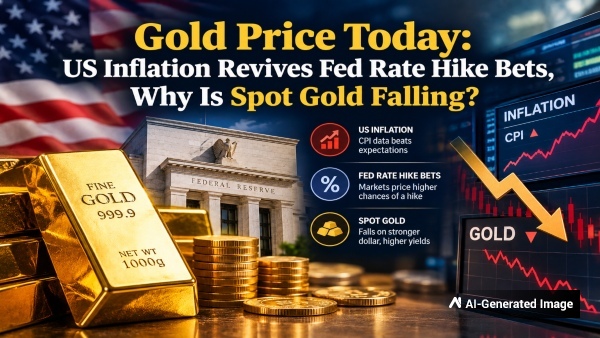
Bullion prices slipped again as hotter-than-expected US inflation revived expectations that the Federal Reserve could raise interest rates. Gold was trading around $4,340 an ounce, extending a period of weakness after the metal had already fallen for three consecutive weeks.
For Indian gold investors, however, the bigger question is simple: Is this just a temporary correction, or is gold's record-breaking rally finally losing steam?
The answer may depend largely on what the US Federal Reserve does next.
US inflation is changing the gold story
The latest US inflation numbers have made investors rethink their expectations for interest rates.
Core consumer inflation, which excludes food and energy prices, rose 0.3% month-on-month in August. The reading reinforced concerns that inflation is proving harder to bring down.
That matters for gold because the metal does not generate interest or dividends.
When interest rates and bond yields rise, investors have more incentive to hold interest-bearing assets. That increases the opportunity cost of holding gold and can put pressure on bullion prices.
Markets have therefore sharply increased their expectations of a Fed rate hike. The probability of a hike has moved significantly higher following the latest inflation data.
Oil is adding another problem
Gold is not fighting the inflation battle alone.
Crude oil prices have surged amid renewed geopolitical tensions in the Middle East and concerns about disruptions to global energy supplies.
Higher oil prices can feed directly into inflation by increasing transportation, manufacturing and other business costs.
That creates an uncomfortable situation for the Federal Reserve. If inflation remains sticky because of higher energy prices, the central bank may have less room to cut rates and could even consider tighter monetary policy.
That is bad news for gold in the short term.
Recent market moves show this relationship clearly: higher oil prices have strengthened expectations of tighter monetary policy, while gold has faced pressure.
So, is the gold rally over?
Not necessarily.
This is where the gold story becomes more complicated.
Gold has been supported by several powerful factors beyond interest-rate expectations. Geopolitical tensions, central-bank purchases, concerns over the global economy and demand for safe-haven assets continue to provide underlying support.
That means a Fed rate hike could hurt gold in the short term without necessarily ending its broader long-term uptrend.
Some analysts believe investors may already have priced in much of the expected Fed action. Attention could therefore shift towards what the US central bank says about future interest rates rather than the rate decision itself.
What does this mean for Indian gold buyers?
For Indian investors, there is another layer to the story - the rupee-dollar equation.
International gold prices are quoted in US dollars. Therefore, even if global gold prices remain under pressure, a weaker rupee can cushion the impact for Indian buyers.
This is why domestic gold prices do not always move exactly in line with international bullion prices.
For someone buying jewellery, coins or bars, the important point is that a short-term fall in international gold prices does not automatically mean a sharp fall in Indian retail gold rates.
And after gold's massive rally, volatility is likely to remain high.
/img/2026/09/shot-121451-e51b0d13a0a0-desktop.jpg)
What should gold investors watch now?
There are three things investors should keep an eye on.
First, the Federal Reserve. The upcoming policy decision and, more importantly, the Fed's guidance on future rates will be critical.
Second, US inflation. If inflation continues to remain sticky, expectations of higher rates could keep gold under pressure.
Third, crude oil and geopolitical tensions. A further spike in oil could increase inflation concerns, but prolonged geopolitical uncertainty could simultaneously increase demand for gold as a safe-haven asset.
That creates an unusual tug-of-war.
Higher rates are negative for gold, while geopolitical uncertainty and inflation fears can support it.
For now, gold is caught in the middle.
After years of being the ultimate safe haven, the yellow metal is entering a phase where investors may have to look beyond headlines about record prices. The next move could depend less on whether inflation is high and more on how central banks respond to it.
For Indian investors, that means gold may still have a place in a diversified portfolio - but after such a strong rally, volatility rather than a one-way rise could be the story from here.


 Click it and Unblock the Notifications

 Sign in with Google
