

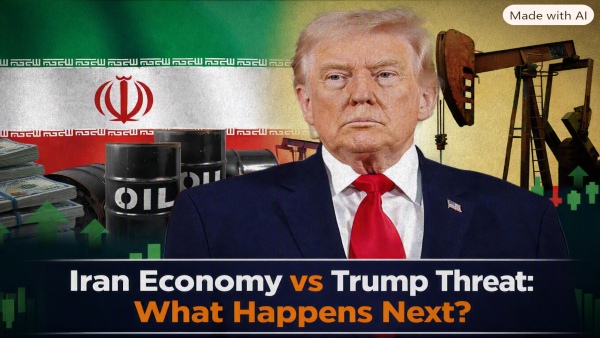
No, the war hasn't stopped. But it's an everyday story now, with US President Donald Trump threatening Iran with something or the other and Iran recalibrating its next move. At the same time, the economy is rising from the ashes of the devastation that started early this year.
Iran's economy has begun to bounce back after the war slump as businesses reopen, according to the head of the Iran Chamber of Commerce, Industries, Mines, and Agriculture, Samad Hassanzadeh. Official data from the Iran Chamber also signals a slight recovery led by business activities.
But Trump has warned that tougher economic measures could be on the way, promising to hit Iran with pressure "never seen before." Since the Iran war began in February, Washington has already stepped up maritime, energy, and financial sanctions while also imposing a naval blockade.
Recent US measures have widened the pressure on Iran, targeting its shadow oil fleet, shipping insurers, and individuals and entities accused of helping the country acquire weapons. Washington has also moved against digital exchanges, freezing an estimated $500 billion worth of Iran-linked cryptocurrency.
Oil Still Holds the Key to Iran's Economic Recovery
Crude oil prices climbed on Monday as hopes of a breakthrough in the US-Iran talks faded, while slower tanker movement through the Strait of Hormuz kept supply disruption risks firmly in focus.
The Strait of Hormuz remains a key trigger for oil prices, with markets closely watching whether tensions could disrupt crude supplies from the Gulf region.
Brent crude futures rose nearly 1% to $89.40 a barrel before easing to $89.20, up 72 cents, by 0229 GMT. US West Texas Intermediate (WTI) crude futures also gained 44 cents to $82.83 a barrel.
The Strait of Hormuz remains a major driver of oil prices as markets weigh the risk of disruptions to crude supplies from the Gulf region. Tensions have also intensified following US President Donald Trump's latest comments on the strategic waterway. Trump has suggested that the Strait of Hormuz could become US territory once the conflict with Iran comes to an end.
The bigger picture points more towards stabilisation than a full-fledged economic recovery. For Tehran, the key challenge now is to turn this tentative improvement into sustained growth. That will depend not just on reviving businesses and production at home, but also on Iran's ability to keep trade flowing, attract investment and maintain ties with international economic partners.
Iran's economy may be showing early signs of stabilisation, but with oil prices climbing, the Strait of Hormuz under pressure and Trump threatening tougher economic measures, Tehran's path to a sustained recovery remains far from certain.


 Click it and Unblock the Notifications

 Sign in with Google
