

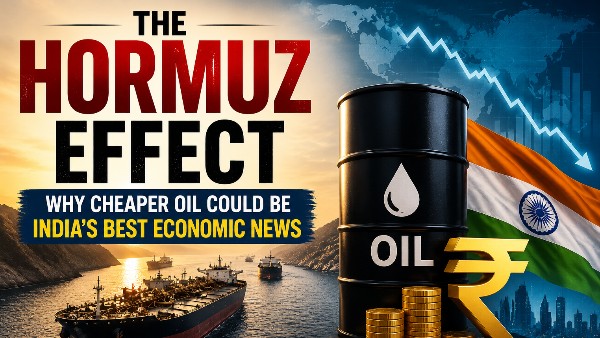
Crude oil just gave the Indian economy a rare piece of unambiguous good news. Brent crude slid to around $70.83 a barrel and WTI to $67.84, marking a four-month low, as fears of a Strait of Hormuz shutdown evaporated following progress in US-Iran talks hosted by Qatar. For a country that imports roughly 85% of its crude needs, that's not a minor data point - it's a direct line to the rupee, inflation, and household budgets.
The trigger: relief, not resolution
The rally in oil prices over the past month had been driven almost entirely by fear - that an Iran-US conflict could choke off the Strait of Hormuz, through which a fifth of the world's oil passes. With mediators now reporting genuine progress in Qatar, and shipping lanes reopening, that war-risk premium is unwinding. Brent had been trading near $72 just a day earlier and is now closing in on pre-conflict levels - though Tehran has said a final deal won't happen until hostilities in Lebanon end and frozen Iranian funds are released, so this relief remains conditional, not locked in.
/img/2026/07/shot-173105-4d4eec5cb14b-desktop.jpg)
Nayara blinks first - but PSU pumps haven't moved
The first visible sign of relief came from Nayara Energy, India's largest private fuel retailer, which cut petrol prices by ₹5 per litre and diesel by ₹3 per litre from July 1 across its roughly 7,000 stations - the first such cut by any Indian retailer in over two years. It's worth noting that this is largely a reversal of an earlier Nayara hike made when crude was expensive, not a fresh windfall passed on to consumers.
/img/2026/07/shot-173129-96e21f012401-desktop.jpg)
State-run OMCs - Indian Oil, BPCL and HPCL - haven't moved yet. Petrol and diesel prices have stayed flat since May 25, when PSU retailers raised petrol by ₹2.61/litre and diesel by ₹2.71/litre. As of today, Delhi pays ₹102.12 for petrol and ₹95.20 for diesel; Mumbai, ₹111.21 and ₹97.83; Bengaluru, ₹111.68; Hyderabad, ₹115.69 and ₹103.82; Chennai, ₹107.76; and Kolkata, ₹113.51.
Why "cheaper crude" doesn't always mean "cheaper petrol"
This is the real story for investors and households alike. When crude prices were high, the government pegged OMC under-recoveries at roughly ₹26 per litre on petrol and ₹81.90 per litre on diesel - losses the companies quietly absorbed rather than passing on in full. Now that crude has cooled, PSU OMCs may use the relief to repair those margins first, before any of it reaches the pump. That's actually a bullish signal for OMC stocks even if consumers see nothing change immediately.
One category has already moved, though: commercial LPG (19 kg) was cut to ₹2,930 from last month's record ₹3,113, and the 5 kg FTL cylinder dropped ₹13 to ₹808.50 - a real relief for restaurants, dhabas and small food businesses. Household LPG cylinders, however, remain untouched.
The Bigger Economic Payoff: Rupee and Rate Cuts
Where cheaper crude matters most is upstream of the pump. India's oil import bill shrinks directly with every dollar crude falls, which helps explain why the rupee is on track for its first monthly gain since February, trading near ₹94.40 to the dollar. A cheaper import bill also strengthens the case for the RBI to ease further at its next Monetary Policy Committee meeting on August 3-5 - the repo rate has held at 5.25% since June, and economists at Bank of Baroda and Elara Securities are already pencilling in additional cuts this year as inflation stays contained.
None of this is guaranteed to hold. Geopolitical relief can reverse as fast as it arrived, and a single flare-up in West Asia could send crude - and the rupee - right back where they started. For now, though, the direction of travel is genuinely positive: cheaper oil, a stronger rupee, room for rate cuts, and the first real fuel-price competition India has seen from a private retailer in two years.


 Click it and Unblock the Notifications

 Sign in with Google
