

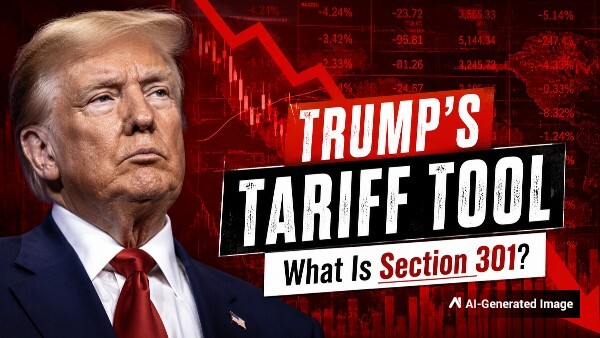
A new wave of tariffs from US President Donald Trump on more than 80 countries has dashed expectations that all will be well in the near future for the world economy and dampened investors' sentiment while global markets grapple with the impact of crude oil prices hovering around $100 per barrel, led by the devastating US-Iran war.
India, too, has been hit by a 10% tariff over concerns about forced labor usage in the production of goods that are imported to the United States. This comes one day before the additional 10% levy imposed on imports from all countries expires and is effective from Friday morning.
The range of tariffs differed between 10% and 12.5%, and although India falls under the lowest bracket, the stock market - Nifty 50 and Sensex fell, with the pharma sector taking the biggest hit, with companies like Dr. Reddy's Laboratories falling nearly 1%, and Sun Pharma dipping about 0.6% at around 2:30 pm IST.
The Indian market reaction was in line with the US stock market, where the Dow and S&P 500 closed in the red, with Alphabet and Tesla dropping steeply post-quarterly earnings. Nvidia, Meta, Amazon, and Oracle were also in the red.
Why Trump's Tariffs Matter to Investors and Stock Markets
There are broadly three reasons why tariffs impact stock markets.
Businesses around the world are all connected. With tariffs imposed on any country, operating costs increase, and it has a cascading effect on other countries on their imports and exports.
Inflation: The rise in prices of goods and services as businesses and corporations pass on the tax levied on them to the buyers, making a product more expensive, so there is a supply and demand gap, and with inflation rising, consumers take a direct hit.
Central bank policies: Most major central banks, including the Federal Reserve, have a policy mandate of inflation just below 2%, but with rising costs, the central banks are usually forced to decide on hiking interest rates. In India, the Reserve Bank of India has a target of 2-6%.
Investors usually track tariffs very closely. If businesses make less profit due to import taxes imposed on corporations, it impacts their balance sheet as well as income statement. Sentiments fall, and thus stock markets react.
What Is Section 301 of the US Trade Act?
Section 301 of the US Trade Act of 1974 is a law giving the US government the power to investigate foreign trade practices and apply taxes or penalties. It targets actions by other countries that break trade deals or hurt US business.
How it works: The Office of the United States Trade Representative (USTR) can start an investigation if there are complaints about US businesses.
The Objective: USTR, through talks and negotiations, tries to change any unfair rule that they think the other country is practicing.
Final Step: If the talks fail, the US imposes extra taxes on a particular country.
This isn't the first time Section 301 has been used. During his first term, Donald Trump, in 2018, imposed this on China.
More tariffs could be on the way. The Office of the US Trade Representative (USTR) is currently investigating whether 16 countries, which together account for nearly 70% of US imports, have been producing and exporting goods in such large quantities that prices are being pushed down, making it harder for American companies to compete. The investigation is still underway, and its findings could pave the way for additional tariffs.
Section 301 gives the US a powerful tool to challenge trade practices it considers unfair—from investigations to potential tariffs.


 Click it and Unblock the Notifications

 Sign in with Google