



 Click it and Unblock the Notifications

17% Or 25%: How Much Tariff Is Trump Imposing On India? Here's What You Need To Know!

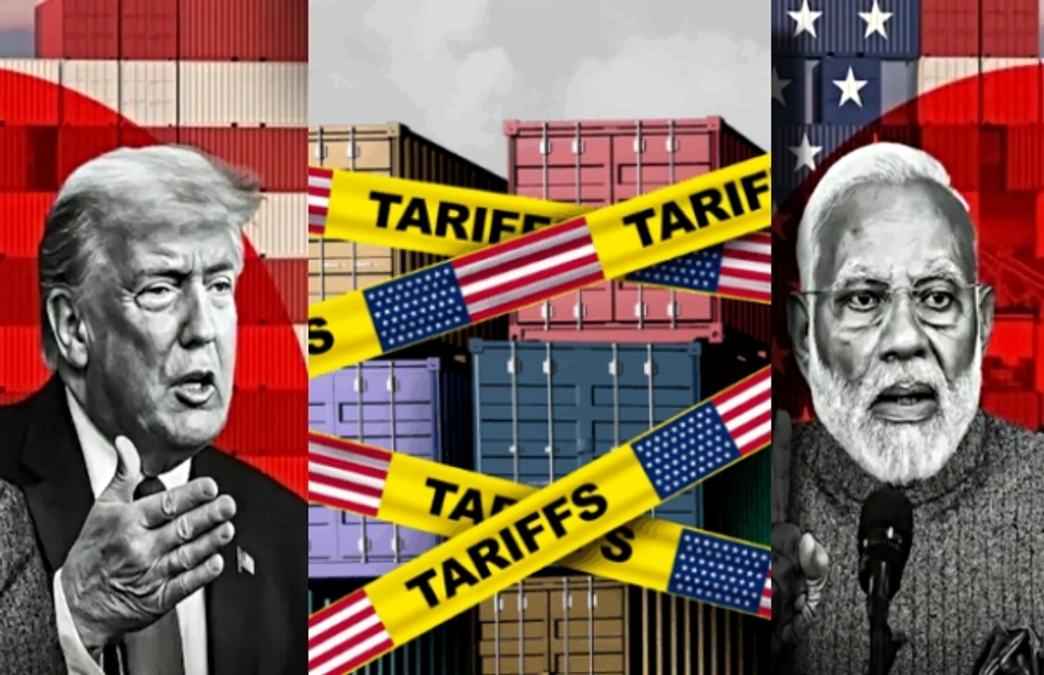
US President Donald Trump and his administration are back with yet another barrage of tariff threats. This time, at least 14 economies, including India, China, and several countries in the European Union, may see the impact. On November 25, the United States Trade Representative (USTR) proposed new duties under Section 301 of the Trade Act of 1974, citing acts, policies, and practices. India is facing a 17% tariff threat if a trade deal is reached to Trump's liking.
"For decades, many of our trading partners have adopted industrial strategies built on targeting manufacturing, wage and labor suppression, financial and other support, non-market economy inputs, and other market-distorting practices that tilt the trade balance in their favor while eroding America's manufacturing base," said USTR Ambassador Jamieson Greer.
Greer added, "In recognition of this, since 2016, leaders ranging from Donald Trump, to Joe Biden, to Xi Jinping, to Emmanuel Macron have recognized the threat that structural excess capacity and production pose for the global economy. But where successive statements at the G7, G20, WTO and other fora have not resulted in change, President Trump is proposing to take action to bring about the elimination of these unfair acts, policies, and practices."
In doing so, Greer believes the USA can level the playing field for American workers and chart a new, more sustainable course for the world economy.
The USTR argues that these 14 economies have certain acts, policies, and practices that create, sustain, or contribute to structural excess capacity and production and are unreasonable, and burden or restrict U.S. commerce.
US Imposed New Tariffs On India
In the case of India, the USTR determines that the country's unreasonable acts, policies, and practices include (1) industrial plans to expand manufacturing; (2) inadequate labor protections; (3) financial repression policies; (4) sustained market access barriers; and (5) failure to address global excess capacity and production, including through imports and foreign direct investment from non-market economies.
The Trump administration believes that India's policies are unreasonable because they: (1) target exports and export-led growth; (2) distort fair, market-oriented competition; (3) fail to commensurately promote domestic demand and consumption; and (4) undermine the welfare of its workers and the public, thereby negatively impacting U.S. workers.
Accordingly, these acts, policies, and practices burden or restrict U.S. commerce by (1) reducing commercial opportunities for U.S. producers and exporters in India and third-country markets; (2) harming the U.S. economy by contributing to lost production, exports, jobs, and investment in the U.S. manufacturing sector; and (3) increasing U.S. economic security risks, including through reliance on NME inputs.
The report added that the case is especially true in sectors like health (pharmaceuticals and medical devices), steel, solar, and information and communications technology (ICT).
Thereby, the USTR has recommended 17% additional tariffs if a trade deal is reached with the USA. The additional tariff could rise to 25% if a deal is not reached.
Since the Trump administration took power in the White House in 2024, it has declared and imposed a slew of tariffs on India. Last year, Washington imposed a reciprocal tariff of 25% on India in April, which came into effect in August. Later, an extra 25% tariff was levied on India due to its purchase of oil and gas from Russia, which the USA opposed. By late 2025, India was paying 50% tariffs for US products.
In February this year, Trump and India's Prime Minister Narendra Modi reached an interim trade agreement, which reduced the Russian oil purchase penalty to an 18% tariff rate on India.
In return, India agreed to eliminate or reduce tariffs on all U.S. industrial goods and a wide range of U.S. food and agricultural products, including dried distillers' grains (DDGs), red sorghum for animal feed, tree nuts, fresh and processed fruit, soybean oil, wine and spirits, and additional products. Further, India agreed to purchase $500 billion of U.S. energy products, aircraft and aircraft parts, precious metals, technology products, and coking coal over the next 5 years.
However, just before going to war with Iran, Trump's bucket of tariffs hit a roadblock due to judicial scrutiny. On February 20, 2026, the US Supreme Court ruled that the International Emergency Economic Powers Act (IEEPA) does not authorize the President to impose tariffs.
Sulking, Trump had to agree to the court ruling that nullified the reciprocal tariff. However, USTR imposed a temporary 10% global tariff under Section 122 of the Trade Act of 1974 for a period of 150 days, which expired in July. Eventually, a 10% tariff came into effect under Section 301.
Section 301 of the United States is intended to respond to unjustifiable, unreasonable, or discriminatory foreign government acts, policies, or practices that burden or restrict U.S. commerce. In July, the USTR recommended 10% and 12.5% tariffs on investigated economies. India was placed in the 10% bracket.
Here's a breakdown of the exact tariffs India faces from the USA.
| Tariff measure | Rate | Status |
|---|---|---|
| Section 122 global tariff | 10% | Temporary measure, expired in July |
| Section 301 - forced-labour investigation | 10% | Final action announced July 23 |
| Section 301 - industrial overcapacity investigation | Up to 25% | Latest proposed rate |
| Proposed rate after India-US trade deal | 17% | Conditional on formal agreement |
The latest Section 301 rule is imposing up to 25% additional tariffs, which reportedly should not be added to the 10% tariffs due to the forced labor duty. If India and the USA could reach a new agreement, the tariff could fall to 17%.

 Sign in with Google