



 Click it and Unblock the Notifications

26/11 Mumbai Attacks: 18 Years On, How Much Did The Terror Attack Impact India's Economy?

Eighteen years have passed since the 26/11 Mumbai terror attacks and it was one of the darkest chapters in the history of India.
On November 26, 2008, ten terrorists entered Mumbai and started attacks that went on for almost four days. The attacks killed 166 people, injured more than 300 and was a huge shock on the country.
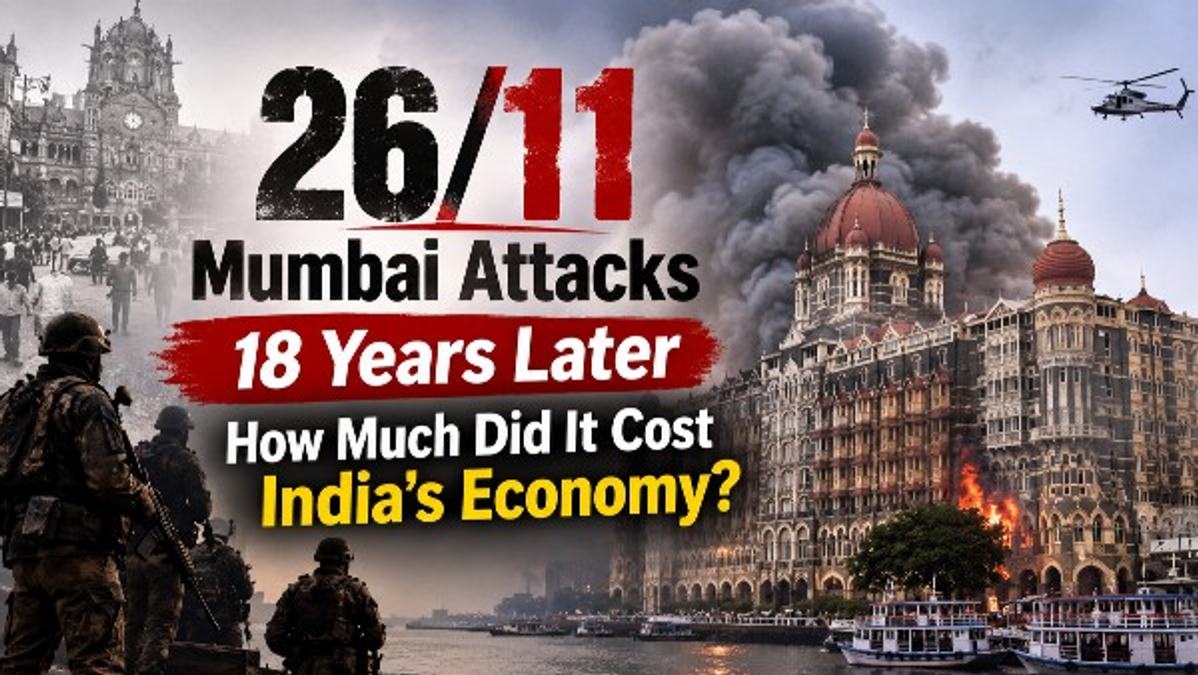
Along with the loss of many precious human lives attacks also had a major impact on the economy. Hotels, tourism businesses, airlines and insurance companies faced losses, while businesses in Mumbai were forced to shut down. So, what exactly did 26/11 cost the Indian economy? Lets find out:
Sensex recovered quickly after the attacks
One of the biggest concerns immediately after the attacks was their impact on India's stock market.
The BSE Sensex closed at around 9,026 on November 26, 2008, before the attacks began. When trading resumed on November 28, the index opened 1.52% lower at 8,898. However, it recovered during the day and ended the session 0.73% higher at 9,092.
It should also be noted the stock market in India was already under pressure because of the global financial crisis. Foreign institutional investors had withdrawn around $13.5 billion from Indian markets since the beginning of 2008, and the Sensex had fallen sharply from its earlier peak of around 21,000.
Hotels and tourism businesses suffered big losses
The sectors which were affected the most were the hospitality and tourism industries because two of Mumbai's most famous hotels, the Taj Mahal Palace and the Oberoi-Trident, were directly targeted.
The attacks damaged these properties and they were shut down for repairs and restoration. Post the attack a lot of foreign tourist cancelled their India travel plans.
Hotels in major tourist destinations reported around 25% decline in occupancy. Airlines, insurance companies and hospitality businesses also faced financial pressure, Mumbai's total city's revenue loss was around Rs 4,000 crore as per reports.
Impact to Insurance companies
The attacks also ended up with people going for insurance claims. Hotels and other affected properties had to look for compensation for damage and business losses.
According to estimates by the Insurance Regulatory and Development Authority (IRDA), the losses to the terrorism insurance pool were around Rs 500 crore.
The Taj Mahal Palace Hotel reportedly received around Rs 180 crore in insurance compensation for restoration costs.
Then Finance Minister P Chidambaram said that the incident would have a negative short-term impact on the economy but he was confident that India would recover.
The long-term cost
One of the biggest long-term effects of 26/11 was the change it brought to India's security system.
The 26/11 attacks exposed huge gaps in intelligence coastal security and the country's ability to respond quickly to a terrorist attack
After the incident, the government established the National Investigation Agency (NIA) to investigate terrorism-related cases. For coastal surveillance, more National Security Guard (NSG) units were deployed in major cities.
Eighteen years later, Mumbai is still flourishing and the country's economy has grown manifold since 2008. But back then the 26/11 attacks did hurt some sectors. However, the crores of financial losses were eventually recovered but the lives lost, families affected will have the scar for the rest of their lives.

 Sign in with Google