



 Click it and Unblock the Notifications

PM Modi's Tough Message To India Inc: Why Have Tax Cuts Not Led To Better Wages

Prime Minister Narendra Modi has put India Inc on notice over a politically sensitive question: whether lower corporate taxes have translated into better wages, more jobs and larger investments. Speaking at the Ficci annual general meeting during its centenary celebrations, he said industry had benefited from major tax relief since 2014, but had not done enough to share the gains with employees.
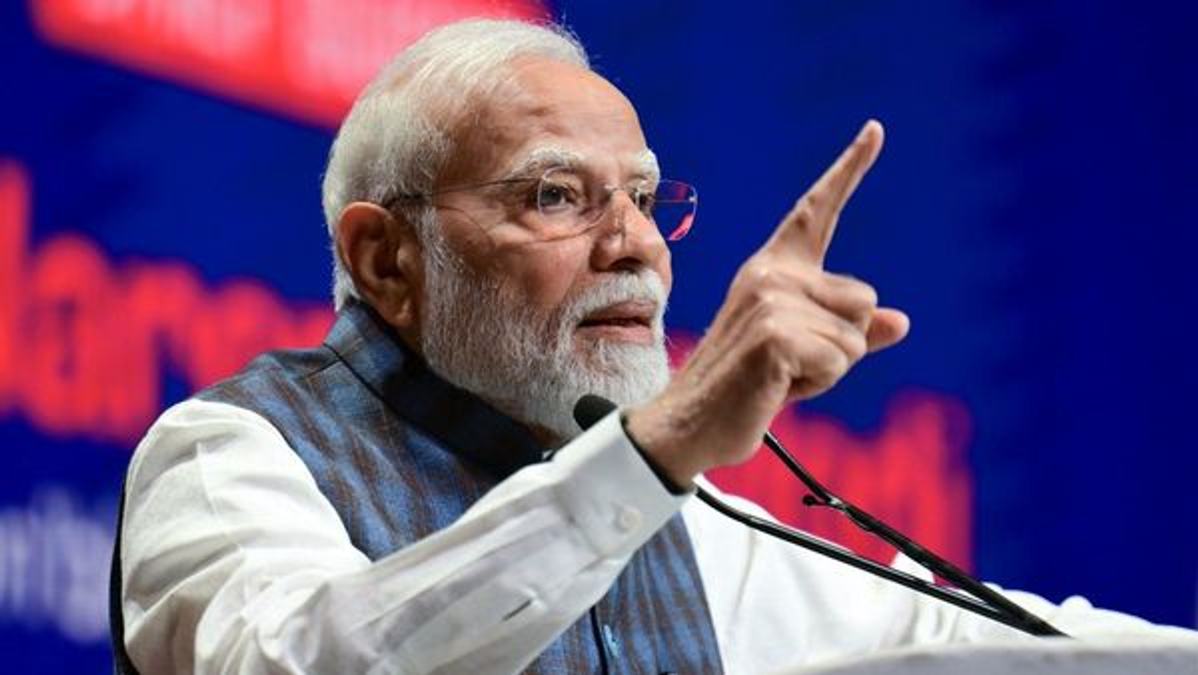
The remarks matter because they come ahead of the Union Budget, when industry bodies usually seek fresh tax incentives, lower compliance costs and sector-specific support. Modi’s message was unusually direct. He linked corporate tax cuts, personal income tax relief and GST rationalisation to a broader push for consumption, investment and domestic manufacturing.
Corporate tax cuts under scrutiny
Modi said the basic corporate tax rate stood at 30% in 2014 and had since been reduced to 22%. The reduction was one of the Centre’s biggest tax policy moves, aimed at improving India’s competitiveness, encouraging private investment and leaving companies with more retained earnings for expansion.
“In 2014, the basic corporate tax rate was 30%. We reduced it to 22%. Today, there is no income tax on earnings up to Rs 12 lakh in India. I know you will not clap, because however much one gives, your appetite never seems to be satisfied,” Modi said, addressing business leaders at the Ficci AGM.
He then questioned whether companies had used the savings to reward workers or create fresh employment. “I have exempted income up to Rs 12 lakh from tax. Did you increase the salaries of your employees? Did you increase the number of employees? No. The attitude remains: 'Modiji, you do it, we will see’,” he said.
The comments reflect a wider policy concern inside government. India has used tax cuts, infrastructure spending, production-linked incentives and GST reforms to support private enterprise. But private capital expenditure has recovered unevenly, while formal job creation and wage growth remain central to the political economy debate.
Why the 22% rate became important
The headline corporate tax rate was sharply lowered in 2019, when domestic companies were offered a 22% rate, provided they did not claim certain exemptions and incentives. New manufacturing companies were offered an even lower concessional rate for a specified period, as the government tried to make India more attractive for factories and supply chains.
For companies, lower tax outgo improves post-tax profits and cash flow. In theory, that money can be used for capital expenditure, research, debt reduction, dividends, wage hikes or hiring. The Prime Minister’s criticism suggests the government now wants a clearer link between tax relief and broader economic outcomes.
Industry, however, has argued that business decisions also depend on demand, input costs, financing conditions and global uncertainty. Several sectors continue to cite margin pressure, volatile commodity prices and cautious consumer spending. At the same time, signs of a pick-up in investment have strengthened the government’s expectation that companies should move faster.
Consumption, GST and the Budget signal
Modi also pointed to relief for individual taxpayers and faster income-tax refunds, saying these measures had put more money in the hands of households. He said reductions in GST rates had helped support consumption by lowering the tax burden on consumers and businesses.
This argument is significant for Budget expectations. If the government believes it has already delivered substantial tax relief to individuals and companies, it may push industry to focus less on concessions and more on investment, employment and productivity. Business groups, meanwhile, are expected to continue seeking measures to reduce costs and improve demand.
The Prime Minister did not reject reform demands. Instead, he invited industry leaders to send proposals directly and said the current government should not be judged by their experience with earlier administrations. “Without hesitation and without inhibition, write to me openly and tell me what reforms are still needed,” he said.
India First message for business
A large part of Modi’s speech focused on domestic manufacturing and strategic self-reliance. He urged companies to think beyond short-term comfort zones and align long-term investment decisions with national priorities. He said every major investment decision over the next 20 years should have “India First” as its foundation.
The Prime Minister connected this message to global trade disruptions and the “weaponisation of resources”. His point was that supply chains for key inputs, raw materials and technologies can no longer be treated as purely commercial issues. For the government, they are now linked to economic security and national resilience.
Pharmaceuticals featured prominently in this argument. Modi noted that India is known as the “pharmacy of the world”, but still imports active pharmaceutical ingredients, bulk drugs and intermediates worth billions of dollars every year. He said the industry must identify which ingredients can be produced within India, building on its strength in finished medicines.
He also mentioned sectors such as steel and aluminium, and urged businesses to seize opportunities created by trade agreements. The message combined two strands of the government’s economic strategy: greater integration with global markets, and deeper domestic capability in sectors seen as strategically important.
Modi’s intervention puts added pressure on corporate India before the Budget. The Centre has lowered the headline corporate tax rate, reduced personal tax burdens and pushed GST reforms. The next question, as framed by the Prime Minister, is whether companies will respond with stronger hiring, better pay and investment decisions that support India’s long-term economic goals.

 Sign in with Google