



 Click it and Unblock the Notifications

US Stock Market Eyes FOMC Meet From Oct 27-28: Rate Hike Or Not; How Fed Rates To Impact DJIA, S&P 500, Nasdaq

The US stock market started the week on a healthy note as focus shifted towards the FOMC meeting from October 27 to October 28. The US stock futures edged higher on Tuesday, signalling a pause from the US Federal Reserve in their rates. However, a rate hike is warranted after the October policy. In fact, global brokerages are predicting at least 3 rate hikes from the Fed in the next 12 months but also believe that the US economy is resilient to bear elevated rates for the longer term. Amidst this, how will US Fed policy impact the Dow Jones, Nasdaq, and S&P 500 ahead?
Dow Jones + Nasdaq + S&P 500
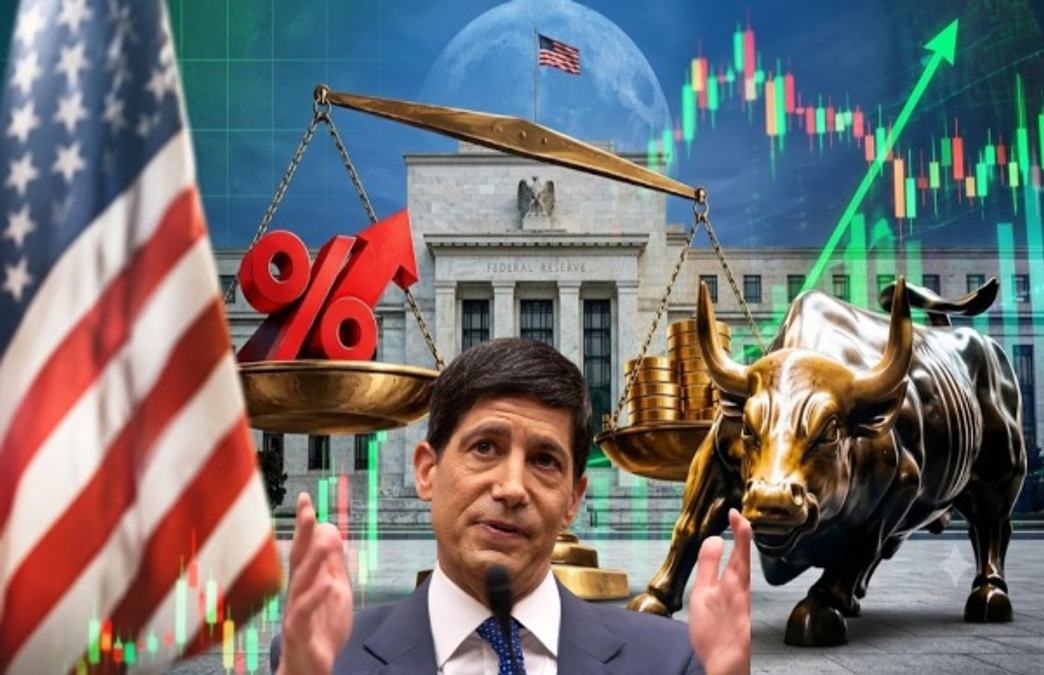
Wall Street kicked off the week positively, with Dow Jones ending at 52,361.58, higher by 146.42 points, or 0.3%. While the Nasdaq Composite surged by 214.04 points or 0.82% to close at 26,169.38, outperforming other counterparts. Also, S&P 500 index gained by 53.09 points or 0.70% to end at 7,676.77.
Key factors that drove the bulls overnight are Anthropic's initial public offering (IPO) that boosted buying in tech stocks. Stocks like Tesla soared over 5%, Nvidia gained 2%, while Microsoft and Amazon also rallied significantly. The uptrend emerged despite concerns of heavy borrowing for AI infrastructure push.
On Tuesday, investors will focus on major earnings like Coca-Cola, Robinhood and Boeing, while awaiting Microsoft, Alphabet and Amazon earnings later in the week.
The Fed is widely expected to leave interest rates unchanged, but investors will watch its policy decision and guidance for clues on the possibility of another rate move before year-end. Durable goods orders, consumer confidence and new home sales are also due, as per Trading Economics.
Ahead of the FOMC meeting, the Dow Jones futures traded higher by 102 points or 0.2% to 52,652 in the early hours of Tuesday. The Nasdaq 100 futures gained 31 points to trade at 29,468.25, while S&P 500 futures are marginally up by 8.75 points to trade at 7,722.75.
The Federal Open Market Committee (FOMC) will begin its 2-day policy meeting on October 27 and will announce its outcome on October 28, 2026. As per UBS, futures market pricing implies that policymakers will keep interest rates on hold at this meeting but raise them again in December.
Will US Fed Hike Rates On October 28?
In the September 2026 policy, Fed chair Kevin Warsh hiked federal fund rates by 25 basis points for the first time in 3 years to 3.75% to 4%. The reason was the elevated inflation which continues to linger due to Iran conflict that has sparked energy crisis. All 19 policymakers of Fed voted for a hike.
That time, Warsh said, "The plain fact is that inflation is too high and has been for too long." He reiterated that the FOMC's predominant focus is on the price stability side of their mandate.
Recently, in IMF Bangkok meeting, Warsh said, "I don't prejudge meetings. I don't believe in saying now what I might do at the meetings that we have in the balance of this year."
Since the last policy meeting, US CPI inflation has surged to 3.7% in September 2026, while annual core inflation rates climbed to 2.6%. This is very high from Fed's consumer price index target of 2%.
Also, the 10-year US Treasury yield rose to 5.36% in early October, its highest intraday level since 2002, though it has since moderated to around 5%.
Despite the above, Fed is expected to keep rates unchanged. UBS in its note said, "Strong US economic data and higher energy costs pushed Treasury yields to multi-decade highs and raised concerns about an extended tightening cycle from the Federal Reserve."
Accordingly, UBS expects rate hikes by 25 basis points in December 2026 and March 2027 and believe resilient economic growth and robust corporate earnings should help US equities withstand moderate policy tightening. Higher starting yields are also creating opportunities to add portfolio income.
Overall, the market has priced in at least 3 rate hikes from the Fed over the next 12 months but after October 2026 policy.
How Fed Rates Will Impact US Stock Market?
UBS has forecasted S&P 500 earnings growth of 25% in 2026 and 14% in 2027, which should help equities absorb moderately higher yields while US economic growth remains firm.
While they recommend positioning for further equity gains while diversifying across regions, sectors, and return drivers and managing concentrated single-stock exposure.
Also, the brokerage's note added that, "We rate fixed income as Attractive and see opportunities to add portfolio income through medium- to long-duration high-quality bonds and medium-maturity credit from stronger investment grade issuers."
Overall, UBS does not expect measured Fed tightening to derail the equity rally and think higher yields create opportunities to strengthen portfolio income and diversification.
Their note added, "Investors should maintain diversified equity exposure and use the rise in yields to add selectively to quality bonds, while remaining cautious on the longest maturities and lower-quality credit."
Either rate hike or not, strong activity data this year have increased confidence that the US economy can absorb a longer period of elevated rates.
Disclaimer: The views and recommendations expressed are solely those of the individual analysts or entities and do not reflect the views of Goodreturns.in or Greynium Information Technologies Private Limited (together referred as "we"). We do not guarantee, endorse or take responsibility for the accuracy, completeness or reliability of any content, nor do we provide any investment advice or solicit the purchase or sale of securities. All information is provided for informational and educational purposes only and should be independently verified from licensed financial advisors before making any investment decisions.

 Sign in with Google