

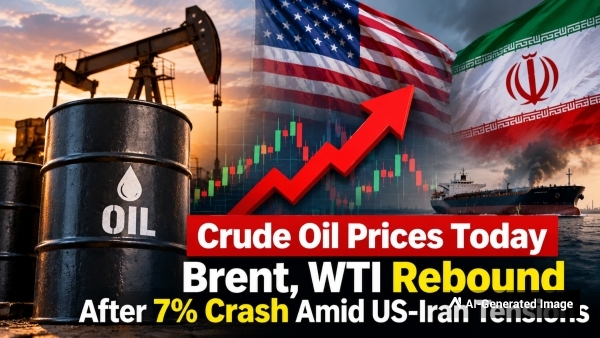
Crude oil prices recovered in early Asian trading on November 3 after suffering a sharp decline in the previous session, as reports of a US military strike on Iran's Qeshm Island renewed concerns over the escalating conflict in the Middle East and the security of global oil supplies.
Brent crude futures rose 48 cents, or 0.5%, to $105.25 per barrel by 0104 GMT. US West Texas Intermediate (WTI) crude also gained 47 cents, or 0.5%, to trade at $96.93 per barrel.
The recovery came after Brent crude witnessed a steep 7.63% decline on Monday, shedding $8.66 to settle at $104.77 per barrel. The sharp fall had eased some of the geopolitical risk premium that had pushed oil prices higher in recent weeks.
However, reports of fresh military action involving the US and Iran brought concerns over potential supply disruptions back into focus.
US Strike On Iran's Qeshm Island Raises Supply Concerns
According to a report by The Wall Street Journal, the United States struck Iran's Qeshm Island, citing US officials familiar with the matter. Some officials reportedly described the strikes as defensive operations aimed at preventing Iran from using the island to threaten commercial shipping in the Strait of Hormuz.
The development has added another layer of uncertainty to an already tense situation in the Middle East.
The Strait of Hormuz is among the world's most important oil transit routes. Before the conflict, approximately one-fifth of global crude oil and natural gas supplies passed through this narrow waterway.
The ongoing US-Iran conflict, which began in late February, has significantly reduced shipping traffic through the strait. Any further disruption to commercial vessels or energy shipments through the route remains a major concern for oil markets.
Tim Waterer, chief market analyst at KCM Trade, said the reports of fresh military activity had brought some of the geopolitical risk premium back into oil prices.
He noted that markets had started factoring in the possibility of a diplomatic resolution, but the latest developments had changed the immediate sentiment.
Iran-US Peace Talks Continue Amid Military Tensions
The latest reports of military action come at a time when diplomatic efforts to end the conflict are still underway.
Tehran said on Monday that communication between Iran and the United States to end the war was continuing. This followed discussions involving Iranian representatives and Qatari mediators, although the talks ended without a breakthrough.
US President Donald Trump also raised questions about whether Washington would resume the threatened military strikes against Iran. He indicated that a possible agreement with Tehran remained an option.
Iranian President Masoud Pezeshkian said Supreme Leader Ayatollah Mojtaba Khamenei had granted the government certain powers to pursue peace negotiations.
The mixed signals from Washington and Tehran have left oil traders assessing two competing developments: the possibility of diplomatic progress and the risk of further military escalation.
Why The Strait Of Hormuz Matters For Global Oil Prices
The Strait of Hormuz plays a critical role in the global energy trade, connecting major oil-producing countries in the Middle East with international markets.
A significant share of crude oil exports from the region moves through this route to buyers across Asia and other parts of the world. Countries dependent on energy imports are particularly sensitive to any disruption in shipments.
For oil markets, the concern is not limited to actual supply losses. Even the threat of shipping restrictions, attacks on commercial vessels or military action around the waterway can influence crude oil prices.
This geopolitical risk premium has been an important factor behind the rise in Brent crude prices in recent months.
Brent crude also ended October at its highest level in six months, reflecting concerns that the Middle East conflict could intensify following the US midterm elections scheduled for November 3.
The latest rebound in crude oil prices highlights how quickly market sentiment can change when developments in the Middle East affect expectations around energy supplies.
For traders, the focus remains on developments involving the US and Iran, the progress of diplomatic negotiations and the movement of commercial vessels through the Strait of Hormuz.


 Click it and Unblock the Notifications


 Sign in with Google