



 Click it and Unblock the Notifications

AI Stock Selloff and Regulatory Scrutiny Drive U.S. Market Volatility

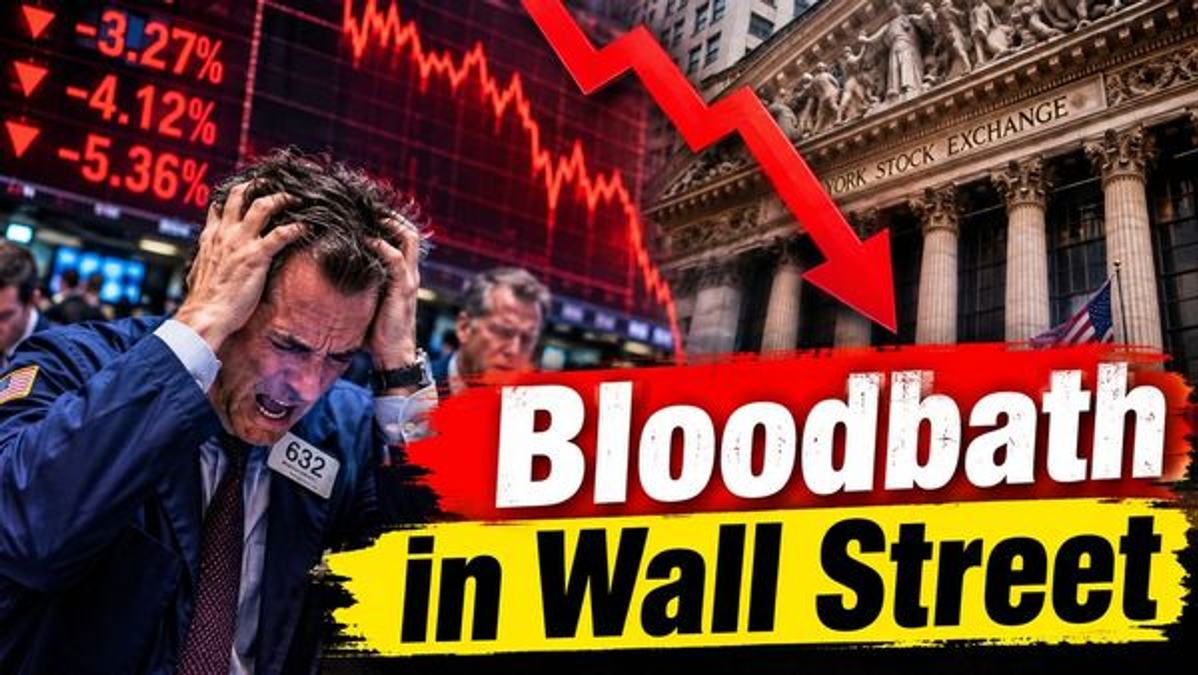
US stocks fell hard on Thursday in a wide sell-off. Technology shares led the drop as doubts grew over the AI trade. About $2.5 trillion in market value was wiped out in one session. The Nasdaq Composite slid into correction territory, showing a sharp change in mood around high-growth firms.
The Nasdaq Composite dropped 5.5%, the biggest one-day fall in 18 months. It also moved 10% below its latest record high. The S&P 500 posted its worst single-day fall since April 2025. The Dow Jones Industrial Average sank 1,833 points, or 3.4%, ending at 51,868.
The sharpest pressure sat in AI-linked market leaders and suppliers. Nvidia fell 9.3% after earlier being the world’s largest company by value. The decline pushed Nvidia shares into negative territory for the year. The move marked a sudden shift for a key Wall Street AI name.
Other hardware and storage names also slid steeply. SanDisk plunged 22%, and Western Digital fell 17%. The scale of losses suggested more than routine profit-taking. Investors appeared to reassess demand tied to data centres and cloud spending. Heavy AI capacity investment also came under closer review.
The selloff fed worries about how quickly AI spending can pay back. Some investors questioned whether high valuations matched near-term returns. Even small hints of slower data centre expansion can hurt sentiment. That can hit chipmakers, memory firms, power equipment groups, and infrastructure names at once.
The selling did not stay limited to technology. All 11 sectors in the S&P 500 ended lower, showing broader de-risking. Seven sectors fell by at least 2%. This pattern suggested fund managers reduced exposure across industries. It was not just a narrow move against AI shares.
Several Dow components posted large declines. Caterpillar fell 6.4%, and JPMorgan Chase dropped 4.2%. UnitedHealth and 3M each lost more than 3%. Losses across financials, industrials, and healthcare pointed to wider concern. Investors weighed uncertainty around growth, policy, and valuations.
Key market moves from Thursday are shown below.
| Asset / Index | Move | Extra detail | Nasdaq Composite | -5.5% | Down 10% from recent record high |
|---|---|---|
| S&P 500 | Worst day since April 2025 | All 11 sectors ended lower |
| Dow Jones Industrial Average | -1,833 points (-3.4%) | Closed at 51,868 |
| Nvidia | -9.3% | Shares moved into negative territory for the year |
| SanDisk | -22% | Heavy selling in storage names |
| Western Digital | -17% | Weakness linked to AI infrastructure demand |
| VIX | +61% | Highest level since early weeks of the Iran war |
Wall Street’s volatility gauge, the VIX, jumped 61% to its highest level since the early weeks of the Iran war. The VIX is often described as the market’s fear index. It tracks expected volatility in the S&P 500. A sharp rise often signals stronger demand for protection.
As equities sank, money moved into safer assets. US government bonds drew stronger buying interest during the stress. The benchmark 10-year Treasury yield fell to its lowest level since September 9. Yields move opposite to prices. So the yield drop matched rising demand for Treasuries.
AI stock selloff adds political and regulatory focus
US President Donald Trump linked the fall to the midterm elections. Democrats secured a strong victory and took control of Congress. The comments added politics to an already volatile session. Markets can react to election outcomes when investors expect changes in tax, spending, or oversight.
"The Stock Market suffered one of the Worst Days in History based on the results of the Election. Such a sad thing to watch! It took so much work to get us to a level that no one has ever seen before, and then this," Trump wrote. "Your 401(k)s have, therefore, dropped. Remember, it wasn't Republicans, it was Dumocrats. Do not fear, however, we will soon, one way or the other, be BIGGER AND STRONGER THAN EVER BEFORE."
In another post, Trump wrote, "The Stock Market crashed today because the Dumocrats had a big TuesdaySo sad to see, you only have yourselves to blame!" Alongside politics, investors watched the likely stance on large technology and AI firms. Concern about tougher scrutiny added to the day’s pressure.
For markets, a central question is how the vote changes the rulebook for technology. Artificial intelligence sits at the core of market leadership. It also raises issues around competition and data usage. Investors also track energy demand, national security, and job disruption. Tougher rules can alter valuation assumptions.
The shock spread quickly beyond the US. In early Friday trade, Japan’s Nikkei fell 6%. South Korea’s Kospi dropped more than 8%. Many Asian markets are tied to the AI and semiconductor cycle. Several regional firms supply chips, memory, displays, and components to global technology companies.
Indian investors tracked the knock-on effects through technology shares and export-driven firms. Global funds and overall risk appetite also mattered. A sharp US correction can lead to caution across emerging markets. Foreign investors may cut risk assets during such periods. Domestic earnings and the rupee’s movement also shaped reactions.
The drop did not, by itself, signal the end of the AI investment cycle. Still, the move showed markets were becoming less forgiving on pricing. Investors were likely to watch cash flows and spending discipline more closely. Regulatory risk and realistic timelines for AI returns also gained attention. These factors kept volatility elevated across global equities.

 Sign in with Google