



 Click it and Unblock the Notifications

Asset Allocation Essentials: Stocks, Mutual Funds, Fixed Deposits and Gold Risk Cautions

Indian investors often split money across stocks, mutual funds, fixed deposits and gold. This is rarely a single-choice decision. The mix usually depends on goals, cash needs, and comfort with losses. Each option reacts differently to inflation, rupee moves, and market stress. Matching products to timelines can reduce forced decisions during volatility.
Returns can shift due to factors outside an investor’s control. Shares may build wealth over years, yet fall sharply within weeks. Fixed deposits offer known payouts, which helps budgeting. Gold may rise when inflation increases or the rupee weakens. Yet gold does not pay interest, unlike deposits and many bonds.
The options below often serve different uses in personal finance. Actual outcomes can vary with taxes, product terms, and market conditions. Many portfolios blend growth assets with steadier choices. This approach reduces dependence on any single product for every goal and time period.
| Asset | Main role | Typical risk | Best suited time horizon | Key limitation | Stocks | Long-term wealth growth | High volatility | 5–7 years or more | Can deliver multi-month or multi-year losses |
|---|---|---|---|---|
| Mutual funds | Diversified market exposure | Varies by category | Depends on fund type | Returns depend on rates, credit, and strategy |
| Fixed deposits | Capital safety and certainty | Low | Short term to medium term | Post-tax returns may lag inflation |
| Gold | Diversification and hedge | Moderate price swings | Support allocation, not primary | No income like dividends or interest |
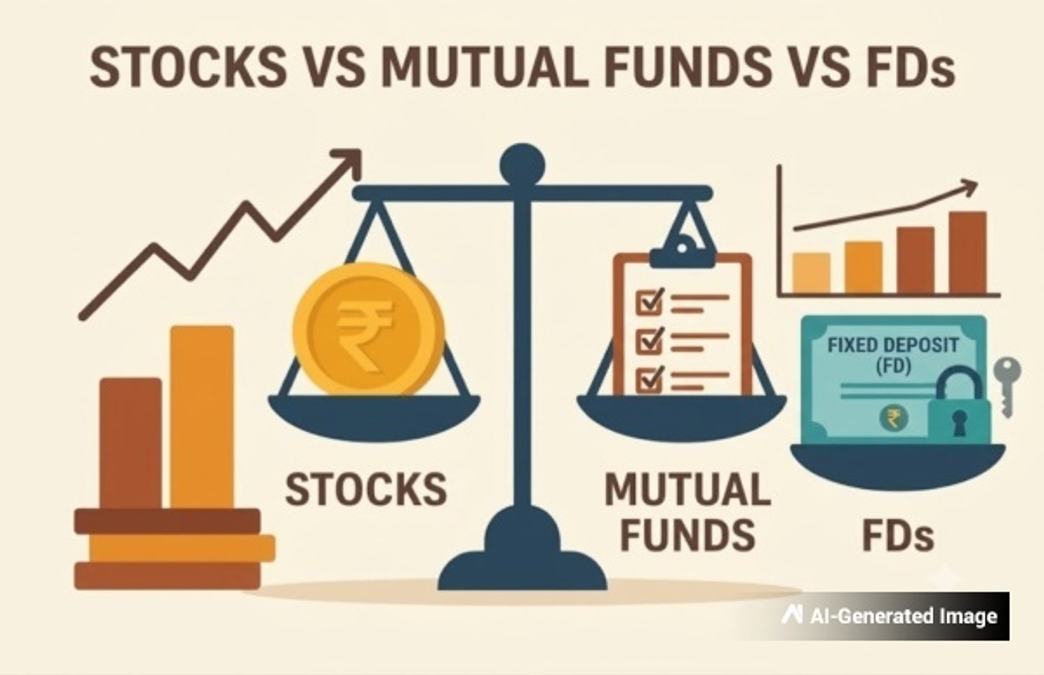
A practical starting point is linking money to the date it is needed. For goals within three years, capital protection often leads. FDs, liquid funds, or short-duration debt options may fit. For goals beyond five years, equity mutual funds or selected shares may take a larger share.
Time horizon also shapes the risk of selling at the wrong time. Money needed within one or two years faces timing risk. A sudden fall can force a sale at a loss. Longer holding periods can absorb drawdowns better. This suits many retirement plans and higher education goals.
Stocks, mutual funds, fixed deposits and gold: risk appetite and product cautions
Risk tolerance needs a realistic check, not a hopeful one. Confidence can rise during strong markets. The real test is a 20% or deeper fall in portfolio value. If such a drop could trigger panic selling, equity exposure may be excessive. A balanced mix can feel easier to hold.
Mutual funds pool money to follow a stated aim. Equity funds mostly buy shares, while debt funds hold bonds and money market instruments. Hybrid funds blend equity and debt. SIPs spread buying across price levels, but do not remove market risk. Reviews often look at category fit, costs, and portfolio quality.
Fixed deposits remain common because terms are easy to follow. Banks and many financial institutions offer a fixed rate for a chosen tenure. The maturity value is known upfront, unless early withdrawal penalties apply. Deposit insurance covers eligible bank deposits up to the prescribed limit per depositor per bank.
FD interest is taxed as per the income tax slab, lowering effective returns. Over long tenures, inflation can erode value if post-tax gains lag prices. Gold exposure also needs care. Jewellery adds making charges and resale deductions. Many investors use sovereign gold bonds, gold ETFs, or digital gold for efficiency.
Stocks, mutual funds, fixed deposits and gold can support different goals within one plan. A frequent error is expecting one product to meet every need. Emergency money often stays in liquid, safer choices. Deposits or debt may cover near-term costs, while equity can suit longer goals, with limited gold for diversification.

 Sign in with Google