

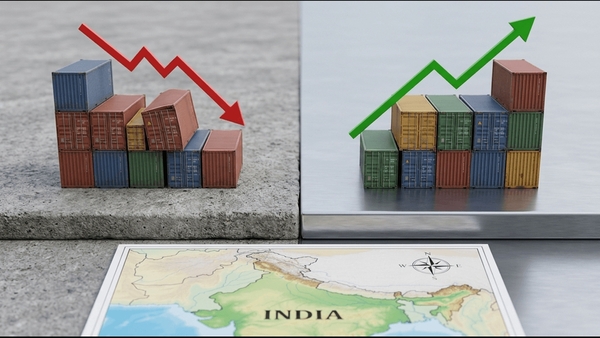
Donald Trump promised tariffs. He delivered them — with compound interest. Since returning to the White House, the administration has methodically erected a wall of import duties that the Tax Foundation calculates as the largest US tax increase as a percentage of GDP since 1993. The cumulative effect: an average additional tax burden of roughly $1,500 per American household in 2026, and a global supply-chain earthquake still reverberating from Shenzhen to Surat.
For NRIs — whether you hold Indian stocks, run a business with cross-border exposure, or simply have family wealth tied to Indian exports — understanding this landscape is no longer optional. It is essential financial literacy.
How We Got Here: A Fast Chronology
| Date | Event |
|---|---|
| February 2025 | 25% tariff on all steel and aluminium imports reinstated globally. Soon doubled to 50% for most countries except the UK. |
| April 2, 2025 — "Liberation Day" | Sweeping "reciprocal" tariffs announced. A 10% baseline on all imports; higher country-specific rates for nations with large US trade deficits. India faces 26-27%. China faces 54%. |
| April 9, 2025 | 90-day pause on country-specific tariffs (except China). Markets exhale briefly. |
| August 2025 | Pause ends. Flat 25% tariff on all Indian goods, with zero product exemptions, takes effect. Pharmaceuticals, electronics, energy — all included. |
| February 2, 2026 | US-India bilateral trade deal announced. Reciprocal tariff on India slashed from 25% to 18%. Additional 25% punitive duty fully removed. Most NRI-relevant sectors breathe easier. |
| April 2026 — Now | Steel, aluminium, copper derivative tariff regime revised. Section 301 investigations launched covering 16 countries and forced-labour enforcement across 60 economies. Court challenges to IEEPA tariff authority ongoing. |
| Country | Approximate Tariff Rate |
|---|---|
| China | 54% |
| Vietnam | 46% |
| Canada | 25%+ |
| Japan | 25% |
| EU | 20% |
| India | 18% |
| UK | 10% |
Approximate US effective tariff rates by major trading partner as of June 2026. India's rate reflects the February 2026 bilateral deal. Rates are blended and subject to product-level variation. Sources: Tax Foundation Tariff Tracker, Atlantic Council, Cleartax.
Who Takes the Hardest Hit
China remains in the eye of the storm. The combined tariff rate of around 54% has effectively made huge swaths of Chinese manufacturing non-competitive in the US market. Beijing has responded with counter-tariffs and supply-chain workarounds, but the economic friction is immense. Chinese exporters in electronics, machinery, and consumer goods face existential pressure to relocate production.
Vietnam, Myanmar, and Laos — popular "China Plus One" manufacturing alternatives — have been handed rates of 46% and 40% respectively, a punishing signal that the US is not prepared to watch companies route goods through South-East Asia to dodge China tariffs. The move has rattled supply-chain planners who spent billions relocating factories from China in 2021-2023.
Canada faces a complicated picture. Beyond standard trade tariffs, goods linked to fentanyl-related ingredients face an additional 35% levy — a politically charged measure Ottawa has sharply disputed.
| Countries Most Exposed | Approximate Tariff Rate |
|---|---|
| China | 54% |
| Brazil (Steel) | 50% |
| Vietnam | 46% |
| Myanmar | 40% |
| Laos | 40% |
| Switzerland | 39% |
| Canada (Fentanyl-linked) | 35% |
Who Escapes Relatively Lightly
The United Kingdom has emerged as the clearest tariff beneficiary. Steel and aluminium tariffs that doubled to 50% for most of the world in 2025 were specifically carved out for the UK, leaving British exporters with a competitive edge in the US market. A 10% baseline applies to most other UK goods — the lowest among major economies.
India, after a bruising 2025 during which a flat 25% was briefly applied with zero exemptions, struck a bilateral deal in February 2026. The reciprocal tariff fell to 18%, and the additional 25% punitive duty was fully removed. Critically, pharmaceuticals, electronics, and energy — which together account for roughly 40% of India's merchandise exports to the US — retained their protected status or benefited from the reduced headline rate.
"India's deal did not eliminate tariff pain — but it transformed an existential threat into a manageable cost of doing business."
Industry by Industry: The Damage Map
The tariff fallout is highly uneven across sectors. Here is a clear-eyed look at which industries are hurting and which are quietly gaining ground:
| Sector | Status | Notes |
|---|---|---|
| Gems & Jewellery | Under Pressure | Previous tariff was 2.12%. The surge to 18-26% is a massive shock on a $9B+ export sector. |
| Textiles & Apparel | Under Pressure | Labour-intensive exports from India and Bangladesh face steep new costs in the US market. |
| Seafood / Marine | Under Pressure | Indian shrimp farmers, especially in Andhra Pradesh, face mounting export losses as the US shifts to Ecuador and Indonesia. |
| Auto Components | Under Pressure | Hit by sector-specific 25% auto tariff on top of reciprocal rates. Indian suppliers to US OEMs feel margin compression. |
| Agri Products | Under Pressure | Tea, spices, dairy, honey, and guar gum all face elevated US duties, crimping a $2.6B+ trade flow. |
| Pharmaceuticals | Gaining Ground | India supplies 40%+ of US generic drugs. Pharma has largely retained exempt or protected status. |
| Smartphones & Electronics | Gaining Ground | India has overtaken China as the top smartphone exporter to the US. Exemptions here are a strategic windfall for Apple's India supply chain. |
| Engineering Goods | Gaining Ground | Turbines, industrial machinery — India benefits as Chinese alternatives face 54% walls. |
| IT Services | Gaining Ground | Tariffs are goods-based; software and services exports are untouched. India's $200B+ IT services sector is insulated. |
| Renewables & Energy | Gaining Ground | Carve-outs for energy and clean tech give India space to grow green exports to the US. |
India's key export sectors mapped on a tariff-impact spectrum, with approximate annual US export values. Electronics and pharma are positioned as structural winners; marine, gems, and textiles bear the brunt. All figures approximate based on available trade data through FY2025-26.
What This Means for NRIs Specifically
If you hold Indian equity, the sector map above is your starting point for portfolio thinking. The Nifty Pharma and Nifty IT indices have demonstrated resilience precisely because their core revenue streams — generic drugs and software services — are structurally insulated from tariff friction. Conversely, companies with heavy dependence on gems, jewellery, or marine exports to the US deserve closer scrutiny of their earnings guidance for FY27.
For NRIs running businesses with India-US supply chains, the February 2026 bilateral deal represents meaningful relief — but not a clean slate. The 18% rate is still far above the 2.5% effective tariff that existed in 2024. Margin compression is real. Companies that have already invested in US-facing manufacturing in India — particularly in electronics and pharmaceuticals — are best positioned to absorb the remaining friction.
The Silver Lining for India: China's 54% tariff wall is structurally redirecting US import demand. India, with its competitive 18% rate, English-speaking workforce, and growing manufacturing base, is the logical beneficiary across electronics, engineering, and pharmaceuticals. The disruption is painful in the short term; the opportunity is generational.
Watch These Wildcards: Pharmaceutical tariffs could rise toward 200% by mid-to-late 2026, per signals from the Trump administration. If India's pharma carve-out is renegotiated or removed, a $12B+ export lifeline faces severe disruption. Monitor bilateral trade deal terms carefully — the current 18% rate is conditional on ongoing negotiations.
The Bottom Line
Trump's tariff regime is the most consequential reshaping of global trade since the 1990s. It is simultaneously a threat and an opportunity — and for India-linked investors, the divide between those two outcomes runs squarely through which sector you are in. Pharma, IT, and electronics are on the right side of history. Gems, seafood, and textiles are fighting for survival. The India-US bilateral deal of 2026 bought time; how that time is used — by companies, policymakers, and investors — will define India's decade.
For the Indian diaspora, the tariff war is not background noise. It is a live variable in the value of the portfolios, businesses, and retirement funds tied to India's export economy. Stay informed, stay allocated wisely.
Disclaimer: This article is an independent editorial explainer based on publicly available data from the Tax Foundation, Atlantic Council, Council on Foreign Relations, J.P. Morgan Global Research, ClearTax India, and Business Standard, current as of June 4, 2026. Tariff rates are approximate and subject to change; product-level exceptions, bilateral deal terms, and legal challenges may alter the landscape materially. This is not investment advice. Consult a SEBI-registered investment advisor or qualified trade consultant before making financial decisions.


 Click it and Unblock the Notifications

 Sign in with Google