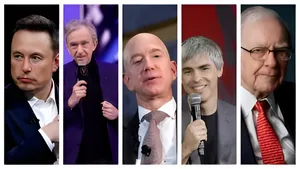
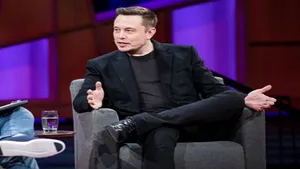
Discover the global elite shaping industries and economies across the world. Leading the pack is Elon Musk, ranked 1st globally with a net worth of $824.34 billion in the Technology sector. Followed by Larry Page from United States, excelling in Technology and holding the 2nd global rank with a net worth of $247.05 billion.
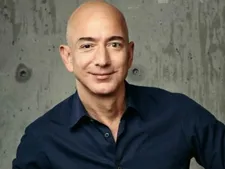
Other notable figures include Sergey Brin from United States at the 3rd global rank, contributing significantly to the Technology sector with a net worth of $228.02 billion. Visionaries like Jeff Bezos from United States and Mark Zuckerberg from United States also play pivotal roles in their respective industries, securing the 4th and 5th global ranks. Explore the distinctive contributions of these leaders and the broader cohort influential figures, each leaving an indelible mark on the global economic landscape.
Read More
In the ever-evolving landscape of global wealth, the distribution of billionaires reflects economic prowess and growth trajectories across nations. According to recent data, here is a glimpse into the top 10 countries boasting the highest number of billionaires:
United States: 977 Billionaires
Topping the charts, the United States maintains its stronghold as the premier hub of wealth creation, with a staggering 977 billionaires contributing to its economic landscape.
China: 521 Billionaires
China follows closely behind, showcasing the rapid rise of its economy and the emergence of numerous billionaires, totaling 521 in number.
India: 213 Billionaires
India secures the third position with a notable presence of 213 billionaires, reflecting the country's dynamic entrepreneurial spirit and burgeoning industries.
Germany: 209 Billionaires
Germany's robust economy and industrial prowess have led to the accumulation of wealth, with 209 billionaires making their mark on the global stage.
Russia: 148 Billionaires
Russia's vast resources and strategic investments have propelled it to the fifth spot, with 148 billionaires contributing to its economic landscape.
Italy: 83 Billionaires
Italy, a bustling financial center, boasts 83 billionaires, underscoring its status as a global financial powerhouse and a magnet for wealth creation.
Canada: 81 Billionaires
Canada's rich cultural heritage and diverse industries have fostered the growth of 81 billionaires, adding to the nation's economic vibrancy and global influence.
Brazil: 74 Billionaires
Brazil's stable economy and thriving business environment have nurtured 74 billionaires, showcasing the country's resilience and potential for wealth creation.
Hong Kong: 70 Billionaires
Hong Kong's natural resources and expanding markets have led to the emergence of 70 billionaires, highlighting the country's economic growth and investment opportunities.
Taiwan: 61 Billionaires
Rounding off the list, the Taiwan boasts 61 billionaires, reflecting its historical significance as a center for commerce and innovation.
This data offers a glimpse into the distribution of global wealth and the varying economic landscapes across nations. As economies evolve and industries flourish, the list of billionaire countries continues to shift, reflecting the dynamic nature of wealth creation on a global scale.
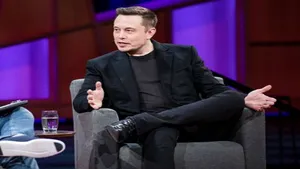
Elon Musk, the CEO of Tesla and SpaceX, is renowned for his innovations in electric vehicles, space exploration, and online platforms. Born in South Africa, Musk's entrepreneurial journey began with ventures like Zip2 and X.com, leading to the creation of PayPal. His visionary leadership extends to companies like SolarCity and X Corp (formerly Twitter), showcasing his diverse interests in clean energy, technology, and social media.
Larry Page, the co-founder of Alphabet, has played a pivotal role in shaping Google's evolution as the world's leading search engine operator. With a background in computer science and a keen eye for innovation, Page's journey from Stanford to Silicon Valley epitomizes the tech industry's transformative power.
Sergey Brin, the co-founder of Alphabet and Google, has played a pivotal role in revolutionizing the world of search engines. From humble beginnings as a math and computer science student to co-creating Google in a friend's garage, Brin's journey exemplifies innovation in the tech sector.
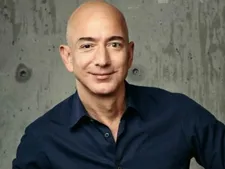
Jeff Bezos, the visionary founder of Amazon, revolutionized online retail with a focus on customer service and long-term strategies. From humble beginnings in 1994, Amazon has grown into the world's largest online retailer, offering a vast range of products and services. Bezos's influence extends beyond e-commerce to space exploration with Blue Origin, showcasing his diverse interests and entrepreneurial spirit.
Mark Zuckerberg, the co-founder and CEO of Meta Platforms, is a prominent figure in the world of social networking. With Meta Platforms as the parent company of Facebook, Zuckerberg's journey from a computer programming prodigy to a tech mogul reflects innovation and strategic leadership in the digital era.
Larry Ellison, the visionary behind Oracle, has left an indelible mark on the technology landscape with his pioneering work in databases. As the largest shareholder of Oracle and a stakeholder in various ventures ranging from sailing teams to luxury real estate, Ellison's influence extends across multiple industries.
Jensen Huang, the president and CEO of Nvidia, has played a pivotal role in shaping the company's success in computer processors and artificial intelligence technology. His journey from Taiwan to Washington state and eventual founding of Nvidia reflects a blend of strategic vision and technological expertise.
Bernard Arnault, the chairman of LVMH Moet Hennessy Louis Vuitton, leads the world's foremost luxury goods manufacturer. With strategic acquisitions like Christian Dior, Fendi, TAG Heuer, and Bulgari, Arnault has cemented LVMH's dominance in the luxury market. His diverse investments extend to art collections and philanthropic endeavors, reflecting his multifaceted approach to wealth management and business leadership.
Michael Dell, the CEO of Dell Technologies, has a storied journey from a college entrepreneur to a technology titan. His strategic investments and leadership in the tech industry have shaped Dell's evolution into a global player.
Rob Walton, a former Walmart chairman and key figure in the Walton family, has played a significant role in Walmart's growth and success over the years. With vast experience in retail and a prominent position in the family's business ventures, Walton's contributions to Walmart's legacy are notable.
Warren Buffett, the renowned chairman of Berkshire Hathaway, has steered the investment group to remarkable success over decades. With a keen eye for value investing and strategic acquisitions, Buffett's leadership has propelled Berkshire Hathaway to become a powerhouse in various industries, including insurance, finance, and consumer goods.
Jim Walton, co-manager of Walton Enterprises, plays a pivotal role in overseeing the family's substantial stake in Walmart, the global retail giant. As part of the Walton family legacy, Jim's contributions to Walmart's growth and strategic direction reflect a deep-rooted commitment to the retail industry.
Ortega, holding a majority stake in Inditex, the world's leading clothing retailer, wields significant influence in the global retail sector. His journey from humble beginnings to building an empire reflects a remarkable entrepreneurial spirit and strategic vision in the fashion industry.
Alice Walton, the youngest child of Walmart's founder Sam Walton, is a key figure in managing the family's significant holdings in Walmart. Her background in finance and her role in Walton Enterprises showcase her involvement in Walmart's legacy.
Steve Ballmer, the former CEO of Microsoft and owner of the L.A. Clippers, has left a lasting impact on the technology and sports industries. From his early days at Harvard University to leading Microsoft and venturing into philanthropy, Ballmer's journey reflects a blend of business acumen and community engagement.
Carlos Slim Helu, a prominent figure in Latin America's mobile-phone industry and diversified investments, has made significant contributions to various sectors. From his early ventures in construction to his strategic acquisitions in telecommunications, Slim's entrepreneurial journey reflects a blend of business acumen and philanthropic initiatives.
Bill Gates, the co-founder of Microsoft, is a prominent figure in the software industry and philanthropy. His journey from Harvard University to building Microsoft showcases his entrepreneurial spirit and technical expertise. With a focus on innovation and philanthropic endeavors through the Bill & Melinda Gates Foundation, Gates continues to make a significant impact on technology and global health initiatives.
Mukesh Ambani, the influential figure behind Reliance Industries, leads one of the world's largest conglomerates with diverse businesses in oil refining, chemicals, and telecommunications. His journey from Stanford Business School to overseeing the expansion of the Ambani empire showcases strategic leadership and business acumen. With significant investments in technology and infrastructure, Ambani continues to shape India's economic landscape.
Billionaire
The first billionaire confirmed in the world was the American oil magnate – John D. Rockefeller in 1916.
As per the 2018 reports, there are more than 2,200 U.S. dollar billionaires so far across the globe and their combined wealth is more than 9.1 U.S. trillion dollars. The wealth of billionaires is growing over the years.
The United States of America has the largest number of billionaires in the world. While India, China and Russia have 90, 213 and 88 billionaires respectively based on a report released in 2015. The report further divulged that only 46 billionaires were aged less than 40 years, while the list of Americans – only billionaires as of 2010, had an average age of 66 years.
Different authorities use several methodologies to determine the net worth of an individual to rank them based on their wealth and not all the information about their finances will be made public.
Usually, these billionaires come from a wide range of backgrounds. A review of their education and work history reveals that there is little correlation between education and success. Around 30% of billionaires do not have a college degree, yet they are performing exceptionally exceeding any other educational background. There is little correlation between any university and becoming a billionaire.
A few colleges educated billionaires pursued business interests and their major was computer science, only half of the engineers worked in engineering and less than a quarter of them studied finance and economics. One of the common fields which the billionaires entered was sales and military services.
Facts about Billionaires
- The total number of billionaires exploded during the pandemic.
- During the first month of the pandemic, US billionaires collectively added $300 billion to their fortune.
- Currently, Elon Musk is the world’s richest person followed by Jeff Bezos, CEO of Amazon.
- Over the last two decades, the American billionaire's wealth has surged from $240 billion to $4.18 trillion during March 2021, which is 17 times more than their total funds in 1990.
- The interesting fact is there is a huge wealth gap even among billionaires. The majority of 94% is worth $10 billion or less. 5% of them are worth somewhere between $10 and $30 billion. Mega billionaires who consist of less than 1% of all billionaires are worth over $30 billion.
- Over the last few years, there has been a steady increase in the number of new billionaires and new members do include more women. The total number of female billionaires has grown by 46 per cent which is more than the total number of male counterparts in the same period. As of 2019, the total number of female billionaires is 233 in the globe, witnessing a sharp growth from 16 in 2013.
Top 20 billionaires all around the globe have a net worth ranging from $60 billion to a whopping over $220 billion. Leading electric cars brand Tesla's CEO Elon Musk tops the chart with a wealth of $228.46 billion, while the founder of the largest luxury goods company, Louis Vuitton takes the second spot with a net worth of $178.17 billion. Jeff Bezos, the founder of e-commerce giant Amazon, who once enjoyed the highest rank in the rich-list, is now in the third spot with a net worth of $151.38 billion. Larry Elison, co-founder of software company Oracle Corporation chief Larry Elison, and Larry Page, co-founder of search engine Google, hold the 4th and 5th rank with a net worth of $131.42 billion and $116.57 billion.
These are the top five billionaires in the world. In the top 10, ace investor Warren Buffet, Google's other co-founder Sergey Brin, Meta's chief Mark Zuckerburg, and Microsoft's founder Bill Gates and its CEO Steve Ballmer are included.
The top 10 billionaires' wealth is a minimum of $100 billion and a maximum of $228 billion.
A billionaire is a person whose net worth is at least one billion units of a given country’s currencies, usually of major currencies like the Euro, United States Dollar, or Pound Sterling. The American business magazine – Forbes comes out with the global list of U.S. billionaires every year. The update of the billionaire's list as an internet version of the list will be done in real time.
Other renowned billionaires in the top 20 list are --- Micheal Bloomberg, Mukesh Ambani, Amancio Ortega, Carlos Slim Helu & Family, Francoise Bettencourt Meyers & family, Jim Walton & Family, Rob Walton & Family, Michael Dell, Alice Walton, and Zhong Shanshan are included.
Mukesh Ambani is the only Indian billionaire in the top 20 richest in the world.




 Click it and Unblock the Notifications


















 Sign in with Google