
 A Oneindia Venture


 Click it and Unblock the Notifications
Accounting Policies of Medistep Healthcare Ltd. Company
Mar 31, 2025
2. Significant Accounting Policies
Basis of Preparation of Financial Statements
The Financial Statements of the Company have been prepared and presented in accordance with the Generally Accepted
Accounting Principles in India (''Indian GAAP''). It comprises the Accounting Standards notified u/s 133 read with section 469
of the Companies Act, 2013. The accounting policies have been framed, keeping in view the fundamental accounting
assumptions of Going Concern, Consistency and Accrual, and also the basic considerations of Prudence, Substance over
form, and Materiality. Based on the nature of products and the time between acquisition of assets and their realisation in
cash and cash equivalents, the Company has ascertained its operating cycle as 12 months for the purpose of current or non¬
current classification of assets and liabilities. These financial statements have been prepared on historical cost basis except
certain items like Financial Leases and Defined Benefit Plans are measured at fair value.
Use of Estimates
The preparation of financial statements requires the management to make certain estimates and assumptions that affect the
amounts reported in the financial statements and notes thereto. The management believes that these estimates and
assumptions are reasonable and prudent but the actual results may differ from them. They are reviewed on an on-going
basis and any revision to accounting estimates is recognised prospectively in current and future periods. Accounting
estimates and assumptions that have a significant effect on the amounts reported in the financial statements include:
i) Net Realisable value of items of Inventories
ii) Useful life and Residual value of Property, Plant and Equipment and Intangible Assets
iii) Defined Benefit obligations
iv) Deferred Tax asset or liability
v) Provisions for Trade Receivables
vi) Other Provisions and Contingencies
Property, Plant and Equipments
Property, plant and equipments are initially recognised at cost. Cost includes purchase price, taxes and duties and other
costs directly attributable to bringing the asset to the working condition for its intended use. However, cost excludes duties
and taxes wherever credit of such duties and taxes is availed. It is thereafter carried at its cost less accumulated depreciation
and accumulated impairment losses, if any.
Depreciation on tangible assets has been provided on "Written Down Value" method in accordance with the provision of
Schedule II of the Companies Act, 2013. Depreciation in respect of tangible assets put to use in current year has been
charged on pro rata basis. Residual values @ 5% of the cost of assets are provided.
Depreciation and amortization methods, useful lives and residual values are reviewed periodically.
Investments
Long-term investments are valued at cost less provision for diminution in value, if the diminution is other than temporary.
Current investments are valued at lower of cost and fair value. Gain or loss arising on the sale of investments is computed as
a difference between carrying amount and the proceeds from sale, net of any expenses. Such gain or loss is recognised in the
Statement of Profit and Loss.
Inventories
Inventories are valued at the lower of cost and net realisable value. Cost is computed on a ''First In First Out'' basis.
Cost of raw materials and stores and spares includes cost of purchase and other costs incurred in bringing the inventories to
their present location and condition. The aforesaid items are valued at net realisable value if the finished products in which
they are to be incorporated are expected to be sold at a loss. Cost of finished goods and work-in-progress include all costs of
purchases, conversion costs and other costs incurred in bringing the inventories to their present location and condition. The
net realisable value is the estimated selling price in the
ordinary course of business less the estimated costs of completion and estimated costs necessary to make the sale.
Trade Receivables and Loans and Advances
Trade Receivables and Loans and Advances are presented after making adequate provision for any shortfall in their recovery.
The provision and any subsequent recovery is recognised in the Profit and Loss statement. Bad debts are written off when
they are identified.
Cash and cash equivalents
All highly liquid financial instruments, which are readily convertible into known amount of cash that are subject to an
insignificant risk of change in value and having original maturities of three months or less from the date of purchase are
considered to be cash equivalents.
Disclaimer: This is 3rd Party content/feed, viewers are requested to use their discretion and conduct proper diligence before investing, GoodReturns does not take any liability on the genuineness and correctness of the information in this article
More Information on Medistep Healthcare Ltd.
-
Medistep Healthcare Ltd. Tools
- Bulk Deals
-
Medistep Healthcare Ltd. Company Details
- Company Profile
- Company History
- Management Team
- Capital Structure
- Product Mix
- Banker/Auditor/Registrar
-
Company History
- NSE Price History
-
Medistep Healthcare Ltd. Key Financial Ratios
- Ratios
-
Medistep Healthcare Ltd. Results
- Half Yearly Results
- Annual Results
-
Medistep Healthcare Ltd. Financial Data
- Audited Results
- Cash Flow
- Balance Sheet
-
Medistep Healthcare Ltd. Reports
- Accounting Policies
- Auditors Report
- Directors Report
- Notes To Account
-
Medistep Healthcare Ltd. Corporate Announcements
- Book Closure
- Board Meetings
-
 Stock Market Outlook Today, 19 June 2026: Sensex, Nifty Likely to Stay Positive Amid US-Iran Peace Deal
 -
 Multibagger Alert: Why THIS Diversified Commercial Stock Has Rallied 143% In 3 Months
 -
 Stock Market Outlook Today, June 16: Sensex, Nifty Likely to Stay Volatile But Positive Ahead of FOMC Meeting
 -
 Stock Market Today: Sensex Jumps Over 1,100 Pts, Nifty Eyes 24,000; IndiGo, HPCL Lead Rally After US-Iran Deal
 -
 Indian Stock Market Outlook Next Week, June 15-19: Sensex, Nifty Likely to Stay Positive; Fed Meeting in Focus
 -
 Bulls Return To D-Street! Nifty-Sensex End 2-Week Losing Run On Iran-US Peace Deal, Strong Rupee
 -
 Stock Market Outlook Today, June 12: Sensex, Nifty Likely to Remain Under Pressure Amid Rising Oil Prices
 -
 Stock Market Outlook Today, 10 June 2026: Sensex, Nifty Likely to Stay Volatile as Crude Trends Dominate
 -
 Stock Market Outlook Today, 9 June: Nifty, Sensex May Stay Volatile Amid Iran-Israel Tension & Crude Oil Surge
 -
 Stock Market Outlook Today, June 8: Sensex, Nifty Likely to Trade Range-Bound Amid RBI Pause and FII Outflows
 -
 Stock Market Outlook Next Week, June 8-12: Sensex, Nifty Likely to Remain Weak; Bears Retain Near-Term Control
 -
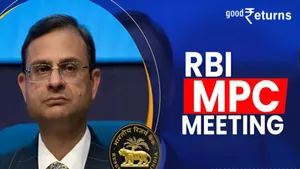 RBI MPC Today: Top Stocks To Watch Ahead of Governor Sanjay Malhotra's Speech On June 5 | What History Suggest
 -
 Stock Market Outlook Today June 4: Sensex, Nifty on Thursday Likely to Stay Volatile Ahead of RBI MPC Decision
 -
 Stock Market Outlook, June 3, 2026: Will Sensex, Nifty Today Extend Recovery? RBI Meet, IT Stocks in Focus
 -
 Penny Stock Under Rs 20 Jumps 2%, Delivers 315% Return In 5 Yrs | What Investors Must Know
 -
 Stock Market Outlook Today, June 2: Sensex, Nifty Likely to Remain Under Pressure Amid FII Selling
-
Block for 8 hours
-
Block for 12 hours
-
Block for 24 hours
-
Don't block

 Sign in with Google
- Male
- Female
- Others
- Under 18
- 18 to 25
- 26 to 35
- 36 to 45
- 45 to 55
- 55+