
 A Oneindia Venture


 Click it and Unblock the Notifications
Notes to Accounts of Medplus Health Services Ltd.
Mar 31, 2025
l. Provisions, contingent liabilities and
contingent assets
Provisions
Provisions are recognised when the
Company has a present obligation (legal
or constructive) as a result of a past
event, it is probable that an outflow of
resources embodying economic benefits
will be required to settle the obligation
and a reliable estimate can be made of
the amount of the obligation. When the
Company expects some or all of a provision
to be reimbursed, the reimbursement is
recognised as a separate asset, but only
when the reimbursement is virtually
certain. The expense relating to a provision
is presented in the standalone statement of
profit and loss net of any reimbursement.
If the effect of the time value of money is
material, provisions are discounted using
a current pre-tax rate that reflects, when
appropriate, the risks specific to the liability.
When discounting is used, the increase in
the provision due to the passage of time is
recognised as a finance cost.
Contingent liabilities
A contingent liability is a possible obligation
that a rises from past events whose existence
will be confirmed by the occurrence or
non-occurrence of one or more uncertain
future events beyond the control of the
Company or a present obligation that is not
recognised because it is not probable that
an outflow of resources will be required to
settle the obligation. A contingent liability
also arises in extremely rare cases where
there is a liability that cannot be recognised
because it cannot be measured reliably. The
company does not recognize a contingent
liability but discloses its existence in the
standalone financial statements.
Contingent assets
Contingent assets has to be recognised in
the financial statements in the period in
which if it is virtually certain that an inflow
of economic benefits will arise. Contingent
assets are assessed continually, and no
such benefits were found for the current
financial year.
m. Retirement and other employee benefits
Retirement benefit in the form of provident
fund is a defined contribution scheme. The
Company has no obligation, other than the
contribution payable to the provident fund.
The Company recognises the contribution
payable to the provident fund scheme as
an expense, when an employee renders
the related service. If the contribution
payable to the scheme for service received
before the balance sheet date exceeds
the contribution already paid, the deficit
payable to the scheme is recognised as a
liability after deducting the contribution
already paid. If the contribution already
paid exceeds the contribution due for
services received before the balance sheet
date, then excess is recognised as an asset.
The Company operates a defined benefit
plan for its employees, viz., gratuity. The
costs of providing benefits under the plan
are determined on the basis of actuarial
valuation at each year-end using the
projected unit credit method consistent
with the advice of qualified actuaries.
Remeasurements, comprising of actuarial
gains and losses, the effect of the asset
ceiling, excluding amounts included in net
interest on the net defined benefit liability
and the return on plan assets (excluding
amounts included in net interest on the
net defined benefit liability), are recognised
immediately in the balance sheet with a
corresponding debit or credit to retained
earnings through OCI in the period in
which they occur. Remeasurements are not
reclassified to the standalone statement of
profit and loss in the subsequent periods.
Past service costs are recognised in profit or
loss on the earlier of:
- The date of the plan amendment or
curtailment, and
- The date that the Company recognises
related restructuring costs
Net interest is calculated by applying the
discount rate to the net defined benefit
liability or asset. The Company recognises
the following changes in the net defined
benefit obligation as an expense in the
standalone statement of profit and loss:
- Service costs comprising current service
costs, past-service costs, gains and
losses on curtailments and non-routine
settlements.
- Net interest expense or income
Accumulated leave, which is expected to
be utilized within the next 12 months, is
treated as short-term employee benefit.
The Company measures the expected cost
of such absences as the additional amount
that it expects to pay as a result of the
unused entitlement that has accumulated
at the reporting date.
The Company treats accumulated leave
expected to be carried forward beyond
twelve months, as long-term employee
benefit for measurement purposes. Such
long-term compensated absences are
provided for based on the actuarial valuation
using the projected unit credit method at
the year-end. Actuarial gains/losses are
immediately taken to the statement of
profit and loss and are not deferred. The
company presents the entire leave as a
current liability in the balance sheet, since
it does not have an unconditional right to
defer its settlement for 12 months after the
reporting date.
n. Employee share-based payments
Employees (including senior executives) of
the Company receive remuneration in the
form of share based payment transactions,
whereby employees render services as
consideration for equity instruments.
The cost of equity-settled transactions
is determined by the fair value at the
date when the grant is made using an
appropriate valuation model.
That cost is recognised, together with a
corresponding increase in share-based
payment (SBP) reserves in equity, over the
period in which the performance and/or
service conditions are fulfilled in employee
benefits expense. The cumulative expense
recognised for equity-settled transactions
at each reporting date until the vesting
date reflects the extent to which the vesting
period has expired and the Company''s
best estimate of the number of equity
instruments that will ultimately vest.
The standalone statement of profit and loss
expense or credit for a period represents
the movement in cumulative expense
recognised as at the beginning and end of
that period and is recognised in employee
benefits expense.
The amount of expenses pertaining to
options granted to employees of the
Company''s subsidiaries are treated
as Deemed Investments in respective
subsidiaries to which employees belong
and are recognised at each reporting
period date until the vesting date, with
corresponding impact in Share-based
payment reserve.
Service and non-market performance
conditions are not taken into account
when determining the grant date fair
value of awards, but the likelihood of the
conditions being met is assessed as part of
the Company''s best estimate of the number
of equity instruments that will ultimately
vest. Market performance conditions are
reflected within the grant date fair value.
Any other conditions attached to an
award, but without an associated service
requirement, are considered to be non¬
vesting conditions. Non-vesting conditions
are reflected in the fair value of an award
and lead to an immediate expensing of an
award unless there are also service and/or
performance conditions.
No expense is recognised for awards that
do not ultimately vest because non-market
performance and/or service conditions
have not been met. Where awards include
a market or non-vesting condition,
the transactions are treated as vested
irrespective of whether the market or non¬
vesting condition is satisfied, provided
that all other performance and/or service
conditions are satisfied.
When the terms of an equity-settled award
are modified, the minimum expense
recognised is the expense had the terms
had not been modified, if the original
terms of the award are met. An additional
expense is recognised for any modification
that increases the total fair value of the
share-based payment transaction, or is
otherwise beneficial to the employee as
measured at the date of modification.
Where an award is cancelled by the entity
or by the counterparty, any remaining
element of the fair value of the award is
expensed immediately through statement
of profit and loss.
The dilutive effect of outstanding options
is reflected as additional share dilution in
the computation of diluted earnings per
share, unless its anti-dilutive to Company''s
earnings in nature.
Shares allotted to Trust:
The Company has created an Employees
benefit trust (Trust) for implementation of
the schemes that are notified or may be
notified from time to time by the Company
under the plan, providing share based
payment to its employees. The company
allocated shares to Trust at the time of
formation of trust. The Company treats
trust as its extension and these equity
instruments are recognised at cost and
deducted from equity.
o. Financial Instruments
A financial instrument is any contract that
gives rise to a financial asset of one entity
and a financial liability or equity instrument
of another entity.
Financial assets
Initial recognition and measurement
All financial assets are recognised initially at
fair value plus except for trade receivables,
less transaction costs that are attributable
to the acquisition of the financial asset.
Purchases or sales of financial assets
that require delivery of assets within a
time frame established by regulation or
convention in the market place (regular way
trades) are recognised on the trade date,
i.e., the date that the Company commits to
purchase or sell the asset. However, trade
receivables that do not contain a significant
financing component are measured at
transaction price.
Subsequent measurement
For purposes of subsequent measurement,
financial assets are classified in
four categories:
i) Debt instruments at amortised cost
ii) Debt instruments at fair value through
other comprehensive income (FVTOCI)
iii) Debt instruments, derivatives and
equity instruments at fair value
through profit or loss (FVTPL)
iv) Equity instruments measured at fair
value through other comprehensive
income (FVTOCI)
Debt instruments at amortised cost
A ''debt instrument'' is measured at the
amortised cost if both the following
conditions are met:
a) The asset is held within a business
model whose objective is to hold
assets for collecting contractual
cash flows, and
b) Contractual terms of the asset give rise
on specified dates to cash flows that
are solely payments of principal and
interest (SPPI) on the principal amount
outstanding.
After initial measurement, such financial
assets are subsequently measured at
amortised cost using the effective interest
rate (EIR) method. Amortised cost is
calculated by taking into account any
discount or premium on acquisition and
fees or costs that are an integral part of
the EIR. The EIR amortisation is included in
other income in the statement of profit and
loss. The losses arising from impairment are
recognised in the statement of profit and
loss. This category generally applies to trade
and other receivables.
Derecognition
A financial asset (or, where applicable, a
part of a financial asset or part of a group
of similar financial assets) is primarily
derecognised (i.e. removed from the
Company''s balance sheet) when:
- the rights to receive Cash flows from the
asset have expired, or
- The Company has transferred its rights to
receive cash flows from the asset or has
assumed an obligation to pay the received
cash flows in full without material delay
to a third party under a ''pass-through''
arrangement; and either (a) the Company
has transferred substantially all the
risks and rewards of the asset, or (b) the
Company has neither transferred nor
retained substantially all the risks and
rewards of the asset, but has transferred
control of the asset.
When the Company has transferred its rights
to receive cash flows from an asset or has
entered into a pass-through arrangement,
it valuates if and to what extent it has
retained the risks and rewards of ownership.
When it has neither transferred nor retained
substantially all of the risks and rewards
of the asset, nor transferred control of the
asset, the Company continues to recognise
the transferred asset to the extent of the
Company''s continuing involvement. In
that case, the Company also recognises an
associated liability. The transferred asset and
the associated liability are measured on a
basis that reflects the rights and obligations
that the Company has retained.
Continuing involvement that takes the form
of a guarantee over the transferred asset
is measured at the lower of the original
carrying amount of the asset and the
maximum amount of consideration that the
Company could be required to repay.
Impairment of financial assets
In accordance with Ind AS 109, the
Company applies expected credit loss (ECL)
model for measurement and recognition of
impairment loss on the following financial
assets and credit risk exposure:
a) Financial assets that are debt
instruments, and are measured
at amortised cost e.g., loans, debt
securities, deposits, trade receivables
and bank balance.
b) Financial assets that are debt
instruments and are measured
as at FVTOCI
In case of trade receivables, the Company
follows a simplified approach wherein an
amount equal to lifetime ECL is measured
and recognised as loss allowance. The
application of simplified approach does not
require the Company to track changes in
credit risk. Rather, it recognises impairment
loss allowance based on lifetime ECLs at
each reporting date, right from its initial
recognition.
For recognition of impairment loss on
other financial assets and risk exposure, the
Company determines that whether there
has been a significant increase in the credit
risk since initial recognition. If credit risk
has not increased significantly, 12-month
ECL is used to provide for impairment
loss. However, if credit risk has increased
significantly, lifetime ECL is used. If, in a
subsequent period, credit quality of the
instrument improves such that there is no
longer a significant increase in credit risk
since initial recognition, then the entity
reverts to recognising impairment loss
allowance based on 12-month ECL.
Lifetime ECL are the expected credit
losses resulting from all possible default
events over the expected life of a financial
instrument. The 12-month ECL is a portion
of the lifetime ECL which results from
default events that are possible within 12
months after the reporting date.
ECL is the difference between all contractual
cash flows that are due to the Company in
accordance with the contract and all the
cash flows that the entity expects to receive
(i.e., all cash shortfalls), discounted at the
original EIR. When estimating the cash
flows, an entity is required to consider:
- All contractual terms of the financial
instrument (including prepayment,
extension, call and similar options) over the
expected life of the financial instrument.
However, in rare cases when the expected
life of the financial instrument cannot
be estimated reliably, then the entity is
required to use the remaining contractual
term of the financial instrument.
- Cash flows from the sale of collateral held
or other credit enhancements that are
integral to the contractual terms
As a practical expedient, the Company
uses a provision matrix to determine
impairment loss allowance on portfolio of
its trade receivables. The provision matrix
is based on its historically observed default
rates over the expected life of the trade
receivables and is adjusted for forward¬
looking estimates. At every reporting
date, the historical observed default rates
are updated and changes in the forward¬
looking estimates are analysed.
ECL impairment loss allowance (or reversal)
recognised during the period is recognised
as income/ expense in the Statement of
Profit and Loss under the head ''Other
expenses''. The balance sheet presentation
for various financial instruments are
Financial assets measured as at amortised
cost, contractual revenue receivables and
lease receivables:
ECL is presented as an allowance, i.e., as an
integral part of the measurement of those
assets in the balance sheet. The allowance
reduces the net carrying amount. Until the
asset meets write-off criteria, the Company
does not reduce impairment allowance
from the gross carrying amount.
Financial Liabilities
Financial liability, Equity and Compound
Financial Instruments
The debt and equity instruments that are
issued are classified as either financial
liabilities or as equity in accordance with the
substance of the contractual arrangement.
Initial recognition and measurement
Financial liabilities
Financial liabilities are classified, at initial
recognition, as financial liabilities at fair
value through profit or loss, loans and
borrowings, payables, as appropriate.
All financial liabilities are recognised initially
at fair value and, in the case of loans and
borrowings and payables, net of directly
attributable transaction costs.
The Company''s financial liabilities include
trade and other payables, loans and
borrowings including bank overdrafts,
financial guarantee contracts.
Equity
An equity instrument is any contract that
evidences a residual interest in the assets of
an entity after deducting all of its liabilities.
Equity instruments issued by the company
are recognised at the proceeds received, net
of direct issue costs.
A conversion option that will be settled by
the exchange of a fixed amount of cash or
another financial asset for a fixed number
of the Company''s own equity instruments is
an equity instrument.
Subsequent measurement
The measurement of financial liabilities
depends on their classification, as
described below:
Financial liabilities at fair value through
profit or loss
Financial liabilities at fair value through
profit or loss include financial liabilities
held for trading and financial liabilities
designated upon initial recognition as at
fair value through profit or loss. Financial
liabilities are classified as held for trading
if they are incurred for the purpose of
repurchasing in the near term.
Gains or losses on liabilities held for trading
are recognised in the standalone statement
of profit and loss.
Financial liabilities designated upon initial
recognition at fair value through profit or
loss are designated as such at the initial
date of recognition, and only if the criteria
in Ind AS 109 are satisfied. For liabilities
designated as FVTPL, fair value gains/ losses
attributable to changes in own credit risk
are recognised in OCI. These gains/ losses
are not subsequently transferred to the
statement of profit and loss. However, the
Company may transfer the cumulative gain
or loss within equity. All other changes in
fair value of such liability are recognised in
the standalone statement of profit and loss.
Loans and borrowings
After initial recognition, interest-bearing
loans and borrowings are subsequently
measured at amortised cost using the EIR
method. Gains and losses are recognised
in the statement of profit and loss when
the liabilities are derecognised as well as
through the EIR amortisation process.
Amortised cost is calculated by taking
into account any discount or premium on
acquisition and fees or costs that are an
integral part of the EIR. The EIR amortisation
is included as finance costs in the standalone
statement of profit and loss.
Derecognition
A financial liability is derecognised when the
obligation under the liability is discharged
or cancelled or expires. When an existing
financial liability is replaced by another from
the same lender on substantially different
terms, or the terms of an existing liability are
substantially modified, such an exchange or
modification is treated as the derecognition
of the original liability and the recognition
of a new liability. The difference in the
respective carrying amounts is recognised in
the standalone statement of profit and loss.
The Company also derecognises a financial
liability when its terms are modified and the
cash flows under the modified terms are
substantially different.
Offsetting of financial instruments
Financial assets and financial liabilities
are offset and the net amount is
reported in the balance sheet if there
is a currently enforceable legal right to
offset the recognised amounts and there
is an intention to settle on a net basis, to
realise the assets and settle the liabilities
simultaneously.
p. Financial Guarantee
In a financial guarantee where the parent
company has provided guarantee to its
subsidiaries, Company treats the fair value
of the guarantee as an equity infusion at the
time of initial recognition and subsequently
recognize the Guarantee premium over the
period of guarantee.
q. Cash and cash equivalents
Cash and cash equivalent in the balance
sheet comprise cash at banks and on
hand and short-term deposits with an
original maturity of three months or less,
which are subject to an insignificant risk of
changes in value.
For the purpose of the standalone statement
of cash flows, cash and cash equivalents
consist of cash and short-term deposits,
as defined above, net of outstanding bank
overdrafts as they are considered an integral
part of the Company''s cash management.
r. Investment in subsidiaries
Investments in subsidiaries are carried at
cost less accumulated impairment losses,
if any. Where an indication of impairment
exists, the carrying amount of the
investment is assessed and written down
immediately to its recoverable amount.
On disposal of investments in subsidiaries,
the difference between net disposal
proceeds and the carrying amounts are
recognised in the standalone statement of
profit and loss.
s. Interest income
Interest income from financial instruments
measured either at amortised cost or at
fair value through other comprehensive
income is recorded using the effective
interest rate (EIR). EIR is the rate that
exactly discounts the estimated future cash
payments or receipts over the expected
life of the financial instrument or a shorter
period, where appropriate, to the gross
carrying amount of the financial asset or
to the amortised cost of a financial liability.
When calculating the effective interest rate,
the Company estimates the expected cash
flows by considering all the contractual
terms of the financial instrument (for
example, prepayment, extension, call and
similar options) but does not consider the
expected credit losses. Interest income is
included in other income in the standalone
statement of profit and loss.
t. Rental Income
Rental income arising from operating
leases on building is accounted for on a
straight-line basis over the lease terms and
is included in revenue in the statement of
profit and loss due to its operating nature.
u. Earnings per equity share
Basic earnings equity per share is calculated
by dividing the net profit or loss attributable
to equity holder of parent company (after
deducting preference dividends and
attributable taxes) by the weighted average
number of equity shares outstanding during
the period. Partly paid equity shares are
treated as a fraction of an equity share to the
extent that they are entitled to participate in
dividends relative to a fully paid equity share
during the reporting period. Equity shares
that will be issued upon the conversion of
a mandatorily convertible instrument are
included in the calculation of basic earnings
per share from the date the contract is
entered into. The weighted average number
of equity shares outstanding during the
period is adjusted for events such as bonus
issue, bonus element in a rights issue, share
split, and reverse share split (consolidation
of shares) that have changed the number
of equity shares outstanding, without a
corresponding change in resources.
For the purpose of calculating diluted
earnings equity per share, the net profit or
loss for the period attributable to equity
shareholders and the weighted average
number of shares outstanding during the
period are adjusted for the effects of all
dilutive potential equity shares.
v. Cash flow statement
Cash flow statement is prepared in
accordance with the indirect method
prescribed in Ind AS 7 ''Statement
of Cash Flows.
w. Share issue expenses
The share issue expenses incurred by the
Company on account of new shares issued are
netted off from securities premium account.
The share issue expenses incurred by the
Company on behalf of selling shareholders
are considered to be recoverable from
selling shareholders and are classified as
share issue expenses recoverable under
other current financials assets.
x. Events after Reporting date
Where events occurring after the Balance
Sheet date provide evidence of conditions
that existed at the end of the reporting
period, the impact of such events is
adjusted within the standalone financial
statements. Otherwise, events after the
Balance Sheet date of material size or nature
are only disclosed.
y. Recent pronouncements
Ministry of Corporate Affairs ("MCA")
notifies new standards or amendments to
the existing standards under Companies
(Indian Accounting Standards) Rules as
issued from time to time. During the year
ended 31 March 2025 months ended,
MCA has notified Ind AS - 117 Insurance
Contracts and amendments to Ind AS 116
- Leases, relating to sale and leaseback
transactions, applicable to the Company
w.e.f. April 1, 2024. The Company has
reviewed the new pronouncements and
based on its evaluation has determined that
it does not have any significant impact in its
financial statements.
MCA on May 7, 2025, vide the Companies
(Indian Accounting standards) Amendment
Rules, 2025 issued amendments to Ind
AS 21 - The Effects of Changes in Foreign
Exchange Rates in relation to lack of
exchangeability of foreign currency which
are applicable from 1 April 2025. The
Company has reviewed the amendments
and based on its evaluation has determined
that these amendments will not have any
significant impact in its financial statement
z. Material accounting policy information
The Company adopted Disclosure of
Accounting policies (Amendments to Ind
AS 1) from 1st April 2023. Although the
amendments did not result in any changes
in the accounting policies themselves, they
impacted the accounting policy information
disclosed in the financial statements.
The amendments require the disclosure of
''material'' rather than ''significant'' accounting
policies. the amendments also provide
guidance on the application of materiality
to disclosure of accounting policies,
assisting entities to provide useful, entity
specific accounting policy information that
users need to understand other information
in the financial statements.
Note:
(a) The Company has given loan to Kalyani Meditimes Private Limited (Borrower) for use by the borrower towards
its working capital and general corporate use purposes and carries an interest rate of 18% p.a. and payable
monthly. The loan is repayable on demand within one working day of such demand. The outstanding balance of
the loan as at March 31,2025 is C4.50 millions (March 31,2024 : C4.50 millions)
(b) The Company has given loan to Kalyani Meditimes Private Limited (Borrower) for use by the borrower towards its
working capital and general corporate use purposes and carries an interest rate of 18% p.a. and payable yearly.
The loan is repayable in 12 months from the issue date. The outstanding balance of the loan as at March 31,2025
is C 13.32 millions (March 31,2024 :C 13.32 millions)
Nature and purpose of reserves
a) Securities premium
Securities premium is used to record the premium on issue of shares. The premium will be utilised in accordance
with the provisions of the Act.
b) Share based payment reserve
The Company has granted equity settled share based payment plans for certain categories of employees of the
Company. (refer note 34).
c) General Reserve
General reserve is used from time to time to transfer profit from reserves, for appropriation purposes.
d) Retained earnings
Retained earnings are profits that the Company has earned till date, less any transfers to general reserve,
dividends or other distributions paid to shareholders.
e) Capital reserve
Capital reserve represents reserve created as part of common control business combination during the financial
year FY 2020-21.
f) Amalgamation adjustment account
Represents reserve created as part of common control transaction business combination during the financial
year FY 2020-21.
Provident fund and other funds
The Company makes contributions, determined as a specified percentage of employee salaries, in respect of qualifying
employees towards provident fund and Employee state insurance, which is defined contribution plan. The Company
has no obligations other than to make specified contributions. The contributions are charged to the statement of
profit and loss as they accrue.
The amount recognised as an expense towards contribution to provident fund and employee state insurance for the
year aggregated to C 25.52 (March 31,2024: C22.93.00 ) (refer note 27).
II. Other benefits - Leave Encashment
The employees of the Company are entitled to leave encashment which are both accumulating and non-accumulating
in nature. The expected cost of accumulating leave encashment is determined by actuarial valuation based on the
additional amount expected to be paid as a result of the unused entitlement that has accumulated at the balance
sheet date. Expense on non-accumulating leaves is recognized in the year in which the absences occur.
The amount recognised as an expense towards leave compensated absences for the year aggregated to C 6.93 (March
31,2024: C 10.76).
(i) MedPlus Employees Stock Option and Shares Plan 2009 (ESOP 2009)
(a) The Company instituted MedPlus Employees Stock Option and Shares Plan 2009 (ESOP 2009). The Board of directors
approved the plan on November 16, 2009. The plan is effective from November 1,2009 which provided for issue of
9,673 stock options to eligible employees. The options vest over a period of four years or as approved by remuneration
committee and would be settled by issue of fully paid equity shares.
Pursuant to a resolution passed by the Board of Directors on February 17, 2011, the Company had formed a trust
(MedPlus Employee Benefit Trust) to implement and administer ESOP 2009 and had allotted 9,673 options to the Trust.
The Company has allotted (before giving impact of bonus and split) 4,110 equity options and 5,563 options to the
trust at premium of C 11,016 per Option and C 5,781 per Option respectively, aggregating total securities premium of
C77.44 millions
Amount receivable from the trust for options granted aggregating to C77.54 (Face value - C 0.10 and Premium of
C77.44) has been accounted as ''Amount recoverable from Trust in kind'' and has been deducted from share capital and
securities premium respectively as these are in the nature of own shares held. The same will be adjusted at the time
of exercise of options by the employees.
During the year March 31,2025 138 (March 31,2024: 238) options were exercised by employees which resulted in
(i) increase in paid up capital by March 31,2025 C 0.00 (March 31,2024: C 0.00) and
(ii) increase of securities premium by March 31,2025 C Nil (March 31,2024: C Nil)
Further, recovery of C 9.92 (March 31,2024: C 18.64) from ESOP trust was done on account of exercised options during
the year ended March 31,2025
(ii) MedPlus Employees Stock Option and Shares Plan 2021 (ESOP 2021)
(a) The Company instituted MedPlus Employees Stock Option and Shares Plan 2021 (ESOP 2021). The Board of directors
approved the plan on August 9, 2021. The plan is effective from August 9, 2021 which provided for issue of 1,117,612
stock options to eligible employees. The options vest over a period of four years from the grant date at 10%, 25%, 25%
and 40% respectively, as a % of options granted. Vesting period may be accelerated on deserving cases, subject to
applicable law and minimum vesting period of at least one year. During the year ended March 31,2025 the Company
35. Leases
The Company recognises right-of-use asset representing its right to use the underlying asset for the lease term at the
lease commencement date. The cost of the right-of-use asset measured at inception shall comprise of the amount of
the initial measurement of the lease liability adjusted for any lease payments made at or before the commencement
date less any lease incentives received, plus any initial direct costs incurred and an estimate of costs to be incurred
by the lessee in dismantling and removing the underlying asset or restoring the underlying asset or site on which it
is located. The right-of-use assets is subsequently measured at cost less any accumulated depreciation, accumulated
impairment losses, if any and adjusted for any remeasurement of the lease liability. The right-of-use assets is
depreciated using the straight-line method from the commencement date over the shorter of lease term or useful life
of right-of-use asset.
36. Operating segment
The Company has presented segment information in the consolidated financial statements which are presented in
the same financial report. Accordingly, in terms of paragraph 3 of Ind AS 108 ''Operating Segments'', no disclosures
related to segment are presented in these standalone financial statements.
37. Capital Commitments
Commitments
As at March 31, 2025 the Company has commitments of C 0.88 relating to contracts remaining to be executed on
capital account. (March 31,2024: C 6.02)
40. Financial instruments Fair Values (Contd)
The fair value of the financial assets and liabilities is included at the amount at which the instrument could be
exchanged in a current transaction between willing parties, other than in a forced or liquidation sale.
Fair value hierarchy
Refer note 2.2d for accounting policy on Fair value.
The carrying amounts of trade receivables, trade payables and cash and cash equivalents are considered to be the
same as their fair values, due to their short-term nature. Difference between carrying amounts and fair values of bank
deposits, other financial assets, other financial liabilities and lease liabilities subsequently measured at amortised cost
is not significant in each of the years presented. For all other amortised cost instruments, carrying value represents
the best estimate of fair value.
There are no transfers between levels 1 and 2 during the year.
41. Financial risk management
The Company''s principal financial liabilities comprise of trade and other payables. The main purpose of these financial
liabilities is to finance the Company''s operations and investments. The Company''s principal financial assets include
investments in subsidiaries, trade and other receivables, and cash and cash equivalents that derive directly from
its operations.
The Company''s activities expose it to a variety of financial risks, including market risk, credit risk and liquidity risk.
The Company''s primary risk management focus is to minimize potential adverse effects of market risk on its financial
performance. The Company''s risk management assessment and policies and processes are established to identify
and analyse the risks faced by the Company, to set appropriate risk limits and controls, and to monitor such risks and
compliance with the same.
Risk assessment and management policies and processes are reviewed regularly to reflect changes in market
conditions and the Company''s activities. The Board of Directors is responsible for overseeing the Company''s risk
assessment and management policies and processes.
Market risk
Market risk is the risk that the fair value or future cash flows of a financial instrument will fluctuate because of changes
in market prices. Such changes in the values of financial instruments may result from changes in the credit, interest
rate, liquidity and other market changes. The Company''s Financial instruments are not affected by market risk.
Credit risk
Credit risk is the risk that counterparty will not meet its obligations under a financial instrument or customer contract,
leading to a financial loss. Credit risk encompasses of both, the direct risk of default and the risk of deterioration
of creditworthiness as well as concentration of risks. Credit risk is controlled by analysing credit limits and
creditworthiness of customers on a continuous basis to whom the credit has been granted after obtaining necessary
approvals for credit.
Financial instruments that are subject to concentrations of credit risk principally consist of trade receivables, cash and
cash equivalents, bank deposits and other financial assets. None of the financial instruments of the Company result in
material concentration of credit risk, except for trade receivables.
Trade and other receivables
Generally the Company operates on Cash and Carry model, however sale to certain institutional customers are
made on credit. Credit terms are generally 30 to 60 days. The customer credit risk is managed by the Company''s
established policy, procedures and control relating to customer credit risk management. Credit quality of a customer
is assessed based on the individual credit limits as defined in accordance with this assessment and outstanding
customer receivables are regularly monitored. The Company'' receivables turnover is quick and historically, there was
no significant defaults on account of those customer in the past. Ind AS requires an entity to recognise in profit or loss,
41. Financial risk management (Contd)
the amount of expected credit losses (or reversal) that is required to adjust the loss allowance at the reporting date to
the amount that is required to be recognised in accordance with Ind AS 109.
The Company assesses at each date of statements of financial position whether a financial asset or a group of financial
assets is impaired. Expected credit losses are measured at an amount equal to the 12 month expected credit losses
or at an amount equal to the life time expected credit losses if the credit risk on the financial asset has increased
significantly since initial recognition. The Company has used a practical expedient by computing the expected credit
loss allowance for trade receivables based on a provision matrix. The provision matrix takes into account historical
credit loss experience and adjusted for forward-looking information. Since the trade receivables are from related
parties, no credit risk is observed.
Exposure to credit risk:
The carrying amount of financial assets represents the maximum credit exposure. The maximum exposure to credit
risk was C 1216.29,C658.44 as of March 31, 2025 and March 31, 2024 respectively, being the total of the carrying
amount of balances with trade receivables.
Other financial instruments including cash deposits
Credit risk from balances with banks is managed by the Company''s treasury department in accordance with the
Company''s policy. Investments of surplus funds are made only with approved counterparties and within credit limits
assigned to each counterparty. Counterparty credit limits are reviewed by the Company''s Board of Directors on an
annual basis, and may be updated throughout the period subject to approval of the authorised person. The limits
are set to minimise the concentration of risks and therefore mitigate financial loss through counterparty''s potential
failure to make payments.
Liquidity risk
Liquidity risk refers to the risk that the Company cannot meet its financial obligations. The objective of liquidity risk
management is to maintain sufficient liquidity and ensure that funds are available for use as per requirements. The
Company manages liquidity risk by maintaining adequate reserves, banking facilities and reserve borrowing facilities,
by continuously monitoring forecast and actual cash flows, and by matching the maturity profiles of financial assets
and liabilities.
44. The Company does not have any has long term contracts or derivative contracts on which material foreseeable
losses were noted.
45. During the earlier years the Company has granted loans and made investment in some of its subsidiaries. Loans
and Investments has been given for general corporate and working capital purpose respectively. None of those
borrowings have been utillised for further advancement of loans/investment for the year ended March 31,2025 and
March 31,2024.
46. Other statutory information
(i) Based on the available information, the Company does not have any transactions with companies struck off
under section 248 of the Companies Act, 2013
(ii) The Company do not have any Benami property, where any proceeding has been initiated or pending against
the Company for holding any Benami property.
(iii) The Company have not traded or invested in Crypto currency or Virtual Currency during the financial year.
(iv) The Company does not have any such transaction which is not recorded in the books of accounts that has been
surrendered or disclosed as income during the year in the tax assessments under the Income Tax Act, 1961 such
as, search or survey or any other relevant provisions of the Income Tax Act, 1961.
(v) The Company have not advanced or loaned or invested funds other than disclosed in note 45 to any other person(s)
or entity(ies), including foreign entities (Intermediaries) with the understanding that the Intermediary shall:
(a) directly or indirectly lend or invest in other persons or entities identified in any manner whatsoever by or
on behalf of the company (Ultimate Beneficiaries) or
(b) provide any guarantee, security or the like to or on behalf of the Ultimate Beneficiaries.
(vi) The Company have not received any fund from any person(s) or entity(ies), including foreign entities (Funding
Party) with the understanding (whether recorded in writing or otherwise) that the Comapany shall:
(a) directly or indirectly lend or invest in other persons or entities identified in any manner whatsoever by or
on behalf of the Funding Party (Ultimate Beneficiaries) or
46. Other statutory information (Contd)
(b) provide any guarantee, security or the like on behalf of the Ultimate Beneficiaries.
(vii) On 28 February 2019, the Hon''ble Supreme Court of India has delivered a judgment clarifying the principles
that need to be applied in determining the components of salaries and wages on which Provident Fund (PF)
contributions need to be made by establishments. However, considering that there are numerous interpretative
issues relating to retrospective application of this judgement, the Company has assessed the impact of the
matter and concluded that there is no material impact on the financial statements. The Company will evaluate
its position and update its provision, if required, on receiving further clarity on the subject.
(viii) The Company is not declared as Wilful Defaulter by any Bank or Financial Institution or other lender.
(ix) The Company do not have any charges or satisfaction which is yet to be registered with ROC beyond the
statutory period.
(x) The company is not part of any group (as per the provisions of Core Investment Companies (Reserve Bank)
Directions, 2016 as amended).
47. Initial Public Offer and Utilization of Proceeds
The Company successfully completed its Initial Public Offering (IPO) during the financial year ended March 31,2022,
issuing 17,573,342 equity shares with a face value of C 2 each. These shares were subsequently listed on the Bombay
Stock Exchange Limited (BSE) and the National Stock Exchange of India Limited (NSE). The IPO consisted of a Fresh
Issue of 7,544,511 equity shares, raising C6,000.00 million, and an Offer for Sale of 10,028,831 equity shares by existing
shareholders, amounting to C7,982.95 million. Initially, the estimated Offer expenses were projected at C536.83
million in the Prospectus. However, during the current financial year, the final actual expenses were determined to
be C 521.16 million, slightly lower than the original estimate. These expenses have been allocated proportionately
between the Company and the selling shareholders, based on their respective offer sizes. The Company''s share of
the final expenses, amounting to C 210.67 million, has been adjusted against the Securities Premium account in
accordance with the provisions of the Companies Act, 2013. The net proceeds received from the IPO will be utilized
for investment in a subsidiary to meet its working capital requirements and for general corporate purposes.
48 Merger of MHS Pharmaceuticals Private Limited with the Company
Pursuant to the approval of the Scheme of Merger between the MedPlus Health Services Limited (Company)
(Transferee Company) and MHS Pharmaceuticals Private Limited (MHSPL or Transferor Company) (engaged in the
business DIstribution of medicines and general items ) and their respective shareholders (the Scheme) by National
Company Law Tribunal (NCLT) at Hyderabad on 14th August, 2024, MHSPL has been merged with the Company
with effect from April 01,2023 (''the Appointed Date''). The NCLT order was filed with the Registrar of Companies on
September 02, 2024.
Salient features of the Scheme are as follows:
Pursuant to the Scheme, the Merger has to accounted in accordance with the Appendix C of IND AS 103 Business
Combination.
i With effect from the Appointed Date, all the assets and liabilities appearing in the books of accounts of the MHS
Pharmaceuticals Private Limited has been recorded by the Company at their respective book values.
ii The balance of the retained earnings appearing in the financial statements of the MHS Pharmaceuticals
Private Limited is aggregated with the corresponding balance appearing in the financial statements of the
transferee.
iii The amount of any inter-company balances, amounts between the Transferor Company and the transferee
Company, appearing in the books of the respective companies, has been eliminated.
iv The financial information in the financial statements in respect of prior periods has been restated as if the
amalgamation had occurred from the beginning of the preceding period in the financial statements,irrespective
of the actual date of the combination.
v The book value of assets and liabilities taken over as on the appointed date were transferred to the Company as
mentioned below:
Reason for change:
The ratio has increased from 0.01 in March 2024 to 0.03 in March 2025 mainly due to increase in net profit after tax,
which is mainly on account of increase in operations of the Company.
Note: Explanations for movement in ratios have been given only where the movement is more than 25%.
50. The Company does not have any contingent liabilities as on March 31,2025 and March 31,2024.
As per our report of even date attached.
For B S R and Co For and on behalf of the Board of Directors of
Chartered Accountants MedPlus Health Services Limited
ICAI Firm Registration Number 128510W
Arpan Jain G. Madhukar Reddy C. Bhaskar Reddy
Partner Managing Director & CEO Whole time Director
Membership Number: 125710 DIN: 00098097 DIN:00926550
Sujit Kumar Mahato Manoj Kumar Srivastava
Chief Financial Officer Company Secretary
Date: May 27, 2025 Date: May 27, 2025 Date: May 27, 2025
Place: Hyderabad Place: Hyderabad Place: Hyderabad
Mar 31, 2024
l. Provisions, contingent liabilities and contingent assets Provisions
Provisions are recognised when the Company has a present obligation (legal or constructive) as a result of a past event, it is probable that an outflow of resources embodying economic benefits will be required to settle the obligation and a reliable estimate can be made of the amount of the obligation. When the Company expects some or all of a provision to be reimbursed, the reimbursement is recognised as a separate asset, but only when the reimbursement is virtually certain. The expense relating to a provision is presented in the standalone statement of profit and loss net of any reimbursement. If the effect of the time value of money is material, provisions are discounted using a current pre-tax rate that reflects, when appropriate, the risks specific to the liability. When discounting is used, the increase in the provision due to the passage of time is recognised as a finance cost.
Contingent liabilities
A contingent liability is a possible obligation that arises from past events whose existence will be confirmed by the occurrence or non-occurrence of one or more uncertain future events beyond the control of the Company or a present obligation that is not recognised because it is not probable that an outflow of resources will be required to settle the obligation. A contingent liability
also arises in extremely rare cases where there is a liability that cannot be recognised because it cannot be measured reliably. The company does not recognize a contingent liability but discloses its existence in the standalone financial statements.
Contingent assets
Contingent assets has to be recognised in the financial statements in the period in which if it is virtually certain that an inflow of economic benefits will arise. Contingent assets are assessed continually and no such benefits were found for the current financial year.
m. Retirement and other employee benefits
Retirement benefit in the form of provident fund is a defined contribution scheme. The Company has no obligation, other than the contribution payable to the provident fund. The Company recognises the contribution payable to the provident fund scheme as an expense, when an employee renders the related service. If the contribution payable to the scheme for service received before the balance sheet date exceeds the contribution already paid, the deficit payable to the scheme is recognised as a liability after deducting the contribution already paid. If the contribution already paid exceeds the contribution due for services received before the balance sheet date, then excess is recognised as an asset.
The Company operates a defined benefit plan for its employees, viz., gratuity. The costs of providing benefits under the plan are determined on the basis of actuarial valuation at each year-end using the projected unit credit method consistent with the advice of qualified actuaries.
Remeasurements, comprising of actuarial gains and losses, the effect of the asset ceiling, excluding amounts included in net interest on the net defined benefit liability and the return on plan assets (excluding amounts included in net interest on the net defined benefit liability), are recognised immediately in the balance sheet with a corresponding debit or credit to retained earnings through OCI in the period in which they occur. Remeasurements are not reclassified to the standalone statement of profit and loss in the subsequent periods.
Past service costs are recognised in profit or loss on the earlier of:
- The date of the plan amendment or curtailment, and
- The date that the Company recognises related restructuring costs
Net interest is calculated by applying the discount rate to the net defined benefit liability or asset. The Company recognises the following changes in the net defined benefit obligation as an expense in the standalone statement of profit and loss:
- Service costs comprising current service costs, past-service costs, gains and losses on curtailments and non-routine settlements;
- Net interest expense or income
Accumulated leave, which is expected to be utilized within the next 12 months, is treated as short-term employee benefit. The Company measures the expected cost of such absences as the additional amount that it expects to pay as a result of the unused entitlement that has accumulated at the reporting date.
The Company treats accumulated leave expected to be carried forward beyond twelve months, as long-term employee benefit for measurement purposes. Such long-term compensated absences are provided for based on the actuarial valuation using the projected unit credit method at the year-end. Actuarial gains/losses are immediately taken to the statement of profit and loss and are not deferred. The company presents the entire leave as a current liability in the balance sheet, since it does not have an unconditional right to defer its settlement for 12 months after the reporting date.
n. Employee share based payments
Employees (including senior executives) of the Company receive remuneration in the form of share based payment transactions, whereby employees render services as consideration for equity instruments.
The cost of equity-settled transactions is determined by the fair value at the date when the grant is made using an appropriate valuation model.
That cost is recognised, together with a corresponding increase in share-based payment (SBP) reserves in equity, over the period in which the performance and/or service conditions are fulfilled in employee benefits expense. The cumulative expense recognised for equity-settled transactions at each reporting date until the vesting date reflects the extent to which the vesting period has expired and the Company''s best estimate of the number of equity instruments that will ultimately vest.
The standalone statement of profit and loss expense or credit for a period represents the movement in cumulative expense recognised as at the beginning and end of that period and is recognised in employee benefits expense.
The amount of expenses pertaining to options granted to employees of the Company''s subsidiaries are treated as Deemed Investments in respective subsidiaries to which employees belong and are recognised at each reporting period date until the vesting date, with corresponding impact in Share-based payment reserve.
Service and non-market performance conditions are not taken into account when determining the grant date fair value of awards, but the likelihood of the conditions being met is assessed as part of the Company''s best estimate of the number of equity instruments that will ultimately vest. Market performance conditions are reflected within the grant date fair value.
Any other conditions attached to an award, but without an associated service requirement, are considered to be non-vesting conditions. Non-vesting conditions are reflected in the fair value of an award and lead to an immediate expensing of an award unless there are also service and/or performance conditions.
No expense is recognised for awards that do not ultimately vest because non-market performance and/or service conditions have not been met. Where awards include a market or non-vesting condition, the transactions are treated as vested irrespective of whether the market or non-vesting condition is satisfied, provided that all other performance and/or service conditions are satisfied.
When the terms of an equity-settled award are modified, the minimum expense recognised is the expense had the terms had not been modified, if the original terms of the award are met. An additional expense is recognised for any modification that increases the total fair value of the share-based payment transaction, or is otherwise beneficial to the employee as measured at the date of modification. Where an award is cancelled by the entity or by the counterparty, any remaining element of the fair value of the award is expensed immediately through statement of profit and loss.
The dilutive effect of outstanding options is reflected as additional share dilution in the computation of diluted earnings per share, unless its anti-dilutive to Company''s earnings in nature.
Shares allotted to Trust:
The Company has created an Employees benefit trust (Trust) for implementation of the schemes that are notified or may be notified from time to time by the Company under the plan, providing share based payment to its employees. The company allocated shares to Trust at the time of formation of trust. The Company treats trust as its extension and these equity instruments are recognised at cost and deducted from equity.
o. Financial Instruments
A financial instrument is any contract that gives rise to a financial asset of one entity and a financial liability or equity instrument of another entity.
Financial assets
Initial recognition and measurement
All financial assets are recognised initially at fair value plus except for trade receivables, less transaction costs that are attributable to the acquisition of the financial asset. Purchases or sales of financial assets that require delivery of assets within a time frame established by regulation or convention in the market place (regular way trades) are recognised on the trade date, i.e., the date that the Company commits to purchase or sell the asset. However, trade receivables that do not contain a significant financing component are measured at transaction price.
Subsequent measurement
For purposes of subsequent measurement, financial assets are classified in four categories:
i) Debt instruments at amortised cost
ii) Debt instruments at fair value through other comprehensive income (FVTOCI)
iii) Debt instruments, derivatives and equity instruments at fair value through profit or loss (FVTPL)
iv) Equity instruments measured at fair value through other comprehensive income (FVTOCI)
Debt instruments at amortised cost
A ''debt instrument'' is measured at the amortised cost if both the following conditions are met:
a) The asset is held within a business model whose objective is to hold assets for collecting contractual cash flows, and
b) Contractual terms of the asset give rise on specified dates to cash flows that are solely payments of principal and interest (SPPI) on the principal amount outstanding.
After initial measurement, such financial assets are subsequently measured at amortised cost using the effective interest rate (EIR) method. Amortised cost is calculated by taking into account any discount or premium on acquisition and fees or costs that are an integral part of the EIR. The EIR amortisation is included in other income in the statement of profit and loss. The losses arising from impairment are recognised in the statement of profit and loss. This category generally applies to trade and other receivables.
Derecognition
A financial asset (or, where applicable, a part of a financial asset or part of a group of similar financial assets) is primarily derecognised (i.e. removed from the Company''s balance sheet) when:
- the rights to receive Cash flows from the asset have expired, or
- The Company has transferred its rights to receive cash flows from the asset or has assumed an obligation to pay the received cash flows in full without material delay to a third party under a ''pass-through'' arrangement; and either (a) the Company has transferred substantially all the risks and rewards of the asset, or (b) the Company has neither transferred nor retained substantially all the risks and rewards of the asset, but has transferred control of the asset.
When the Company has transferred its rights to receive cash flows from an asset or has entered into a pass-through arrangement, it valuates if and to what extent it has retained the risks and rewards of ownership. When it has neither transferred nor retained substantially all of the risks and rewards of the asset, nor transferred control of the asset, the Company continues to recognise the transferred asset to the extent of the Company''s continuing involvement. In that case, the Company also recognises an associated liability. The transferred asset and the associated liability are measured on a basis that reflects the rights and obligations that the Company has retained.
Continuing involvement that takes the form of a guarantee over the transferred asset is measured at the lower of the original carrying amount of the asset and the maximum amount of consideration that the Company could be required to repay.
Impairment of financial assets
In accordance with Ind AS 109, the Company applies expected credit loss (ECL) model for measurement and recognition of impairment loss on the following financial assets and credit risk exposure:
a) Financial assets that are debt instruments, and are measured at amortised cost e.g., loans, debt securities, deposits, trade receivables and bank balance.
b) Financial assets that are debt instruments and are measured as at FVTOCI
In case of trade receivables, the Company follows a simplified approach wherein an amount equal to lifetime ECL is measured and recognised as loss allowance. The application of simplified approach does not require the Company to
track changes in credit risk. Rather, it recognises impairment loss allowance based on lifetime ECLs at each reporting date, right from its initial recognition.
For recognition of impairment loss on other financial assets and risk exposure, the Company determines that whether there has been a significant increase in the credit risk since initial recognition. If credit risk has not increased significantly, 12-month ECL is used to provide for impairment loss. However, if credit risk has increased significantly, lifetime ECL is used. If, in a subsequent period, credit quality of the instrument improves such that there is no longer a significant increase in credit risk since initial recognition, then the entity reverts to recognising impairment loss allowance based on 12-month ECL.
Lifetime ECL are the expected credit losses resulting from all possible default events over the expected life of a financial instrument. The 12-month ECL is a portion of the lifetime ECL which results from default events that are possible within 12 months after the reporting date.
ECL is the difference between all contractual cash flows that are due to the Company in accordance with the contract and all the cash flows that the entity expects to receive (i.e., all cash shortfalls), discounted at the original EIR. When estimating the cash flows, an entity is required to consider:
- All contractual terms of the financial instrument (including prepayment, extension, call and similar options) over the expected life of the financial instrument. However, in rare cases when the expected life of the financial instrument cannot be estimated reliably, then the entity is required to use the remaining contractual term of the financial instrument.
- Cash flows from the sale of collateral held or other credit enhancements that are integral to the contractual terms
As a practical expedient, the Company uses a provision matrix to determine impairment loss allowance on portfolio of its trade receivables. The provision matrix is based on its historically observed default rates over the expected life of the trade receivables and is adjusted for
forward-looking estimates. At every reporting date, the historical observed default rates are updated and changes in the forward-looking estimates are analysed.
ECL impairment loss allowance (or reversal) recognised during the period is recognised as income/ expense in the Statement of Profit and Loss under the head ''Other expenses''. The balance sheet presentation for various financial instruments are Financial assets measured as at amortised cost, contractual revenue receivables and lease receivables: ECL is presented as an allowance, i.e., as an integral part of the measurement of those assets in the balance sheet. The allowance reduces the net carrying amount. Until the asset meets write-off criteria, the Company does not reduce impairment allowance from the gross carrying amount.
Financial Liabilities
Financial liability, Equity and Compound Financial Instruments
The debt and equity instruments that are issued are classified as either financial liabilities or as equity in accordance with the substance of the contractual arrangement.
Initial recognition and measurement Financial liabilities :
Financial liabilities are classified, at initial recognition, as financial liabilities at fair value through profit or loss, loans and borrowings, payables, as appropriate.
All financial liabilities are recognised initially at fair value and, in the case of loans and borrowings and payables, net of directly attributable transaction costs.
The Company''s financial liabilities include trade and other payables, loans and borrowings including bank overdrafts, financial guarantee contracts.
Equity:
An equity instrument is any contract that evidences a residual interest in the assets of an entity after deducting all of its liabilities. Equity instruments issued by the company are recognised at the proceeds received, net of direct issue costs.
A conversion option that will be settled by the exchange of a fixed amount of cash or another financial asset for a fixed number of the Company''s own equity instruments is an equity instrument.
Subsequent measurement
The measurement of financial liabilities depends on their classification, as described below:
Financial liabilities at fair value through profit or loss
Financial liabilities at fair value through profit or loss include financial liabilities held for trading and financial liabilities designated upon initial recognition as at fair value through profit or loss. Financial liabilities are classified as held for trading if they are incurred for the purpose of repurchasing in the near term.
Gains or losses on liabilities held for trading are recognised in the standalone statement of profit and loss.
Financial liabilities designated upon initial recognition at fair value through profit or loss are designated as such at the initial date of recognition, and only if the criteria in Ind AS 109 are satisfied. For liabilities designated as FVTPL, fair value gains/ losses attributable to changes in own credit risk are recognised in OCI. These gains/ losses are not subsequently transferred to the statement of profit and loss. However, the Company may transfer the cumulative gain or loss within equity. All other changes in fair value of such liability are recognised in the standalone statement of profit and loss.
Loans and borrowings
After initial recognition, interest-bearing loans and borrowings are subsequently measured at amortised cost using the EIR method. Gains and losses are recognised in the statement of profit and loss when the liabilities are derecognised as well as through the EIR amortisation process.
Amortised cost is calculated by taking into account any discount or premium on acquisition and fees or costs that are an integral part of the EIR. The EIR amortisation is included as finance costs in the standalone statement of profit and loss.
Derecognition
A financial liability is derecognised when the obligation under the liability is discharged or cancelled or expires. When an existing financial liability is replaced by another from the same lender on substantially different terms, or the terms of an existing liability are substantially modified, such an exchange or modification is treated as the derecognition of the original liability and the recognition of a new liability. The difference in the respective carrying amounts is recognised in the standalone statement of profit and loss. The Company also derecognises a financial liability when its terms are modified and the cash flows under the modified terms are substantially different.
Offsetting of financial instruments
Financial assets and financial liabilities are offset and the net amount is reported in the balance sheet if there is a currently enforceable legal right to offset the recognised amounts and there is an intention to settle on a net basis, to realise the assets and settle the liabilities simultaneously.
p. Financial Guarantee
In a financial guarantee where the parent company has provided guarantee to its subsidiaries, Company treats the fair value of the guarantee as an equity infusion at the time of initial recognition and subsequently recognize the Guarantee premium over the period of guarantee.
q. Cash and cash equivalents
Cash and cash equivalent in the balance sheet comprise cash at banks and on hand and short-term deposits with an original maturity of three months or less, which are subject to an insignificant risk of changes in value.
For the purpose of the standalone statement of cash flows, cash and cash equivalents consist of cash and short-term deposits, as defined above, net of outstanding bank overdrafts as they are considered an integral part of the Company''s cash management.
r. Investment in subsidiaries
Investments in subsidiaries are carried at cost less accumulated impairment losses, if any. Where an indication of impairment exists, the carrying amount of the
investment is assessed and written down immediately to its recoverable amount. On disposal of investments in subsidiaries, the difference between net disposal proceeds and the carrying amounts are recognised in the standalone statement of profit and loss.
s. Interest income
Interest income from financial instruments measured either at amortised cost or at fair value through other comprehensive income is recorded using the effective interest rate (EIR). EIR is the rate that exactly discounts the estimated future cash payments or receipts over the expected life of the financial instrument or a shorter period, where appropriate, to the gross carrying amount of the financial asset or to the amortised cost of a financial liability. When calculating the effective interest rate, the Company estimates the expected cash flows by considering all the contractual terms of the financial instrument (for example, prepayment, extension, call and similar options) but does not consider the expected credit losses. Interest income is included in other income in the standalone statement of profit and loss.
t. Rental Income
Rental income arising from operating leases on building is accounted for on a straight-line basis over the lease terms and is included in revenue in the statement of profit and loss due to its operating nature.
u. Earnings per equity share
Basic earnings equity per share is calculated by dividing the net profit or loss attributable to equity holder of parent company (after deducting preference dividends and attributable taxes) by the weighted average number of equity shares outstanding during the period. Partly paid equity shares are treated as a fraction of an equity share to the extent that they are entitled to participate in dividends relative to a fully paid equity share during the reporting period. Equity shares that will be issued upon the conversion of a mandatorily convertible instrument are included in the calculation of basic earnings per share from the date the contract is entered into. The weighted average number of equity shares outstanding during the period is adjusted for events such as bonus issue, bonus element in a rights issue, share split, and reverse share split
(consolidation of shares) that have changed the number of equity shares outstanding, without a corresponding change in resources.
For the purpose of calculating diluted earnings equity per share, the net profit or loss for the period attributable to equity shareholders and the weighted average number of shares outstanding during the period are adjusted for the effects of all dilutive potential equity shares.
v. Cash flow statement
Cash flow statement is prepared in accordance with the indirect method prescribed in Ind AS 7 ''Statement of Cash Flows''.
w. Share issue expenses
The share issue expenses incurred by the Company on account of new shares issued are netted off from securities premium account. The share issue expenses incurred by the Company on behalf of selling shareholders are considered to be recoverable from selling shareholders and are classified as share issue expenses recoverable under other current financials assets.
x. Events after Reporting date
Where events occurring after the Balance Sheet date provide evidence of conditions that existed at the end of the reporting period, the impact of
such events is adjusted within the standalone financial statements. Otherwise, events after the Balance Sheet date of material size or nature are only disclosed.
y. Recent pronouncements
Recent pronouncements Ministry of Corporate Affairs ("MCA") notifies new standards or amendments to the existing standards under Companies (Indian Accounting Standards) Rules as issued from time to time. For the year ended March 31, 2024, MCA has not notified any new standards or amendments to the existing standards applicable to the Company.
z. Material accounting policy informaton
The Company adopted Disclosure of Accounting policies (Amendments to Ind AS 1) from 151 April 2023. Although the amendments did not result in any changes in the accounting policies themselves, they impacted the accounting policy information disclosed in the financial statements. The amendments require the disclosure of ''material'' rather than ''significant'' accounting policies. the amendments also provide guidance on the application of materiality to disclosure of accounting policies, assisting entities to provide useful, entity specific accounting policy information that users need to understand other information in the financial statements.
B. Defined Contribution Plan
Provident fund and other funds
The Company makes contributions, determined as a specified percentage of employee salaries, in respect of qualifying employees towards provident fund and Employee state insurance, which is defined contribution plan. The Company has no obligations other than to make specified contributions. The contributions are charged to the statement of profit and loss as they accrue.
The amount recognised as an expense towards contribution to provident fund and employee state insurance for the year aggregated to C22.90 (March 31, 2023: C 12.05) (refer note 27).
II. Other benefits - Leave Encashment
The employees of the Company are entitled to leave encashment which are both accumulating and non-accumulating in nature. The expected cost of accumulating leave encashment is determined by actuarial valuation based on the additional amount expected to be paid as a result of the unused entitlement that has accumulated at the balance sheet date. Expense on non-accumulating leaves is recognized in the year in which the absences occur.
The amount recognised as an expense towards leave compensated absences for the year aggregated to C 10.75 (March 31,2023: C 3.25).
34. Employee stock option plan
(i) MedPlus Employees Stock Option and Shares Plan 2009 (ESOP 2009)
(a) The Company instituted MedPlus Employees Stock Option and Shares Plan 2009 (ESOP 2009). The Board of directors approved the plan on November 16, 2009. The plan is effective from November 1,2009 which provided for issue of 9,673 stock options to eligible employees. The options vest over a period of four years or as approved by remuneration committee and would be settled by issue of fully paid equity shares.
Pursuant to a resolution passed by the Board of Directors on February 17, 2011, the Company had formed a trust (MedPlus Employee Benefit Trust) to implement and administer ESOP 2009 and had allotted 9,673 options to the Trust.
The Company has allotted (before giving impact of bonus and split) 4,110 equity options and 5,563 options to the trust at premium of C 11,016 per Option and C 5,781 per Option respectively, aggregating total securities premium of C77.44 millions
Amount receivable from the trust for options granted aggregating to C77.54 (Face value - C 0.10 and Premium of C77.44) has been accounted as ''Amount recoverable from Trust in kind'' and has been deducted from share capital and securities premium respectively as these are in the nature of own shares held. The same will be adjusted at the time of exercise of options by the employees.
During the year March 31, 2024: 238 (March 31, 2023: 416) options were exercised by employees which resulted in
(i) increase in year ended paid up capital by March 31, 2024 C0.00 (March 31, 2023: C0.00) and
(ii) increase of securities premium by March 31,2024 C Nil (March 31, 2023: C Nil)
Further, recovery of C 18.64 (March 31, 2023: C 11.89) from ESOP trust was done on account of exercised options during the year ended March 31, 2024
35. Leases
The Company recognises right-of-use asset representing its right to use the underlying asset for the lease term at the lease commencement date. The cost of the right-of-use asset measured at inception shall comprise of the amount of the initial measurement of the lease liability adjusted for any lease payments made at or before the commencement date less any lease incentives received, plus any initial direct costs incurred and an estimate of costs to be incurred by the lessee in dismantling and removing the underlying asset or restoring the underlying asset or site on which it is located. The right-of-use assets is subsequently measured at cost less any accumulated depreciation, accumulated impairment losses, if any and adjusted for any remeasurement of the lease liability. The right-of-use assets is depreciated using the straight-line method from the commencement date over the shorter of lease term or useful life of right-of-use asset.
36. Operating segment
In accordance with Ind AS 108, Operating Segments, segment information has been given in the consolidated financial statements of MedPlus Health Services Limited and therefore no separate disclosure on segment information is given in these standalone financial statements.
37. Capital Commitments
As at March 31, 2024 the Company has commitments of C 6.02 relating to contracts remaining to be executed on capital account. (March 31, 2023: C 22.51)
38. Details of dues of micro enterprises and small enterprises as defined under the MSMED Act, 2006
The Ministry of Micro, Small and Medium Enterprises has issued an Office Memorandum dated August 26, 2008 which recommends that the Micro and Small Enterprises should mention in their correspondence with its customers the Entrepreneurs Memorandum Number as allocated after filling the Memorandum. Accordingly, the disclosure in respect of the amounts payable to such enterprises as at March 31, 2024 has been made in the standalone financial statements based on information received and available with the Company. Further in the view of the Management, the impact of interest, if any, that may be payable in accordance with the provisions of the Act is not expected to be material. The Company has not received any claim for interest from any supplier under the said Act.
Fair value hierarchy
Refer note 2.2d for accounting policy on Fair value.
The carrying amounts of trade receivables, trade payables and cash and cash equivalents are considered to be the same as their fair values, due to their short-term nature. Difference between carrying amounts and fair values of bank deposits, other financial assets, other financial liabilities and lease liabilities subsequently measured at amortised cost is not significant in each of the years presented. For all other amortised cost instruments, carrying value represents the best estimate of fair value.
41. Financial risk management
The Company''s principal financial liabilities comprise of trade and other payables. The main purpose of these financial liabilities is to finance the Company''s operations and investments. The Company''s principal financial assets include investments in subsidiaries, trade and other receivables, and cash and cash equivalents that derive directly from its operations.
The Company''s activities expose it to a variety of financial risks, including market risk, credit risk and liquidity risk. The Company''s primary risk management focus is to minimize potential adverse effects of market risk on its financial performance. The Company''s risk management assessment and policies and processes are established to identify and analyse the risks faced by the Company, to set appropriate risk limits and controls, and to monitor such risks and compliance with the same. Risk assessment and management policies and processes are reviewed regularly to reflect changes in market conditions and the Company''s activities. The Board of Directors is responsible for overseeing the Company''s risk assessment and management policies and processes.
Market risk
Market risk is the risk that the fair value or future cash flows of a financial instrument will fluctuate because of changes in market prices. Such changes in the values of financial instruments may result from changes in the credit, interest rate, liquidity and other market changes. The Company''s Financial instruments are not affected by market risk.
Credit risk
Credit risk is the risk that counterparty will not meet its obligations under a financial instrument or customer contract, leading to a financial loss. Credit risk encompasses of both, the direct risk of default and the risk of deterioration of creditworthiness as well as concentration of risks. Credit risk is controlled by analysing credit limits and creditworthiness of customers on a continuous basis to whom the credit has been granted after obtaining necessary approvals for credit. Financial instruments that are subject to concentrations of credit risk principally consist of trade receivables, cash and cash equivalents, bank deposits and other financial assets. None of the financial instruments of the Company result in material concentration of credit risk, except for trade receivables.
Receivables
The customer credit risk is managed by the Company''s established policy, procedures and control relating to customer credit risk management. Credit quality of a customer is assessed based on the individual credit limits as defined in accordance with this assessment and outstanding customer receivables are regularly monitored. The Company'' receivables turnover is quick and historically, there was no significant defaults on account of those customer in the past. Ind AS requires an entity to recognise in profit or loss, the amount of expected credit losses (or reversal) that is required to adjust the loss allowance at the reporting date to the amount that is required to be recognised in accordance with Ind AS 109.
The Company assesses at each date of statements of financial position whether a financial asset or a group of financial assets is impaired. Expected credit losses are measured at an amount equal to the 12 month expected credit losses or at an amount equal to the life time expected credit losses if the credit risk on the financial asset has increased significantly since initial recognition. The Company has used a practical expedient by computing the expected credit loss allowance for trade receivables based on a provision matrix. The provision matrix takes into account historical credit loss experience and adjusted for forward-looking information. Since the trade receivables are from related parties, no credit risk is observed.
Exposure to credit risk:
The carrying amount of financial assets represents the maximum credit exposure. The maximum exposure to credit risk was ?658.42,?376.93 as of March 31,2024 and March 31, 2023 respectively, being the total of the carrying amount of balances with trade receivables.
Other financial instruments including cash deposits
Credit risk from balances with banks is managed by the Company''s treasury department in accordance with the Company''s policy. Investments of surplus funds are made only with approved counterparties and within credit limits assigned to each counterparty. Counterparty credit limits are reviewed by the Company''s Board of Directors on an annual basis, and may be updated throughout the period subject to approval of the authorised person. The limits are set to minimise the concentration of risks and therefore mitigate financial loss through counterparty''s potential failure to make payments.
Liquidity risk
Liquidity risk refers to the risk that the Company cannot meet its financial obligations. The objective of liquidity risk management is to maintain sufficient liquidity and ensure that funds are available for use as per requirements. The Company manages liquidity risk by maintaining adequate reserves, banking facilities and reserve borrowing facilities, by continuously monitoring forecast and actual cash flows, and by matching the maturity profiles of financial assets and liabilities.
Excessive risk concentration
Concentrations arise when a number of counterparties are engaged in similar business activities, or activities in the same geographical region, or have economic features that would cause their ability to meet contractual obligations to be similarly affected by changes in economic, political or other conditions. Concentrations indicate the relative sensitivity of the Company''s performance to developments affecting a particular industry.
In order to avoid excessive concentrations of risk, the Company''s policies and procedures include specific guidelines to focus on the maintenance of a diversified portfolio. Identified concentrations of credit risks are controlled and managed accordingly.
42. Capital Management
For the purpose of the Company''s capital management, capital includes issued equity capital and all other equity reserves attributable to the equity holders. The primary objective of the Company''s capital management is to maximise the shareholder value.
The Company manages its capital structure in consideration to the changes in economic conditions and the requirements of the financial covenants. The Company monitors capital using a gearing ratio, which is net debt divided by total capital plus net debt. The Company includes within net debt, borrowings including interest accrued on borrowings less cash and short-term deposits.
43. Details of Corporate Social Responsibilities expenditure
The Company is not required to spend any amount towards CSR as per the provisions of Section 135 of the Companies Act, 2013 since the Company has losses in previous years.
44. The Company does not have any has long term contracts or derivative contracts on which material foreseeable losses were noted.
45. During the earlier years the Company has granted loans and made investment in some of its subsidiaries. Loans has been given for general corporate and working capital purpose respectively. None of those loans have been utilized by the subsidiaries for further advancement of loans/investment for the year ended March 31,2024 and March 31, 2023.
46. Other statutory information
(i) Based on the available information, the Company does not have any transactions with companies struck off under section 248 of the Companies Act, 2013 or section 560 of Companies Act, 1956.
(ii) The Company do not have any Benami property, where any proceeding has been initiated or pending against the Company for holding any Benami property.
(iii) The Company have not traded or invested in Crypto currency or Virtual Currency during the financial year.
(iv) The Company does not have any such transaction which is not recorded in the books of accounts that has been surrendered or disclosed as income during the year in the tax assessments under the Income Tax Act, 1961 such as, search or survey or any other relevant provisions of the Income Tax Act, 1961.
(v) The Company have not advanced or loaned or invested funds other than disclosed in note 45 to any other person(s) or entity(ies), including foreign entities (Intermediaries) with the understanding that the Intermediary shall:
(a) directly or indirectly lend or invest in other persons or entities identified in any manner whatsoever by or on behalf of the company (Ultimate Beneficiaries) or
(b) provide any guarantee, security or the like to or on behalf of the Ultimate Beneficiaries.
(vi) The Company have not received any fund from any person(s) or entity(ies), including foreign entities (Funding Party) with the understanding (whether recorded in writing or otherwise) that the Comapany shall:
(a) directly or indirectly lend or invest in other persons or entities identified in any manner whatsoever by or on behalf of the Funding Party (Ultimate Beneficiaries) or
(b) provide any guarantee, security or the like on behalf of the Ultimate Beneficiaries.
(vii) On 28 February 2019, the Hon''ble Supreme Court of India has delivered a judgment clarifying the principles that need to be applied in determining the components of salaries and wages on which Provident Fund (PF) contributions need to be made by establishments. However, considering that there are numerous interpretative issues relating to retrospective application of this judgement, the Company has assessed the impact of the matter and concluded that there is no material impact on the financial statements. The Company will evaluate its position and update its provision, if required, on receiving further clarity on the subject.
(viii) The Company is not declared as Wilful Defaulter by any Bank or Financial Institution or other lender.
(ix) The Company do not have any charges or satisfaction which is yet to be registered with ROC beyond the statutory period.
(x) The company is not part of any group (as per the provisions of Core Investment Companies (Reserve Bank) Directions, 2016 as amended).
47. Initial Public Offer and Utilization of Proceeds
The Company has completed an Initial Public Offer (''IPO'') of 1,75,73,342 equity shares of face value of C 2 each during the year ended March 31, 2022 along with a consequent listing of its equity shares on the Bombay Stock Exchange Limited (''BSE'') and National Stock Exchange of India Limited (''NSE''). The IPO involved a Fresh Issue of 75,44,511 equity shares by the Company for an amount of C6,000.00 and an offer for sale of 1,00,28,831 equity shares by certain shareholders for an amount of C7,982.95. Further, an amount of C536.83 has been incurred towards the IPO related expenses which are proportionately allocated between the Company and the Selling Shareholders as per respective offer size, with the Company'' share of expenses aggregating to C 217.27 being adjusted against the balance of Securities Premium in accordance with the provisions of the Companies Act, 2013. The net proceeds received from the aforesaid IPO would be utilized towards investment in a subsidiary for meeting its working capital requirements and towards general corporate purposes.
Reason for change:
The ratio has increased from 0.00 in March 2023 to 0.01 in March 2024 mainly due to increase in net profit after tax, which is mainly on account of increase in operations of the Company.
Note: Explanations for movement in ratios have been given only where the movement is more than 25%.
49. The Company does not have any contingent liabilities as on March 31, 2024 and March 31, 2023.
50. During the year ended March 31, 2024, with respect to the merger between the Company and MHS Pharmaceuticals Private Limited (MHS), a wholly owned subsidiary, the Company has received approval from equity shareholders and trade creditors at their meetings held on December 15, 2023 pursuant to NCLT order dated November 7, 2023. The Company has filed the final petition for approval under Section 232 Read with Section 230 of the Companies Act, 2013 dated December 26, 2023. Further, the hearing for final approval has been adjourned to June 13, 2024. Consequent adjustments will be made on receipt of requisite approval.
As per our report of even date attached.
For B S R and Co For and on behalf of the Board of Directors of
Chartered Accountants MedPlus Health Services Limited
ICAI Firm Registration Number 128510W
Arpan Jain G. Madhukar Reddy C. Bhaskar Reddy
Partner Managing Director & CEO Whole time Director
Membership Number: 125710 DIN: 00098097 DIN:00926550
Sujit Kumar Mahato Manoj Kumar Srivastava
Chief Financial Officer Company Secretary
New Delhi, May 28, 2024 Hyderabad, May 28, 2024 Hyderabad, May 28, 2024
Mar 31, 2023
The Company has performed an assessment of realisability of the carrying value of its investments in subsidiaries as at 31 March 2023, pursuant to which an amount of C125.77 recognized as an impairment loss towards investments in Wynclark Pharmaceuticals Private Limited during the earlier years has now been reversed. This reversal was mainly due to significant improvement in the operational and financial performance of the aforesaid subsidiary leading to consistent profits being earned from its operations and the Company''s plan with respect to the future operations.
Further, pursuant to the aforesaid said assessment carried out, Company has also recognized a provision towards impairment of its investments and loans receivable (including interest receivables) from Kalyani Meditimes Private Limited (KMT) to the tune of C35.00 and C 21.33, respectively. The provision for impairment was mainly on account of a significant decline in the operations of KMT.
The Company has given loan to Kalyani Meditimes Private Limited (Borrower) for use by the borrower towards its working capital and general corporate use purposes and carries an interest rate of 18% p.a. and payable monthly. The loan is repayable on demand within one working day of such demand. The outstanding balance of the loan as at March 31, 2023 is H4.50 millions (March 31, 2022 : 4.5 millions)
The Company has given loan to Kalyani Meditimes Private Limited (Borrower) for use by the borrower towards its working capital and general corporate use purposes and carries an interest rate of 18% p.a. and payable yearly. The loan is repayable in 12 months from the issue date. The Outstanding balance of the loan as at March 31, 2023 is C 13.32 millions (March 31,2022 : 23.32 millions)
The Company has only one class of equity shares having par value of C2 per share (March 31, 2022- C 2 per share). Each holder of equity shares is entitled to one vote per share. The Company declares and pays dividends in Indian rupees.
In the event of liquidation of the Company, the holders of equity shares will be entitled to receive remaining assets of the company, after distribution of all preferential amounts. The distribution will be in proportion to the number of equity shares held by the shareholders.
The Company has issued 0.001% Series A CCPS having face value of H20 per share. The CCPS carries preference as to dividend over equity share holders. If dividend on cumulative preference shares is not declared for a financial year, the entitlement thereto is carried forward to the next year. The preference share holders are entitled to one vote per share at meetings of the company on any resolutions of the company directly affecting their rights on fully convertible basis. In the event of liquidation, preference shareholders have a preferential right over equity shareholders to be repaid to the extent of capital paid-up and dividend in arrears on such shares.
The Company has issued 0.001% Series B CCPS having face value of H20 per share. The CCPS carries preference as to dividend over equity share holders. If dividend on cumulative preference shares is not declared for a financial year, the entitlement thereto is carried forward to the next year. The preference share holders are entitled to one vote per share at meetings of the company on any resolutions of the company directly affecting their rights on fully convertible basis.
The Company has issued 0.001% Series B1 CCPS having face value of H20 per share. The CCPS carries preference as to dividend over equity share holders. If dividend on cumulative preference shares is not declared for a financial year, the entitlement thereto is carried forward to the next year. The preference share holders are entitled to one vote per share at meetings of the company on any resolutions of the company directly affecting their rights on fully convertible basis.
The Company has issued 0.001% Series B2 CCPS having face value of H20 per share. The CCPS carries preference as to dividend over equity share holders. If dividend on cumulative preference shares is not declared for a financial year, the entitlement thereto is carried forward to the next year. The preference share holders are entitled to one vote per share at meetings of the company on any resolutions of the company directly affecting their rights on fully convertible basis.
The Company has issued 0.001% Series C1 CCPS having face value of H20 per share. The CCPS carries preference as to dividend over equity share holders. If dividend on cumulative preference shares is not declared for a financial year, the entitlement thereto is carried forward to the next year. The preference share holders are entitled to one vote per share at meetings of the company on any resolutions of the company directly affecting their rights on fully convertible basis. In the event of liquidation, preference shareholders have a preferential right in accordance with the terms of the agreement.
The Company has issued 0.001% Series C2 CCPS having face value of H20 per share. The CCPS carries preference as to dividend over equity share holders. If dividend on cumulative preference shares is not declared for a financial year, the entitlement thereto is carried forward to the next year. The preference share holders are entitled to one vote per share at meetings of the company on any resolutions of the company directly affecting their rights on fully convertible basis. In the event of liquidation, preference shareholders have a preferential right in accordance with the terms of the agreement.
(c) Terms of conversion of preference shares
i) 0.001% Series A CCPS
0.001% Series A CCPS having face value of H20 per share shall be entitled to be converted into equity shares at the earliest of the following events in the manner stipulated under Articles of association (''AOA''):
a. upon filing of the Draft Red Herring Prospectus with SEBI in connection with the Initial Public Offer (''IPO'') and
b. exercise of option by the CCPS shareholder in respect of either the full or part of the CCPS , not later than maturity date i.e., 19 years from the issue date.
0.001% Series B CCPS having face value of H20 per share shall be entitled to be converted into equity shares at the earliest of the following events in the manner stipulated under Articles of association (''AOA''):
a. upon filing of the Red Herring Prospectus with SEBI in connection with the IPO and
b. exercise of option by the CCPS shareholder in respect of either the full or part of the CCPS, not later than maturity date i.e., 19 years from the issue and allotment date.
0.001% Series B1 CCPS having face value of H20 per share shall be entitled to be converted into equity shares at the earliest of the following events in the manner stipulated under Articles of association (''AOA''):
a. upon occurrence of the B1 Measurement Event i.e., (i) one day prior to filing of the Red Herring
Prospectus (''RHP'') for an IPO or Qualified IPO as defined in the agreement or (ii) Transfer of all
New Investor 3 Specific Shares pursuant to (a) a Third Party Sale, (b) a Strategic Sale or (c) any other
sale of all the New Investor 3 Specific Shares, which, in case of (ii) above, would be deemed to be Transferred last, i.e., after Transfer of all other Shares in the Company held by the New Investor 3; and
b. B1 CCPS that have not been converted into Equity Shares as per option above, shall compulsorily convert into Equity Shares on the Maturity Date i.e.,19 years from the issue and allotment date.
0.001% Series B2 CCPS having face value of H20 per share shall be entitled to be converted into equity shares at the earliest of the following events in the manner stipulated under Articles of association (''AOA''):
a. upon occurrence of the B2 Measurement Event i.e., (i) one day prior to filing of the Red Herring
Prospectus (''RHP'') for an IPO or Qualified IPO as defined in the agreement or (ii) Transfer of all
the Subscription Shares 2 pursuant to (a) a Third Party Sale, (b) a Strategic Sale or (c) any other
sale of all Subscription Shares 2 Shares, which, in case of (ii) above, would be deemed to be Transferred last, i.e., after Transfer of all other Shares in the Company held by the Investor; and
b. B2 CCPS that have not been converted into Equity Shares as per option above, shall compulsorily convert into Equity Shares on the Maturity Date i.e.,19 years from the issue and allotment date.
0.001% Series C1 CCPS having face value of H20 per share shall be entitled to be converted into equity shares at the earliest of the following events in the manner stipulated under Articles of association (''AOA''):
a. upon occurrence of the New Investor 3 Measurement Event i.e.,(i) one day prior to filing of the Red Herring Prospectus (''RHP'') for an IPO or Qualified IPO as defined in the agreement or (ii) Transfer of all New Investor 3 Specific Shares pursuant to (a) a Third Party Sale, (b) a Strategic Sale or (c) any other sale of all the New Investor 3 Specific Shares, which, in case of (ii) above, would be deemed to be Transferred last, i.e., after Transfer of all other Shares in the Company held by the New Investor 3; and
b. exercise of option by the CCPS shareholder in respect of either the full or part of the CCPS, not later than maturity date i.e., 19 years from the issue and allotment date.
0.001% Series C2 CCPS having face value of H20 per share shall be entitled to be converted into equity shares at the earliest of the following events in the manner stipulated under Articles of association (''AOA''):
a. upon occurrence of the Investor Measurement Event i.e., (i) one day prior to filing of the Red Herring Prospectus (''RHP'') for an IPO or Qualified IPO as defined in the agreement or (ii) Transfer of all the Subscription Shares 2 pursuant to (a) a Third Party Sale, (b) a Strategic Sale or (c) any other sale of all the Subscription Shares 2 Shares, which, in case of (ii) above, would be deemed to be Transferred last, i.e., after Transfer of all other Shares in the Company held by the Investor; and
b. exercise of option by the CCPS shareholder in respect of either the full or part of the CCPS, not later than maturity date i.e., 19 years from the issue and allotment date.
Nature and purpose of reserves
a) Securities premium
Securities premium is used to record the premium on issue of shares. The premium will be utilised in accordance with the provisions of the Act.
b) Share based payment reserve
The Company has granted equity settled share based payment plans for certain categories of employees of the Company. (Refer note 34).
c) General Reserve
General reserve is used from time to time to transfer profit from reserves, for appropriation purposes.
d) Retained earnings
Retained earnings are profits that the Company has earned till date, less any transfers to general reserve, dividends or other distributions paid to shareholders.
e) Capital reserve
Capital reserve represents reserve created as part of common control transaction (business transfer) in financial year 2021.
f) Amalgamation adjustment account
Represents reserve created as part of common control transaction (business transfer) in financial year 2021.
The Company has business losses amounting to C 116.12 which can be carried forward for the next 7 years and unabsorbed depreciation loss amounting to C 8.24.
The Company has received a demand notice of C 34.86 on account of certain disallowances and additions to the total income. The Company has filed an appeal with the Commissioner of Income Tax (Appeals) challenging the said demand. On the basis of evaluation of the said demand notice and the underlying facts by an independent external consultant, the Company is confident that the matter would be settled in its favour. Accordingly, no adjustments have been made to these financial statements in this regard.
I. Post Employment Benefits A. Defined Benefits Plan - Gratuity
Company has a defined benefit plan which provides for gratuity payments for its employees. Under the plan, every employee who has completed at least five years of service gets gratuity on departure @ 15 days salary (based on last drawn basic salary) for each completed year of service. The scheme is partly funded in the form of a qualifying insurance policy managed by Life Insurance Corporation of India.
B. Defined Contribution Plan Provident fund and other funds
The Company makes contributions, determined as a specified percentage of employee salaries, in respect of qualifying employees towards provident fund and Employee state insurance, which is defined contribution plan. The Company has no obligations other than to make specified contributions. The contributions are charged to the statement of profit and loss as they accrue.
The amount recognised as an expense towards for the year aggregated to C 12.05 (March 31,2022: C 3.82) and is included in contribution to provident fund and other funds.
II. Other benefits - Leave Encashment
The employees of the Company are entitled to leave encashment which are both accumulating and non-accumulating in nature. The expected cost of accumulating leave encashment is determined by actuarial valuation based on the additional amount expected to be paid as a result of the unused entitlement that has accumulated at the balance sheet date. Expense on non-accumulating leaves is recognized in the year in which the absences occur.
The amount recognised as an expense towards leave compensated absences for the year aggregated to C 3.25 (March 31, 2022: C 0.90).
34. Employee stock option plan
(i) MedPlus Employees Stock Option and Shares Plan 2009 (ESOP 2009)
(a) The Company instituted MedPlus Employees Stock Option and Shares Plan 2009 (ESOP 2009). The Board of directors approved the plan on November 16, 2009. The plan is effective from November 1,2009 which provided for issue of 9,673 stock options to eligible employees. The options vest over a period of four years or as approved by remuneration committee and would be settled by issue of fully paid equity shares.
Pursuant to a resolution passed by the Board of Directors on February 17, 2011, the Company had formed a trust (MedPlus Employee Benefit Trust) to implement and administer ESOP 2009 and had allotted 9,673 options to the Trust.
The Company has allotted (before giving impact of bonus and split) 4,110 equity shares and 5,563 shares to the trust at premium of C 0.01102 per share and C 0.00578 per share respectively, aggregating total securities premium of C 77.44
Amount receivable from the trust for options granted aggregating to C77.54 (Face value - C 0.10 and Premium of C 77.44) has been accounted as ''Amount recoverable from Trust in kind'' and has been deducted from share capital and securities premium respectively as these are in the nature of own shares held. The same will be adjusted at the time of exercise of options by the employees.
During the year March 31, 2023 416 (March 31, 2022 8,760) options were exercised by employees which resulted in
(i) increase in paid up capital by March 31, 2023 C 0.00 (March 31, 2022: C 0.09) and
(ii) increase of securities premium by March 31, 2023 C Nil (March 31, 2022: C 67.51)
Further, recovery of C 11.89 (March 31, 2022: C 5.86) from ESOP trust was done on account of exercised options during the year ended March 31, 2023
(ii) MedPlus Employees Stock Option and Shares Plan 2021 (ESOP 2021)
(a) The Company instituted MedPlus Employees Stock Option and Shares Plan 2021 (ESOP 2021). The Board of directors approved the plan on August 9, 2021. The plan is effective from August 9, 2021 which provided for issue of 1,117,612 stock options to eligible employees. The options vest over a period of four years from the grant date at 10%, 25%, 25% and 40% respectively, as a % of options granted. Vesting period may be accelerated on deserving cases, subject to applicable law and minimum vesting period of at least one year. During the year ended March 31, 2023 the Company has granted 95,941 (March 31, 2022: 70,317) Options to its employees and 36,900 (March 31,2022: 865,587) Options to the employees of its subsidiaries under Employee stock option and Share plan 2021 after taking necessary approval at an exercise price of H541.98 per option on March 30, 2023 (March 31,2022: H232 per option on November 22, 2021).
Note: The management of the Company made an application with the Bombay Stock Exchange Limited (BSE) and the National Stock Exchange of India Limited (NSE) during the year ended March 31, 2023 in connection with seeking their approval for allotment of equity shares of the Company to the employees of the subsidiaries granted in accordance with The ESOP 2021 plan. An in-principle approval of the BSE and NSE has been received in this regard. However, the approval is subject to ratification of the scheme and the underlying stock options granted to the employees of the subsidiaries through a separate Special Resolution by the shareholders of the Company. The necessary process to seek the approval of the shareholders has already been initiated by the management subsequent to the year ended March 31, 2023. However, in view of the management, the said process is not expected to have any impact on these financial statements, including the accounting for the stock options granted to the employees of the subsidiaries.
The Company recognises right-of-use asset representing its right to use the underlying asset for the lease term at the lease commencement date. The cost of the right-of-use asset measured at inception shall comprise of the amount of the initial measurement of the lease liability adjusted for any lease payments made at or before the commencement date less any lease incentives received, plus any initial direct costs incurred and an estimate of costs to be incurred by the lessee in dismantling and removing the underlying asset or restoring the underlying asset or site on which it is located. The right-of-use assets is subsequently measured at cost less any accumulated depreciation, accumulated impairment losses, if any and adjusted for any remeasurement of the lease liability. The right-of-use assets is depreciated using the straight-line method from the commencement date over the shorter of lease term or useful life of right-of-use asset.
The Company does not face a significant liquidity risk with regards to its lease liabilities as the current assets are sufficient to meet the obligations related to lease liabilities as and when fall due.
In accordance with Ind AS 108, Operating Segments, segment information has been given in the consolidated financial statements of MedPlus Health Services Limited and therefore no separate disclosure on segment information is given in these standalone financial statements.
As at March 31,2023 the Company has commitments of C 22.51 relating to contracts remaining to be executed on capital account. (March 31,2022: C141.77)
38. Details of dues to micro and small enterprises as defined under the MSMED Act, 2006
The Ministry of Micro, Small and Medium Enterprises has issued an Office Memorandum dated August 26, 2008 which recommends that the Micro and Small Enterprises should mention in their correspondence with its customers the Entrepreneurs Memorandum Number as allocated after filling the Memorandum. Accordingly, the disclosure in respect of the amounts payable to such enterprises as at March 31,2023 has been made in the standalone financial statements based on information received and available with the Company. Further in the view of the Management, the impact of interest, if any, that may be payable in accordance with the provisions of the Act is not expected to be material. The Company has not received any claim for interest from any supplier under the said Act.
1. All transactions with related parties are made on terms equivalent to those that prevail in arm''s length transactions. Outstanding balances for trade receivable, trade payable and other payables are unsecured, interest free and settlement occurs in cash. The Company has recorded impairment of balances relating to amounts owed by related party during the year ended March 31,2023, provision for bad and doubtful debts will be made on an aggregate basis i.e. not specific to party. The assessment is undertaken each financial year through evaluating the financial position of the related party and the market in which the related party operates.
2. Managerial remuneration does not include post employment benefit which is determined for Company as whole
The fair value of the financial assets and liabilities is included at the amount at which the instrument could be exchanged in a current transaction between willing parties, other than in a forced or liquidation sale.
Fair value hierarchy
Refer note 2.2f for accounting policy on Fair value.
The carrying amount of financial assets and financial liabilities measured at amortised cost in the standalone financial statements are a reasonable approximation of their fair values since the Company does not anticipate that the carrying amounts would be significantly different from the values that would eventually be received or settled.
There are no transfers between levels 1 and 2 during the year.
The Company''s principal financial liabilities comprise of trade and other payables. The main purpose of these financial liabilities is to finance the Company''s operations and investments. The Company''s principal financial assets include investments in subsidiaries, trade and other receivables, and cash and cash equivalents that derive directly from its operations.
The Company''s activities expose it to a variety of financial risks, including market risk, credit risk and liquidity risk. The Company''s primary risk management focus is to minimize potential adverse effects of market risk on its financial performance. The Company''s risk management assessment and policies and processes are established to identify and analyse the risks faced by the Company, to set appropriate risk limits and controls, and to monitor such risks and compliance with the same. Risk assessment and management policies and processes are reviewed regularly to reflect changes in market conditions and the Company''s activities. The Board of Directors is responsible for overseeing the Company''s risk assessment and management policies and processes.
Market risk
Market risk is the risk that the fair value or future cash flows of a financial instrument will fluctuate because of changes in market prices. Such changes in the values of financial instruments may result from changes in the credit, interest rate, liquidity and other market changes. The Company''s Financial instruments are not affected by market risk.
Credit risk is the risk that counterparty will not meet its obligations under a financial instrument or customer contract, leading to a financial loss. Credit risk encompasses of both, the direct risk of default and the risk of deterioration of creditworthiness as well as concentration of risks. Credit risk is controlled by analysing credit limits and creditworthiness of customers on a continuous basis to whom the credit has been granted after obtaining necessary approvals for credit. Financial instruments that are subject to concentrations of credit risk principally consist of trade receivables, cash and cash equivalents, bank deposits and other financial assets. None of the financial instruments of the Company result in material concentration of credit risk, except for trade receivables.
The customer credit risk is managed by the Company''s established policy, procedures and control relating to customer credit risk management. Credit quality of a customer is assessed based on the individual credit limits as defined in accordance with this assessment and outstanding customer receivables are regularly monitored. The Company receivables turnover is quick and historically, there was no significant defaults on account of those customer in the past. Ind AS requires an entity to recognise in profit or loss, the amount of expected credit losses (or reversal) that is required to adjust the loss allowance at the reporting date to the amount that is required to be recognised in accordance with Ind AS 109. The Company assesses at each date of statements of financial position whether a financial asset or a group of financial assets is impaired. Expected credit losses are measured at an amount equal to the 12 month expected credit losses or at an amount equal to the life time expected credit losses if the credit
risk on the financial asset has increased significantly since initial recognition. The Company has used a practical expedient by computing the expected credit loss allowance for trade receivables based on a provision matrix. The provision matrix takes into account historical credit loss experience and adjusted for forward-looking information. Since the trade receivables are from related parties, no credit risk is observed.
Exposure to credit risk:
The carrying amount of financial assets represents the maximum credit exposure. The maximum exposure to credit risk was C 02.97, 77.34 as of March 31, 2023 and March 31,2022 respectively, being the total of the carrying amount of balances with trade receivables.
Other financial instruments including cash deposits
Credit risk from balances with banks is managed by the Company''s treasury department in accordance with the Company''s policy. Investments of surplus funds are made only with approved counterparties and within credit limits assigned to each counterparty. Counterparty credit limits are reviewed by the Company''s Board of Directors on an annual basis, and may be updated throughout the period subject to approval of the authorised person. The limits are set to minimise the concentration of risks and therefore mitigate financial loss through counterparty''s potential failure to make payments.
Liquidity risk
Liquidity risk refers to the risk that the Company cannot meet its financial obligations. The objective of liquidity risk management is to maintain sufficient liquidity and ensure that funds are available for use as per requirements. The Company manages liquidity risk by maintaining adequate reserves, banking facilities and reserve borrowing facilities, by continuously monitoring forecast and actual cash flows, and by matching the maturity profiles of financial assets and liabilities.
Concentrations arise when a number of counterparties are engaged in similar business activities, or activities in the same geographical region, or have economic features that would cause their ability to meet contractual obligations to be similarly affected by changes in economic, political or other conditions. Concentrations indicate the relative sensitivity of the Company''s performance to developments affecting a particular industry.
In order to avoid excessive concentrations of risk, the Company''s policies and procedures include specific guidelines to focus on the maintenance of a diversified portfolio. Identified concentrations of credit risks are controlled and managed accordingly
For the purpose of the Company''s capital management, capital includes issued equity capital and all other equity reserves attributable to the equity holders. The primary objective of the Company''s capital management is to maximise the shareholder value.
The Company manages its capital structure in consideration to the changes in economic conditions and the requirements of the financial covenants. The Company monitors capital using a gearing ratio, which is net debt divided by total capital plus net debt.The Company includes within net debt, borrowings including interest accrued on borrowings less cash and short-term deposits.
43. Details of CSR expenditure
The Company is not required to spend any amount towards CSR as per the provisions of Sec 135 of the Companies Act, 2013 since the Company has losses in previous years.
44. The Company does not have any has long term contracts or derivative contracts on which material foreseeable losses were noted.
45. The Company has granted loans and made investment in some of its subsidiaries. Loans and Investments has been given for general corporate and working capital purpose respectively.None of those borrowings have been utillised for further advancement of loans/investment for the year ended March 31, 2023 and March 31,2022.
46. Other statutory information
(i) Based on the available information, the Company does not have any transactions with companies struck off under section 248 of the Companies Act, 2013 or section 560 of Companies Act, 1956.
(ii) The Company do not have any Benami property, where any proceeding has been initiated or pending against the Company for holding any Benami property.
(iii) The Company have not traded or invested in Crypto currency or Virtual Currency during the financial year.
(iv) The Company does not have any such transaction which is not recorded in the books of accounts that has been surrendered or disclosed as income during the year in the tax assessments under the Income Tax Act, 1961 such as, search or survey or any other relevant provisions of the Income Tax Act, 1961.
(v) The Company have not advanced or loaned or invested funds other than disclosed in note 45 to any other person(s) or entity(ies), including foreign entities (Intermediaries) with the understanding that the Intermediary shall:
(a) directly or indirectly lend or invest in other persons or entities identified in any manner whatsoever by or on behalf of the company (Ultimate Beneficiaries) or
(b) provide any guarantee, security or the like to or on behalf of the Ultimate Beneficiaries.
(vi) The Company have not received any fund from any person(s) or entity(ies), including foreign entities (Funding Party) with the understanding (whether recorded in writing or otherwise) that the Comapany shall:
(a) directly or indirectly lend or invest in other persons or entities identified in any manner whatsoever by or on behalf of the Funding Party (Ultimate Beneficiaries) or
(b) provide any guarantee, security or the like on behalf of the Ultimate Beneficiaries.
(vii) On 28 February 2019, the Hon''ble Supreme Court of India has delivered a judgment clarifying the principles that need to be applied in determining the components of salaries and wages on which Provident Fund (PF) contributions need to be made by establishments. However, considering that there are numerous interpretative issues relating to retrospective application of this judgement, the Company has assessed the impact of the matter and concluded that there is no material impact on the financial statements. The Company will evaluate its position and update its provision, if required, on receiving further clarity on the subject.
(viii) The Company is not declared as Wilful Defaulter by any Bank or Financial Institution or other lender.
(ix) The Company do not have any charges or satisfaction which is yet to be registered with ROC beyond the statutory period.
(x) The company is not part of any group (as per the provisions of Core Investment Companies (Reserve Bank) Directions, 2016 as amended).
47. Initial Public Offer and Utilization of Proceeds
The Company has completed an Initial Public Offer (''IPO'') of 17,573,342 equity shares of face value of C 2 each during the year ended March 31, 2022 along with a consequent listing of its equity shares on the Bombay Stock Exchange Limited (''BSE'') and National Stock Exchange of India Limited (''NSE''). The IPO involved a Fresh Issue of 7,544,511 equity shares by the Company for an amount of C 6,000 and an offer for sale of 10,028,831 equity shares by certain shareholders for an amount of C 7,982.95. Further, an amount of C 536.83 has been incurred towards the IPO related expenses which are proportionately allocated between the Company and the Selling Shareholders as per respective offer size, with the Company'' share of expenses aggregating to C C 217.27 being adjusted against the balance of Securities Premium in accordance with the provisions of the Companies Act, 2013. The net proceeds received from the aforesaid IPO would be utilized towards investment in a subsidiary for meeting its working capital requirements and towards general corporate purposes.
The utilization of IPO proceeds received by the holding Company (Net of IPO related expense) is summarized below:
The ratio has decreased from 1% in March 2022 to 0% in March 2023 mainly due to increase in average equity by holding company.
49. The Board of Directors of the Company, at their meeting held on 10 January 2023, have approved a Scheme of amalgamation (Scheme) between the Company and MHS Pharmaceuticals Private Limited (MHS), a wholly owned subsidiary, with an appointed date of 1 April 2023. The management is in the process of filing the Scheme with the National Company Law Tribunal and other regulators for their approval.
Mar 31, 2022
Loan 1
During the year ended 31st March, 2021, the Company has given loan of '' 4.50 million to Kalyani Meditimes Private Limited ("Borrower") for use by the borrower towards its working capital and general corporate use purposes and carries an interest rate of 18% p.a. and payable monthly. The loan is repayable on demand within one working day of such demand. The outstanding balance of the loan as at 31st March, 2022 is '' 4.50 millions.
The Company in current year had given loan of '' 23.32 million to Kalyani Meditimes Private Limited ("Borrower") for use by the borrower towards its working capital and general corporate use purposes and carries an interest rate of 18% p.a. and payable yearly. The loan is repayable in 12 months from the issue date.
* Deposits paid to Bombay Stock Exchange Limited (''BSE'') for the purpose of IPO.
** The Company has spent/ accrued '' 536.83 million towards IPO related expenses which includes legal expenses, certification fees, listing fees, audit expenses and others. These expenses are shared between the selling shareholders and company in proportion of their shares. The share issue expenses incurred by the Company on behalf of selling shareholders are considered to be recoverable from selling shareholders/ IPO public issue account and are classified as share issue expenses receivable under other current financials assets.
(b) Terms and rights attached to equity shares
i) Equity shares
The Company has only one class of equity shares having par value of '' 2 per share (31st March, 2021- '' 10 per share). Each holder of equity shares is entitled to one vote per share. The Company declares and pays dividends in Indian rupees.
In the event of liquidation of the Company, the holders of equity shares will be entitled to receive remaining assets of the Company, after distribution of all preferential amounts. The distribution will be in proportion to the number of equity shares held by the shareholders (also Refer note 45).
The Company has issued 0.001% Series A CCPS having face value of '' 20 per share. The CCPS carries preference as to dividend over equity share holders. If dividend on cumulative preference shares is not declared for a financial year, the entitlement thereto is carried forward to the next year. The preference share holders are entitled to one vote per share at meetings of the Company on any resolutions of the Company directly affecting their rights on fully convertible basis. In the event of liquidation, preference shareholders have a preferential right over equity shareholders to be repaid to the extent of capital paid-up and dividend in arrears on such shares (also Refer note 45).
The Company has issued 0.001% Series B CCPS having face value of '' 20 per share. The CCPS carries preference as to dividend over equity share holders. If dividend on cumulative preference shares is not declared for a financial year, the entitlement thereto is carried forward to the next year. The preference share holders are entitled to one vote per share at meetings of the Company on any resolutions of the Company directly affecting their rights on fully convertible basis (also Refer note 45).
The Company has issued 0.001% Series B1 CCPS having face value of '' 20 per share. The CCPS carries preference as to dividend over equity share holders. If dividend on cumulative preference shares is not declared for a financial year, the entitlement thereto is carried forward to the next year. The preference share holders are entitled to one vote per share at meetings of the Company on any resolutions of the Company directly affecting their rights on fully convertible basis (also Refer note 45).
The Company has issued 0.001% Series B2 CCPS having face value of '' 20 per share. The CCPS carries preference as to dividend over equity share holders. If dividend on cumulative preference shares is not declared for a financial year, the entitlement thereto is carried forward to the next year. The preference share holders are entitled to one vote per share at meetings of the Company on any resolutions of the Company directly affecting their rights on fully convertible basis (also Refer note 45).
The Company has issued 0.001% Series C1 CCPS having face value of '' 20 per share. The CCPS carries preference as to dividend over equity share holders. If dividend on cumulative preference shares is not declared for a financial year, the entitlement thereto is carried forward to the next year. The preference share holders are entitled to one vote per share at meetings of the Company on any resolutions of the Company directly affecting their rights on fully convertible basis. In the event of liquidation, preference shareholders have a preferential right in accordance with the terms of the agreement (also Refer note 45).
The Company has issued 0.001% Series C2 CCPS having face value of '' 20 per share. The CCPS carries preference as to dividend over equity share holders. If dividend on cumulative preference shares is not declared for a financial
year, the entitlement thereto is carried forward to the next year. The preference share holders are entitled to one vote per share at meetings of the Company on any resolutions of the Company directly affecting their rights on fully convertible basis. In the event of liquidation, preference shareholders have a preferential right in accordance with the terms of the agreement (also Refer note 45).
(c) Terms of conversion of preference shares
i) 0.001% Series A CCPS
0.001% Series A CCPS having face value of '' 20 per share shall be entitled to be converted into equity shares at the earliest of the following events in the manner stipulated under Articles of association (''AOA''):
a. upon filing of the Draft Red Herring Prospectus with SEBI in connection with the Initial Public Offer (''IPO'') and
b. exercise of option by the CCPS shareholder in respect of either the full or part of the CCPS , not later than maturity
date i.e., 19 years from the issue date.
0.001% Series B CCPS having face value of '' 20 per share shall be entitled to be converted into equity shares at the earliest of the following events in the manner stipulated under Articles of association (''AOA''):
a. upon filing of the Red Herring Prospectus with SEBI in connection with the IPO and
b. exercise of option by the CCPS shareholder in respect of either the full or part of the CCPS, not later than maturity
date i.e., 19 years from the issue and allotment date.
0.001% Series B1 CCPS having face value of '' 20 per share shall be entitled to be converted into equity shares at the earliest of the following events in the manner stipulated under Articles of association (''AOA''):
a. upon occurrence of the B1 Measurement Event i.e., (i) one day prior to filing of the Red Herring Prospectus (''RHP'') for an IPO or Qualified IPO as defined in the agreement or (ii) Transfer of all New Investor 3 Specific Shares pursuant to (a) a Third Party Sale, (b) a Strategic Sale or (c) any other sale of all the New Investor 3 Specific Shares, which, in case of (ii) above, would be deemed to be Transferred last, i.e., after Transfer of all other Shares in the Company held by the New Investor 3; and
b. B1 CCPS that have not been converted into Equity Shares as per option above, shall compulsorily convert into Equity Shares on the Maturity Date i.e.,19 years from the issue and allotment date.
0.001% Series B2 CCPS having face value of '' 20 per share shall be entitled to be converted into equity shares at the earliest of the following events in the manner stipulated under Articles of association (''AOA''):
a. upon occurrence of the B2 Measurement Event i.e., (i) one day prior to filing of the Red Herring Prospectus (''RHP'') for an IPO or Qualified IPO as defined in the agreement or (ii) Transfer of all the Subscription Shares 2 pursuant to (a) a Third Party Sale, (b) a Strategic Sale or (c) any other sale of all Subscription Shares 2 Shares, which, in case of (ii) above, would be deemed to be Transferred last, i.e., after Transfer of all other Shares in the Company held by the Investor; and
b. B2 CCPS that have not been converted into Equity Shares as per option above, shall compulsorily convert into Equity Shares on the Maturity Date i.e.,19 years from the issue and allotment date.
0.001% Series C1 CCPS having face value of '' 20 per share shall be entitled to be converted into equity shares at the earliest of the following events in the manner stipulated under Articles of association (''AOA''):
a. upon occurrence of the New Investor 3 Measurement Event i.e.,(i) one day prior to filing of the Red Herring Prospectus (''RHP'') for an IPO or Qualified IPO as defined in the agreement or (ii) Transfer of all New Investor 3 Specific Shares pursuant to (a) a Third Party Sale, (b) a Strategic Sale or (c) any other sale of all the New Investor
3 Specific Shares, which, in case of (ii) above, would be deemed to be Transferred last, i.e., after Transfer of all other Shares in the Company held by the New Investor 3; and
b. exercise of option by the CCPS shareholder in respect of either the full or part of the CCPS, not later than maturity date i.e., 19 years from the issue and allotment date.
0.001% Series C2 CCPS having face value of '' 20 per share shall be entitled to be converted into equity shares at the
earliest of the following events in the manner stipulated under Articles of association (''AOA''):
a. upon occurrence of the Investor Measurement Event i.e., (i) one day prior to filing of the Red Herring Prospectus (''RHP'') for an IPO or Qualified IPO as defined in the agreement or (ii) Transfer of all the Subscription Shares 2 pursuant to (a) a Third Party Sale, (b) a Strategic Sale or (c) any other sale of all the Subscription Shares 2 Shares, which, in case of (ii) above, would be deemed to be Transferred last, i.e., after Transfer of all other Shares in the Company held by the Investor; and
b. exercise of option by the CCPS shareholder in respect of either the full or part of the CCPS, not later than maturity date i.e., 19 years from the issue and allotment date.
(e) During the five years immediately preceding the year, ended 31st March, 2022, no shares have been bought back or issued for consideration other than cash except for bonus shares issued which have been disclosed in point (g) below.
(f) Shares reserved for issue under options
For details of shares reserved for issue under the Employee Stock Options and Shares Plan, 2009 (ESOP 2009) of the Company. (Refer note 35)
34. EMPLOYEE BENEFITS I. Post Employment BenefitsA. Defined Benefits Plan - Gratuity
Company has a defined benefit plan which provides for gratuity payments for its employees. Under the plan, every employee who has completed at least five years of service gets gratuity on departure @ 15 days salary (based on last drawn basic salary) for each completed year of service. The scheme is partly funded by an insurance company in the form of a qualifying insurance policy managed by Life Insurance Corporation of India.
The components of gratuity cost recognised in the standalone statement of profit and loss for the year ended 31st March, 2022 and 31st March, 2021 consist of the following:
B. Defined Contribution PlanProvident fund and other funds
The Company makes contributions, determined as a specified percentage of employee salaries, in respect of qualifying employees towards provident fund and Employee state insurance, which is defined contribution plan. The Company has no obligations other than to make specified contributions. The contributions are charged to the statement of profit and loss as they accrue.
The amount recognised as an expense towards for the year aggregated to '' 3.82 millions (31st March, 2021: '' 1.86 millions) and is included in "contribution to provident fund and other funds".
II. Other benefits - Leave Encashment
The employees of the Company are entitled to leave encashment which are both accumulating and non-accumulating in nature. The expected cost of accumulating leave encashment is determined by actuarial valuation based on the additional amount expected to be paid as a result of the unused entitlement that has accumulated at the balance sheet date. Expense on non-accumulating leaves is recognised in the year in which the absences occur.
The amount recognised as an expense towards year encashment for the year aggregated to '' 0.90 millions (31st March, 2021: '' 1.37 millions).
35. EMPLOYEE STOCK OPTION PLAN
(i) MedPlus Employees Stock Option and Shares Plan 2009 (ESOP 2009)
(a) The Company instituted MedPlus Employees Stock Option and Shares Plan 2009 (ESOP 2009). The Board of directors approved the plan on November 16, 2009. The plan is effective from 1st November, 2009 which provided for issue of 9,673 ((21,764 equity shares and 870,570 CCPS options, including bonus issue) stock options to eligible employees. The options vest over a period of four years or as approved by remuneration committee and would be settled by issue of fully paid equity shares.
Pursuant to a resolution passed by the Board of Directors on 17th February, 2011, the Company had formed a trust (MedPlus Employee Benefit Trust) to implement and administer ESOP 2009 and had allotted 9,673 (21,764 equity shares and 870,570 CCPS options, including bonus issue) of '' 10 each to the Trust.
The Company has allotted (before giving impact of bonus and split) 4,110 equity shares and 5,563 shares to the trust at premium of '' 11,016.12 per share and '' 5,781 per share respectively, aggregating total securities premium of '' 77.44 million.
Amount receivable from the trust for options granted aggregating to '' 77.54 million (Face value - '' 0.10 million and Premium of '' 77.44 million) has been accounted as ''Amount recoverable from Trust in kindâ and has been deducted from share capital and securities premium respectively as these are in the nature of own shares held. The same will be adjusted at the time of exercise of options by the employees.
During the year 31st March, 2022, 8,760 options were exercised by employees which resulted in
(i) increase in paid up capital by '' 0.09 million and
(ii) increase of securities premium by '' 67.51 million
Further, recovery of '' 5.86 million from ESOP trust was done on account of exercised options.
(ii) MedPlus Employees Stock Option and Shares Plan 2021 (ESOP 2021)
(a) The Company instituted MedPlus Employees Stock Option and Shares Plan 2021 (ESOP 2021). The Board of directors approved the plan on 9th August, 2021. The plan is effective from 9th August, 2021 which provided for issue of 1,117,612 stock options to eligible employees. The options vest over a period of four years from the grant date at 10%, 25%, 25% and 40% respectively, as a % of options granted. Vesting period may be accelerated on deserving cases, subject to applicable law and minimum vesting period of at least one year. During the year ended 31st March, 2022 the Company has granted 70,317 ESOPs to its employees and 865,587 ESOPâs to the employees of its subsidiaries under Employee stock option and Share plan 2021 after taking necessary approval at an exercise price of '' 232 per option on 22nd November, 2021.
The Company recognises right-of-use asset representing its right to use the underlying asset for the lease term at the lease commencement date. The cost of the right-of-use asset measured at inception shall comprise of the amount of the initial measurement of the lease liability adjusted for any lease payments made at or before the commencement date less any lease incentives received, plus any initial direct costs incurred and an estimate of costs to be incurred by the lessee in dismantling and removing the underlying asset or restoring the underlying asset or site on which it is located. The right-of-use assets is subsequently measured at cost less any accumulated depreciation, accumulated impairment losses, if any and adjusted for any remeasurement of the lease liability. The right-of-use assets is depreciated using the straight-line method from the commencement date over the shorter of lease term or useful life of right-of-use asset.
In accordance with Ind AS 108, Operating Segments, segment information has been given in the consolidated financial statements of MedPlus Health Services Limited and therefore no separate disclosure on segment information is given in these standalone financial statements.
38. COMMITMENTS AND CONTINGENT LIABILITIESa. Commitments
As at 31st March, 2022 the Company has commitments of '' 141.77 millions relating to contracts remaining to be executed on capital account. (31st March, 2021: Nil)
b. Contingent liabilities
The Company has given corporate guarantee to banks against the loan taken by its subsidiary company - Optival Health Solutions Private Limited of '' 1,850.00 million (31st March, 2021 : '' 1,850.00 million) for the purpose of funding its working capital requirements.
39. DETAILS OF DUES TO MICRO AND SMALL ENTERPRISES AS DEFINED UNDER THE MSMED ACT, 2006
The Ministry of Micro, Small and Medium Enterprises has issued an Office Memorandum dated 26th August, 2008 which recommends that the Micro and Small Enterprises should mention in their correspondence with its customers the Entrepreneurs Memorandum Number as allocated after filling the Memorandum. Accordingly, the disclosure in respect of the amounts payable to such enterprises as at 31st March, 2022 has been made in the standalone financial statements based on information received and available with the Company. Further in the view of the Management, the impact of interest, if any, that may be payable in accordance with the provisions of the Act is not expected to be material. The Company has not received any claim for interest from any supplier under the said Act.
The fair value of the financial assets and liabilities is included at the amount at which the instrument could be exchanged in a current transaction between willing parties, other than in a forced or liquidation sale.
Refer note 2.2f for accounting policy on Fair value.
The carrying amount of financial assets and financial liabilities measured at amortised cost in the standalone financial statements are a reasonable approximation of their fair values since the Company does not anticipate that the carrying amounts would be significantly different from the values that would eventually be received or settled.
There are no transfers between levels 1 and 2 during the year.
The Companyâs principal financial liabilities comprise of trade and other payables. The main purpose of these financial liabilities is to finance the Companyâs operations and investments. The Companyâs principal financial assets include investments in subsidiaries, trade and other receivables, and cash and cash equivalents that derive directly from its operations.
The Companyâs activities expose it to a variety of financial risks, including market risk, credit risk and liquidity risk. The Companyâs primary risk management focus is to minimise potential adverse effects of market risk on its financial performance. The Companyâs risk management assessment and policies and processes are established to identify and analyse the risks faced by the Company, to set appropriate risk limits and controls, and to monitor such risks and compliance with the same.
Risk assessment and management policies and processes are reviewed regularly to reflect changes in market conditions and the Companyâs activities. The Board of Directors is responsible for overseeing the Companyâs risk assessment and management policies and processes.
Market risk is the risk that the fair value or future cash flows of a financial instrument will fluctuate because of changes in market prices. Such changes in the values of financial instruments may result from changes in the credit, interest rate, liquidity and other market changes. The Companyâs Financial instruments are not affected by market risk.
Credit risk is the risk that counterparty will not meet its obligations under a financial instrument or customer contract, leading to a financial loss. Credit risk encompasses of both, the direct risk of default and the risk of deterioration of creditworthiness as well as concentration of risks. Credit risk is controlled by analysing credit limits and creditworthiness of customers on a continuous basis to whom the credit has been granted after obtaining necessary approvals for credit.
Financial instruments that are subject to concentrations of credit risk principally consist of trade receivables, cash and cash equivalents, bank deposits and other financial assets. None of the financial instruments of the Company result in material concentration of credit risk, except for trade receivables.
The customer credit risk is managed by the Companyâs established policy, procedures and control relating to customer credit risk management. Credit quality of a customer is assessed based on the individual credit limits as defined in accordance with this assessment and outstanding customer receivables are regularly monitored. The Companyâ receivables turnover is quick and historically, there was no significant defaults on account of those customer in the past. Ind AS requires an entity to recognise in profit or loss, the amount of expected credit losses (or reversal) that is required to adjust the loss allowance at the reporting date to the amount that is required to be recognised in accordance with Ind AS 109.
The Company assesses at each date of statements of financial position whether a financial asset or a group of financial assets is impaired. Expected credit losses are measured at an amount equal to the 12 month expected credit losses or at an amount equal to the life time expected credit losses if the credit risk on the financial asset has increased significantly since initial recognition. The Company has used a practical expedient by computing the expected credit loss allowance for trade receivables based on a provision matrix. The provision matrix takes into account historical credit loss experience and adjusted for forward-looking information. Since the trade receivables are from related parties, no credit risk is observed.
The carrying amount of financial assets represents the maximum credit exposure. The maximum exposure to credit risk was '' 77.34 millions, 115.06 millions as of 31st March, 2022 and 31st March, 2021 respectively, being the total of the carrying amount of balances with trade receivables.
Other financial instruments including cash deposits
Credit risk from balances with banks is managed by the Company''s treasury department in accordance with the Companyâs policy. Investments of surplus funds are made only with approved counterparties and within credit limits assigned to each counterparty. Counterparty credit limits are reviewed by the Company''s Board of Directors on an annual basis, and may be updated throughout the period subject to approval of the authorised person. The limits are set to minimise the concentration of risks and therefore mitigate financial loss through counterparty''s potential failure to make payments.
Liquidity risk refers to the risk that the Company cannot meet its financial obligations. The objective of liquidity risk management is to maintain sufficient liquidity and ensure that funds are available for use as per requirements. The Company manages liquidity risk by maintaining adequate reserves, banking facilities and reserve borrowing facilities, by continuously monitoring forecast and actual cash flows, and by matching the maturity profiles of financial assets and liabilities.
Concentrations arise when a number of counterparties are engaged in similar business activities, or activities in the same geographical region, or have economic features that would cause their ability to meet contractual obligations to be similarly affected by changes in economic, political or other conditions. Concentrations indicate the relative sensitivity of the Company''s performance to developments affecting a particular industry.
In order to avoid excessive concentrations of risk, the Company''s policies and procedures include specific guidelines to focus on the maintenance of a diversified portfolio. Identified concentrations of credit risks are controlled and managed accordingly.
For the purpose of the Companyâs capital management, capital includes issued equity capital and all other equity reserves attributable to the equity holders. The primary objective of the Companyâs capital management is to maximise the shareholder value.
The Company manages its capital structure in consideration to the changes in economic conditions and the requirements of the financial covenants. The Company monitors capital using a gearing ratio, which is net debt divided by total capital plus net debt. The Company includes within net debt, borrowings including interest accrued on borrowings less cash and short-term deposits.
44. DETAILS OF CSR EXPENDITURE
The Company is not required to spend any amount towards CSR as per the provisions of Sec 135 of the Companies Act, 2013 since the Company has losses in previous years.
45. AGREEMENT WITH SHAREHOLDERS
(i) During the year ended 31st March, 2021:
a. Shareholder agreement (SHA) and Share Subscription Agreements (SSA)
Pursuant to a Shareholders Agreement (SHA) dated 24th December 2020 entered into with Agilemed Investments Private Limited, Lone Furrow Investments Private Limited, PI Opportunities Fund - I (PI), S.S. Pharma LLC, Shore Pharma LLC, Natco Pharma Limited, Time Cap Pharma Labs Private Limited, Lavender Rose Investments Limited, the Promoters and the Existing Share holders and the Share Subscription Agreement (SSA) dated 24th December, 2020 entered into with Lavender Rose Investments Limited (''Investorâ), Gangadi Investments Private Limited (Promoter 2), G Madhukar Reddy (Promoter 1), Agilemed Investments Private Limited and Lone Furrow Investments Private Limited and the Share Subscription Agreement (SSA) dated 24th December, 2020 entered into with PI Opportunities Fund - I (PI) (''Investorâ), Gangadi Investments Private Limited (Promoter 2), G Madhukar Reddy (Promoter 1), Agilemed Investments Private Limited and Lone Furrow Investments Private Limited, the Company issued 560,896 0.001% Series C1 CCPS to Lavender Rose Investments Limited on 9th February, 2021 and 160,147 0.001% Series C2 CCPS to PI on 9th February, 2021 on a private placement basis as per the provisions of Section 42 of the Companies Act, 2013. Consequent to such issue of shares, the Company received '' 777.90 million and '' 222.10 million, respectively, the details of which are included in the table below: * The Company has incurred an amount of '' 20.00 million as expenses towards the issuance of Series C1 CCPS and Series C2 CCPS.
Pursuant to a Shareholders Agreement (SHA) dated 24th December, 2020 entered into with Agilemed Investments Private Limited, Lone Furrow Investments Private Limited, PI Opportunities Fund - I (PI), S.S. Pharma LLC, Shore Pharma LLC, Natco Pharma Limited, Time Cap Pharma Labs Private Limited, Lavender Rose Investments Limited, the
45. AGREEMENT WITH SHAREHOLDERS (CONTD.)
Promoters and the Existing Share holders, the conversion ratio of all the different series of CCPS i.e., Series A, Series B, Series B1, Series B2, Series Cl and Series C2 has been effectively determined on an overall basis at 1 equity share for each CCPS held with different conversion ratioâs within different series basis the conversion events. Accordingly, the Series B, B1, B2 CCPS issued as bonus shares during the year and the CCPS issued under Series Cl and C2 and covered under the SHA were classified as equity at their transaction values as at the transaction date.
Of the above proceeds, the Company has utilised '' 60.00 million towards repayment of loan, '' 30.14 million towards expenses incurred for issuance of the CCPS, '' 7.00 million towards investment in subsidiaries and '' 624.78 million towards general business purposes. As at 31st March, 2022, the unutilised amount of '' 278.08 million has been placed in fixed deposits with banks.
During the year ended 31st March, 2022, the Company has approved and converted the Series A,B,B1,B2,C1 and C2 Compulsory convertible preference shares (CCPS) into its equity shares in the ratio of 5 equity shares for one CCPS held.
The management believes that the outbreak of COVID pandemic does not have any significant impact on the future operations of the Company since it provides essential services i.e., pathological testing services and sale of pharmaceutical items. Accordingly, the Company continues to prepare the financial statements on a going concern basis. Basis managementâs current assessment, it does not expect any adjustments to the carrying amounts of inventories, tangible assets, intangible assets, trade receivables and other financial assets on account of the current economic situation. The eventual outcome of the impact of this global health pandemic may be different from those estimated as on the date of approval of these standalone financial statements.
47. BUSINESS TRANSFER AGREEMENT (BTA)
(a) Pursuant to a Business Transfer Agreement (BTA) dated 10th December, 2020 entered into between the Company and MHS Pharmaceuticals Private Limited, a subsidiary of the Company (''the sellerâ), the seller had transferred its business of manufacturing, wholesale trading and contract manufacturing of pharma, fast-moving consumer goods and beauty products as a going concern on a slump sale basis for a lumpsum consideration and without values being assigned to individual assets and liabilities.
(d) Accounting under Ind AS 103: Business Combinations
Appendix C to Ind AS 103 "Business Combination" defines Common control business combination as business combination involving entities or businesses in which all the combining entities or businesses are ultimately controlled by the same party or parties both before and after the business combination, and that control is not transitory and accordingly any common control transaction needs to be accounted from the beginning of the preceding period in the financial statements, irrespective of the actual date of the combination. Accordingly, the amounts relating to year ended 31st March, 2022 include the impact of the business acquisition shown in the statement, have been restated after recognising the effect of the scheme as above.
48. The Company does not have any has long term contracts or derivative contracts on which material foreseeable losses were noted.
49. The Company has granted loans and made investment in some of its subsidiaries and other parties. Loans has been given for general corporate purpose. In some of the cases, the subsidiary has utilised borrowings for further investment as per their business requirement. However, none of those borrowings have been utillised for further advancement of loans/ investment for the year ended 31st March, 2022 and 31st March, 2021.
50. OTHER STATUTORY INFORMATION
(i) Based on the available information, the Company does not have any transactions with companies struck off under section 248 of the Companies Act, 2013 or section 560 of Companies Act, 1956.
(ii) The Indian Parliament has approved the Code on Social Security, 2020 which would impact the contributions by the Company towards Provident Fund and Gratuity. The Ministry of Labour and Employment has released draft rules for the Code on Social Security, 2020 on 13th November, 2020, and has invited suggestions from stakeholders which are under active consideration by the Ministry. The Company will assess the impact and its evaluation once the subject rules are notified and will give appropriate impact in its financial statements in the period in which, the Code becomes effective and the related rules to determine the financial impact are published.
(iii) The Company do not have any Benami property, where any proceeding has been initiated or pending against the Company for holding any Benami property.
(iv) The Company have not traded or invested in Crypto currency or Virtual Currency during the financial year.
50. OTHER STATUTORY INFORMATION (CONTD.)
(v) The Company does not have any such transaction which is not recorded in the books of accounts that has been surrendered or disclosed as income during the year in the tax assessments under the Income Tax Act, 1961 such as, search or survey or any other relevant provisions of the Income Tax Act, 1961.
(vi) The Company have not advanced or loaned or invested funds other than disclosed in note 49 to any other person(s) or entity(ies), including foreign entities (Intermediaries) with the understanding that the Intermediary shall:
(a) directly or indirectly lend or invest in other persons or entities identified in any manner whatsoever by or on behalf of the Company (Ultimate Beneficiaries) or
(b) provide any guarantee, security or the like to or on behalf of the Ultimate Beneficiaries.
(vii) The Company have not received any fund from any person(s) or entity(ies), including foreign entities (Funding Party) with the understanding (whether recorded in writing or otherwise) that the Comapany shall:
(a) directly or indirectly lend or invest in other persons or entities identified in any manner whatsoever by or on behalf of the Funding Party (Ultimate Beneficiaries) or
(b) provide any guarantee, security or the like on behalf of the Ultimate Beneficiaries.
(viii) On 28th February, 2019, the Honâble Supreme Court of India has delivered a judgment clarifying the principles that need to be applied in determining the components of salaries and wages on which Provident Fund (PF) contributions need to be made by establishments. However, considering that there are numerous interpretative issues relating to retrospective application of this judgement, the Company has assessed the impact of the matter and concluded that there is no material impact on the financial statements. The Company will evaluate its position and update its provision, if required, on receiving further clarity on the subject.
51. INITIAL PUBLIC OFFER AND UTILISATION OF PROCEEDS
The Company has completed an Initial Public Offer (''IPO'') of 1,75,73,342 equity shares of face value of '' 2 each during the year ended 31st March, 2022 along with a consequent listing of its equity shares on the Bombay Stock Exchange Limited (''BSE'') and National Stock Exchange of India Limited (''NSE''). The IPO involved a Fresh Issue of 75,44,511 equity shares by the Companny for an amount of '' 6,000 million and an offer for sale of 1,00,28,831 equity shares by certain shareholders for an amount of '' 7,982.95 million. Further, an amount of '' 536.83 million has been incurred towards the IPO related expenses which are proportionately allocated between the Company and the Selling Shareholders as per respective offer sise, with the Companyâ share of expenses aggregating to '' 217.27 million being adjusted against the balance of Securities Premium in accordance with the provisions of the Companies Act, 2013. The net proceeds received from the aforesaid IPO would be utilised towards investment in a subsidiary for meeting its working capital requirements and towards general corporate purposes.
53. EVENTS AFTER BALANCE SHEET DATE
Pursuant to an approval received from the Board of Directors of the Company at their meetings held on 12th April, 2022 and 20th April, 2022, the Company has made investments aggregating to '' 2,826.06 million towards subscription of 6,224,801 equity shares of'' 10 each in its subsidiary Optival Health Solutions Private Limited.
54. The Company does not have any pending litigations which would impact its financial position as at the year end.
55. The Ministry of Corporate Affairs (MCA) vide notification dated 24th March, 2021 has amended Schedule III to the Companies Act, 2013 in respect of certain disclosures. These amendments are applicable from 1st April, 2021. The Company has given effect to these amendments while preparation of the these financial results, including comparative information.
Disclaimer: This is 3rd Party content/feed, viewers are requested to use their discretion and conduct proper diligence before investing, GoodReturns does not take any liability on the genuineness and correctness of the information in this article
More Information on Medplus Health Services Ltd.
-
Medplus Health Services Ltd. Tools
- Bulk Deals
- Block Deals
-
Medplus Health Services Ltd. Company Details
- Company Profile
- Company History
- Management Team
- Capital Structure
- Product Mix
- Banker/Auditor/Registrar
-
Company History
- BSE Price History
- NSE Price History
-
Medplus Health Services Ltd. Key Financial Ratios
- Ratios
-
Medplus Health Services Ltd. Results
- Quarterly Results
- Half Yearly Results
- Nine Months Results
- Annual Results
-
Medplus Health Services Ltd. Financial Data
- Audited Results
- Cash Flow
- Balance Sheet
-
Medplus Health Services Ltd. Reports
- Accounting Policies
- Auditors Report
- Directors Report
- Notes To Account
-
Medplus Health Services Ltd. Corporate Announcements
- Book Closure
- Board Meetings
-
 Stock Market Outlook Today, 22 July 2026: Sensex, Nifty Likely to Trade Range-Bound Amid Crude Oil Concerns
 -
 Stock Market Outlook Today, July 21: Sensex, Nifty Likely Range-Bound as Crude, Rupee & Q1 Results Trigger
 -
 Stock Market Outlook Today, 20 July 2026: Sensex, Nifty May Extend Rally as Q1 Earnings Take Centre Stage
 -
 Stock Market Outlook Next Week, 20-24 July: Sensex, Nifty Likely To Extend Gains Amid Q1 Results & Global Cues
 -
 Stock Market Outlook Today, July 17: Sensex, Nifty May Trade Range-Bound; Reliance Results, IT Stocks in Focus
 -
 Stock Market Outlook Today, July 15: Sensex, Nifty to Trade Cautiously After US CPI; Crude Oil in Focus
 -
 KOSPI Crashes 27% From June Peak: Is South Korea's Bear Market a Blessing in Disguise for Nifty, Sensex?
 -
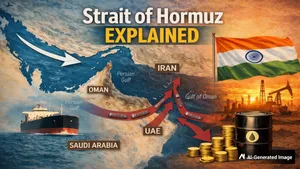 How 20 Miles of Mayhem Impacts India's Trade Deficit, Rupee, Crude Oil and Stock Market
 -
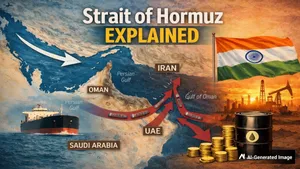 How 20 Miles of Mayhem Impacts India's Trade Deficit, Rupee, Crude Oil and Stock Market
 -
 Stock Market Outlook Today, July 14, 2026: Sensex, Nifty Likely to Stay Resilient Despite Global Uncertainty
 -
 Small Cap Stock Under Rs 50: Eitecon International Stock Rallies 9% | What's Fuelling The Rally?
 -
 Forget AI and Climate Change: Geopolitics, War, and Crude Oil Could Trigger the Next Global Crisis
 -
 Forget AI and Climate Change: Geopolitics, War, and Crude Oil Could Trigger the Next Global Crisis
 -
 Why Is Stock Market Rising Today? Nifty 50 Jumps Above 24500 1st Time Since April 22 | Key Reasons Explained
 -
 Stock Market Outlook Today, 7 July 2026: Sensex, Nifty Likely To Continue Winning Streak; Here's What to Watch
 -
 Nifty 50 & Sensex Half-Yearly Review: FIIs Haven’t Left India, They’re Rebalancing in Stocks and Bonds
-
Block for 8 hours
-
Block for 12 hours
-
Block for 24 hours
-
Don't block

 Sign in with Google
- Male
- Female
- Others
- Under 18
- 18 to 25
- 26 to 35
- 36 to 45
- 45 to 55
- 55+