
 A Oneindia Venture


 Click it and Unblock the Notifications
Accounting Policies of Sunlite Recycling Industries Ltd. Company
Mar 31, 2025
b Use of estimates
The preparation of financial statements requires
the management of the Company to make
estimates and assumptions that affect the reported
balances of assets and liabilities and disclosures
relating to the contingent liabilities as at the date
of the financial statements and reported amounts
of income and expense during the year. Examples
of such estimates include provisions for doubtful
receivables, provision for income taxes, the useful
lives of depreciable Property, Plant and Equipment
and provision for impairment. Future results could
differ due to changes in these estimates and the
difference between the actual result and the
estimates are recognised in the period in which the
results are known / materialise.
c Property, Plant and Equipment
Property, Plant and Equipment are stated at cost,
less accumulated depreciation / amortisation. Costs
include all expenses incurred to bring the asset to
its present location and condition.
d Depreciation / Amortisation
In respect of Property, Plant and Equipment
(other than freehold land and capital work-in¬
progress) acquired during the year, depreciation/
amortisation is charged as per WDV (Written Down
Value) method so as to charge depreciation on
fixed assets on their book value at the end of the
year before charging such depreciation as per
Schedule II of Companies Act,2013.
2 SIGNIFICANT ACCOUNTING POLICIES
a Basis of Preparation
These financial statements have been prepared in
accordance with the Generally Accepted Accounting
Principles in India (''Indian GAAP'') to comply with
the Accounting Standards specified under Section
133 of the Companies Act, 2013, as applicable.
The financial statements have been prepared
under the historical cost convention on accrual
basis, except for certain financial instruments
which are measured at fair value.
e Leases
Assets taken on lease by the Company in its capacity
as lessee, where the Company has substantially all
the risks and rewards of ownership are classified
as finance lease. Such a lease is capitalised at the
inception of the lease at lower of the fair value or
the present value of the minimum lease payments
and a liability is recognised for an equivalent
amount. Each lease rental paid is allocated
between the liability and the interest cost so as to
obtain a constant periodic rate of interest on the
outstanding liability for each year.
Lease arrangements where the risks and rewards
incidental to ownership of an asset substantially
vest with the lessor, are recognised as operating
leases. Lease rentals under operating leases are
recognised in the statement of profit and loss on a
straight-line basis.
f Impairment
At each balance sheet date, the management reviews
the carrying amounts of its assets included in each
cash generating unit to determine whether there is
any indication that those assets were impaired. If
any such indication exists, the recoverable amount
of the asset is estimated in order to determine the
extent of impairment. Recoverable amount is the
higher of an asset''s net selling price and value in
use. In assessing value in use, the estimated future
cash flows expected from the continuing use of the
asset and from its disposal are discounted to their
present value using a pre-tax discount rate that
reflects the current market assessments of time
value of money and the risks specific to the asset.
Reversal of impairment loss is recognised as income
in the statement of profit and loss.
g Investments
Long-term investments and current maturities
of long-term investments are stated at cost, less
provision for other than temporary diminution
in value. Current investments, except for current
maturities of long-term investments, comprising
investments in mutual funds, government securities
and bonds are stated at the lower of cost and fair
value.
h Revenue recognition
Revenue from the sale of copper wire and cables
are recognised upon delivery, which is when title
passes to the customer.Revenue is reported net of
discounts.
Dividend is recorded when the right to receive
payment is established. Interest income is
recognised on time proportion basis taking into
account the amount outstanding and the rate
applicable.
i Taxation
Current income tax expense comprises taxes on
income from operations in India and in foreign
jurisdictions. Income taxpayable in India is
determined in accordance with the provisions of
the Income Tax Act, 1961. Tax expense relating to
foreign operations is determined in accordance
with tax laws applicable in countries where such
operations are domiciled.
Minimum Alternative Tax (MAT) paid in accordance
with the tax laws in India, which gives rise to future
economic benefits in the form of adjustment of
future income tax liability, is considered as an asset
if there is convincing evidence that the Company will
pay normal income tax after the tax holiday period.
Accordingly, MAT is recognised as an asset in the
balance sheet when the asset can be measured
reliably and it is probable that the future economic
benefit associated with it will fructify.
Deferred tax expense or benefit is recognised on
timing differences being the difference between
taxable income and accounting income that
originate in one period and is likely to reverse in one
or more subsequent periods. Deferred tax assets
and liabilities are measured using the tax rates and
tax laws that have been enacted or substantively
enacted by the balance sheet date.
Advance taxes and provisions for current income
taxes are presented in the balance sheet after off¬
setting advance tax paid and income tax provision
arising in the same tax jurisdiction for relevant tax
paying units and where the Company is able to
and intends to settle the asset and liability on a net
basis.
The Company offsets deferred tax assets and
deferred tax liabilities if it has a legally enforceable
right and these relate to taxes on income levied by
the same governing taxation laws.
j Foreign currency transactions
Income and expense in foreign currencies are
converted at exchange rates prevailing on the date
of the transaction. Foreign currency monetary
assets and liabilities other than net investments
in non-integral foreign operations are translated
at the exchange rate prevailing on the balance
sheet date and exchange gains and losses are
recognised in the statement of profit and loss.
Exchange difference arising on a monetary item
that, in substance, forms part of an enterprise''s
net investments in a non-integral foreign operation
are accumulated in a foreign currency translation
reserve.
k Inventories
Raw materials are carried at the lower of cost
and net realisable value. Cost is determined on
a weighted average basis. Purchased goods-in-
transit are carried at cost. Work-in-progress is
carried at the lower of cost and net realisable value.
Stores and spare parts are carried at lower of cost
and net realisable value. Finished goods produced
or purchased by the Company are carried at lower
of cost and net realisable value. Cost includes
direct material and labour cost and a proportion of
manufacturing overheads.
l Cash and cash equivalents
The Company considers all highly liquid financial
instruments, which are readily convertible into
known amount of cash that are subject to an
insignificant risk of change in value and having
original maturities of three months or less from the
date of purchase, to be cash equivalents.
Disclaimer: This is 3rd Party content/feed, viewers are requested to use their discretion and conduct proper diligence before investing, GoodReturns does not take any liability on the genuineness and correctness of the information in this article
More Information on Sunlite Recycling Industries Ltd.
-
Sunlite Recycling Industries Ltd. Tools
- Bulk Deals
-
Sunlite Recycling Industries Ltd. Company Details
- Company Profile
- Company History
- Management Team
- Capital Structure
- Product Mix
- Banker/Auditor/Registrar
-
Company History
- NSE Price History
-
Sunlite Recycling Industries Ltd. Key Financial Ratios
- Ratios
-
Sunlite Recycling Industries Ltd. Results
- Quarterly Results
- Half Yearly Results
- Nine Months Results
- Annual Results
-
Sunlite Recycling Industries Ltd. Financial Data
- Audited Results
- Cash Flow
- Balance Sheet
-
Sunlite Recycling Industries Ltd. Reports
- Accounting Policies
- Auditors Report
- Directors Report
- Notes To Account
-
Sunlite Recycling Industries Ltd. Corporate Announcements
- Book Closure
- Dividend
- Board Meetings
-
 Stock Market Outlook Today, 19 June 2026: Sensex, Nifty Likely to Stay Positive Amid US-Iran Peace Deal
 -
 Multibagger Alert: Why THIS Diversified Commercial Stock Has Rallied 143% In 3 Months
 -
 Stock Market Outlook Today, June 16: Sensex, Nifty Likely to Stay Volatile But Positive Ahead of FOMC Meeting
 -
 Stock Market Today: Sensex Jumps Over 1,100 Pts, Nifty Eyes 24,000; IndiGo, HPCL Lead Rally After US-Iran Deal
 -
 Indian Stock Market Outlook Next Week, June 15-19: Sensex, Nifty Likely to Stay Positive; Fed Meeting in Focus
 -
 Bulls Return To D-Street! Nifty-Sensex End 2-Week Losing Run On Iran-US Peace Deal, Strong Rupee
 -
 Stock Market Outlook Today, June 12: Sensex, Nifty Likely to Remain Under Pressure Amid Rising Oil Prices
 -
 Stock Market Outlook Today, 10 June 2026: Sensex, Nifty Likely to Stay Volatile as Crude Trends Dominate
 -
 Stock Market Outlook Today, 9 June: Nifty, Sensex May Stay Volatile Amid Iran-Israel Tension & Crude Oil Surge
 -
 Stock Market Outlook Today, June 8: Sensex, Nifty Likely to Trade Range-Bound Amid RBI Pause and FII Outflows
 -
 Stock Market Outlook Next Week, June 8-12: Sensex, Nifty Likely to Remain Weak; Bears Retain Near-Term Control
 -
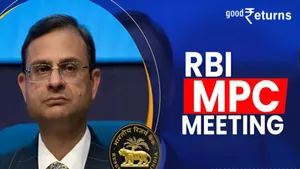 RBI MPC Today: Top Stocks To Watch Ahead of Governor Sanjay Malhotra's Speech On June 5 | What History Suggest
 -
 Stock Market Outlook Today June 4: Sensex, Nifty on Thursday Likely to Stay Volatile Ahead of RBI MPC Decision
 -
 Stock Market Outlook, June 3, 2026: Will Sensex, Nifty Today Extend Recovery? RBI Meet, IT Stocks in Focus
 -
 Penny Stock Under Rs 20 Jumps 2%, Delivers 315% Return In 5 Yrs | What Investors Must Know
 -
 Stock Market Outlook Today, June 2: Sensex, Nifty Likely to Remain Under Pressure Amid FII Selling
-
Block for 8 hours
-
Block for 12 hours
-
Block for 24 hours
-
Don't block

 Sign in with Google
- Male
- Female
- Others
- Under 18
- 18 to 25
- 26 to 35
- 36 to 45
- 45 to 55
- 55+